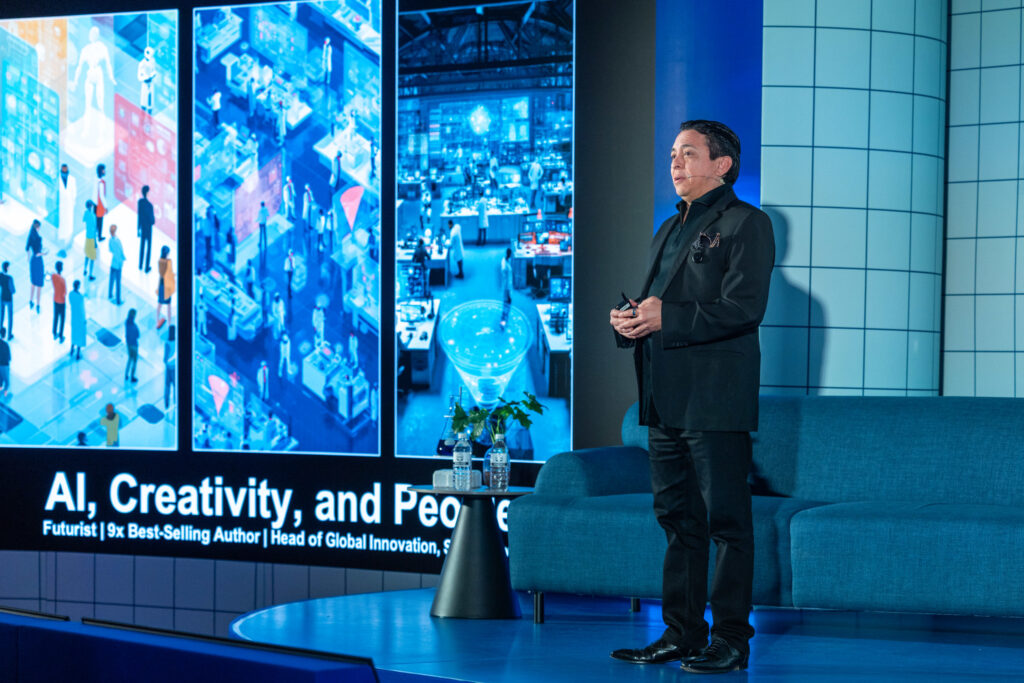
As artificial intelligence helps people produce content at a blinding pace, personalization, and automation abundant, empathy, creativity, digital warmth, and memorable experiences become more valuable.
I recently had the privilege of traveling to Johannesburg for my first visit to South Africa, where I opened the Standard Bank CIB Brand & Marketing Blue Flame Awards Gala.
I knew I was walking into a room filled with people who think deeply about brands, creativity, customers, experiences, and growth. This global marketing team is one of the business in the business! And because this was an awards celebration, I was also speaking to people whose work had already demonstrated what becomes possible when imagination meets execution.
So rather than talk about AI as another technology trend, I wanted to explore a more consequential question, what happens to creativity, branding, marketing, and customer experience when intelligence itself becomes abundant?
Most organizations are approaching AI through the language of efficiency not innovation or value creation, prioritizing questions such as, How can we produce more content? Move faster? Automate tasks? Personalize at scale? Reduce costs? Improve productivity?
If all we do with AI is what we did yesterday, only faster, cheaper, and at greater scale, then we haven’t transformed much of anything. We have created a new status quo, now powered by AI.
In Johannesburg, I challenged the audience to think about the “A” in AI differently…not simply as artificial intelligence, but also as “augmented intelligence.” The opportunity is to use these systems to expand what we can imagine, create, understand, and accomplish, to unlock what we couldn’t do yesterday and create new value tomorrow.
As marketing leaders and experience architects, that could very well be the most important choices you make in this next era.
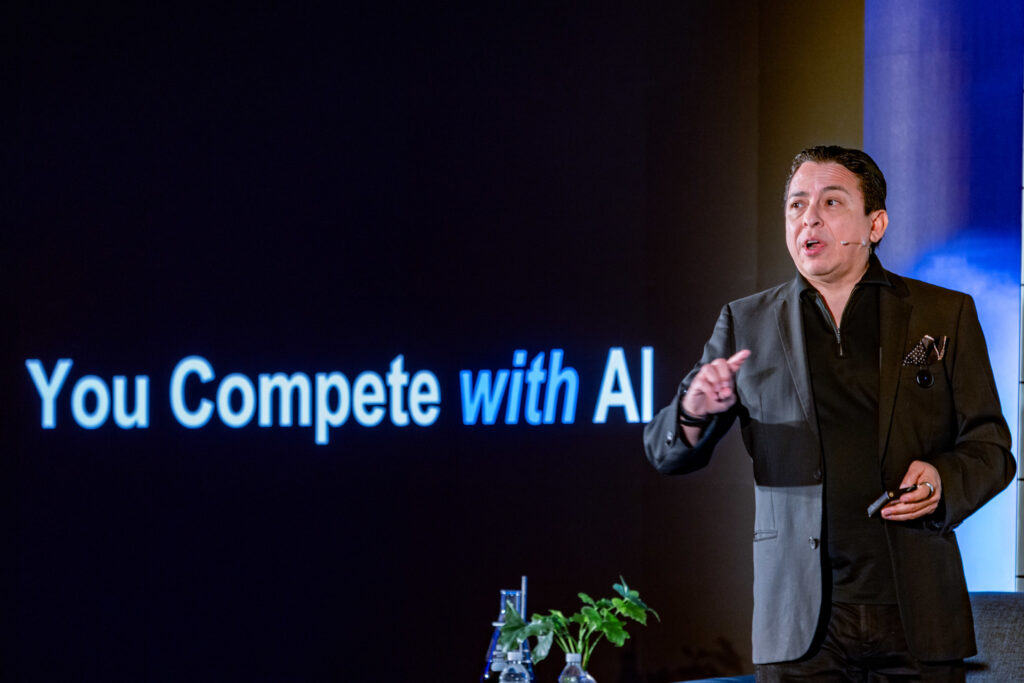
You don’t compete against AI, you compete with AI
There is no shortage of headlines warning us that AI will compete with people. But there is another way to frame what is happening.
You don’t simply compete against AI. Increasingly, you compete with AI…meaning, you compete not against AI, but more effectively in creative collaboration with it.
There’s a popular saying that AI won’t take your job, but someone using AI will take your job. Not so fast. Someone using AI to accelerate existing work becomes more productive, sure. But someone using AI to question assumptions, discover possibilities, explore ideas, and create things they could not previously create becomes augmented. The second person is playing a very different game. That’s what I’m talking about.
The same will be true for organizations. AI can make yesterday’s processes more efficient, and it can help us imagine tomorrow’s possibilities. Those two ambitions require different mindsets.
The first starts with the work as it exists and asks AI to improve it. The second starts with a much more interesting question, What could we do now that we couldn’t do before?
That not only changes the prompt, but more importantly, it changes the thinking behind the prompt. It changes the possibilities we explore and the role we believe we play alongside the technology.
AI doesn’t bring your lived experience to the conversation. It doesn’t bring your particular intuition about a customer, their lived experiences, the lessons accumulated throughout your career, the relationships that shaped you, the mistakes that taught you, or the imagination and taste that make an idea uniquely yours.
You do.
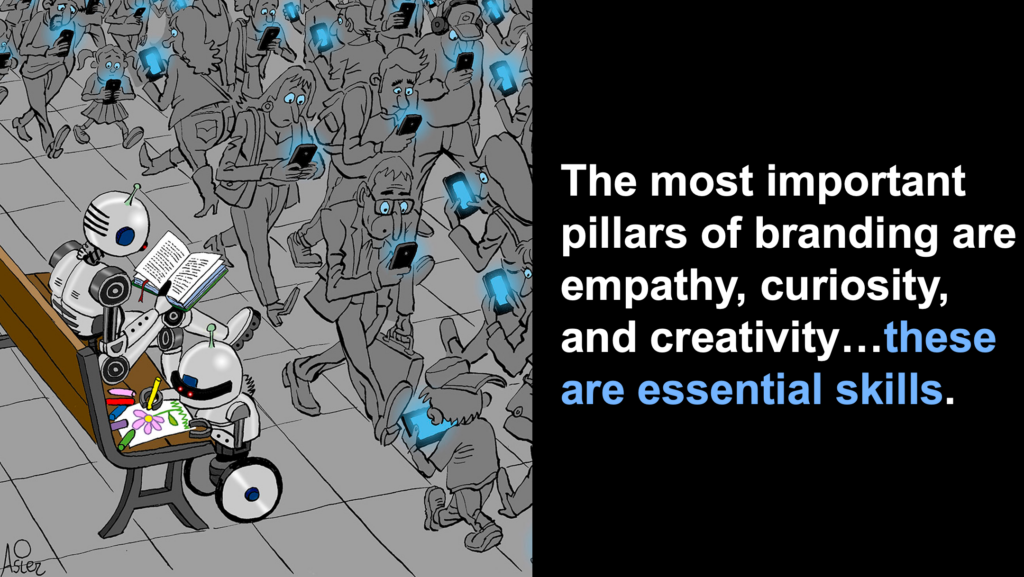
Your creativity, curiosity, empathy, intuition, imagination, and judgment become inputs into what AI makes possible. We’ve historically described qualities like these as “soft skills.” In an AI-first world, that language feels obsolete. These are essential human skills, because they increasingly determine how distinctly and meaningfully we show up with machines.
Creativity requires something most companies accidentally remove
One of my favorite thinkers was Sir Ken Robinson. He spent much of his career reminding us that creativity isn’t some mysterious talent reserved for artists. It is something human beings naturally possess and then, somewhere along the way, learn to suppress.
He told the lovable story of a six-year-old girl drawing in class who struggled in most classes, but not art. In this class, she was intently engaged. Her teacher noticed, walked up to her and asked what she was drawing.
“I’m drawing a picture of God,” the girl replied.
The teacher explained that nobody knew what God looked like.
The girl responded in a way that only kids could. “They will in a minute,” she shared matter-of-factly.
The point was the remarkable confidence children have before they learn to fear being wrong.
Adults have learned that fear. Organizations have, too.
But as Robinson observed, “if we’re not prepared to be wrong, we’ll never come up with anything original.”
If we’re not prepared to be wrong…
We talk about innovation while constructing cultures that inadvertently punish the behaviors innovation requires. We reward certainty. We celebrate the right answer. We optimize processes. We minimize risk. We structure employee reviews around following the rules. Then we ask people to innovate while requiring them to defend an idea before they’ve had the space to discover whether it might work.
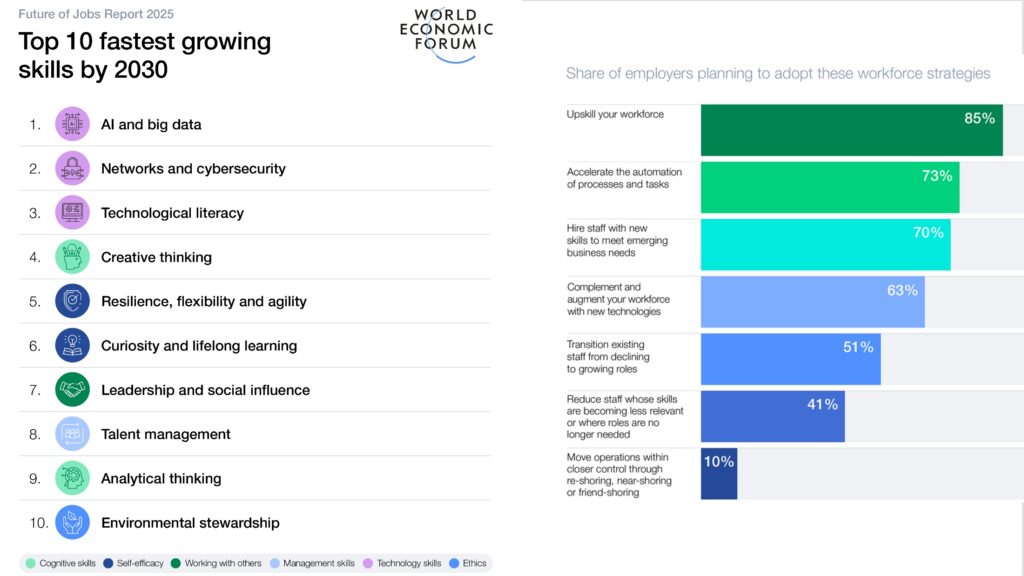
That becomes particularly dangerous in an age of AI. If people are afraid to ask unusual questions, explore ridiculous ideas, challenge assumptions, or produce something imperfect, AI won’t make the organization more innovative. It will make conventional thinking faster.
Innovation isn’t the adoption of magical technology. At its simplest, innovation is the creation of new value.
Iteration improves something that already exists. Innovation creates something that didn’t. We need both, but they are not interchangeable. The courage to venture beyond what we already know, to be wrong, learn, unlearn, experiment, and try again, is part of how we move from optimization to originality.
Leaders therefore have another responsibility in the age of AI. They must foster an environment where people feel safe enough to explore the unknown.
AI isn’t going to create that culture for us.
That’s the role of leadership in all its forms and levels.
This is a CTRL-ALT-DELETE moment
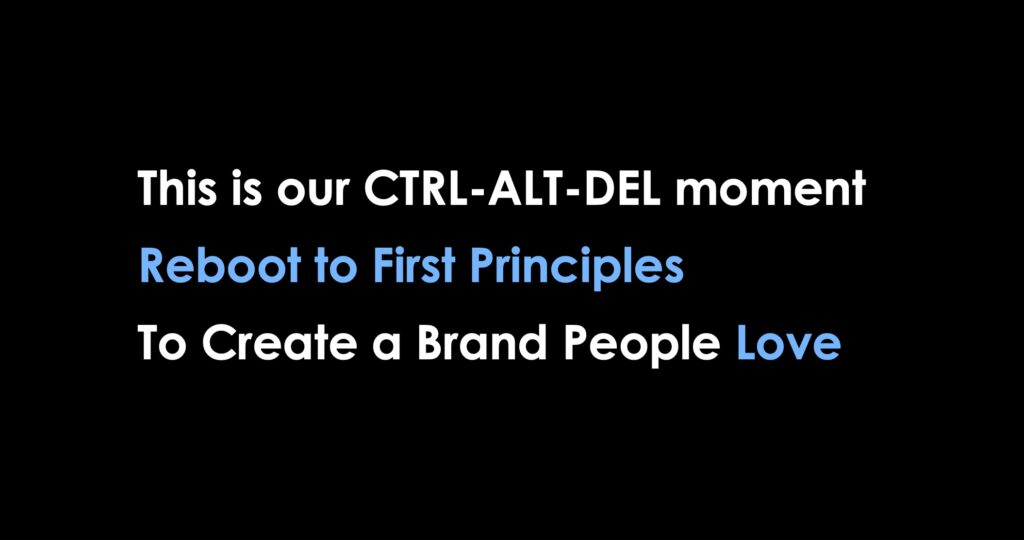
During the presentation, I described this moment as an opportunity to hit CTRL-ALT-DELETE and reboot around first principles.
When technology changes this quickly, it becomes even more important to remember why we are doing the work in the first place.
Who are we trying to serve? What are they trying to accomplish? What do they value? What are they worried about? How should they feel when they encounter us? What should they remember?
Somewhere between marketing technology, funnels, dashboards, KPIs, campaigns, channels, content calendars, automation platforms, personalization engines, and now AI, it became possible to become extraordinarily sophisticated at marketing while simultaneously getting further away from the human being we’re marketing to.
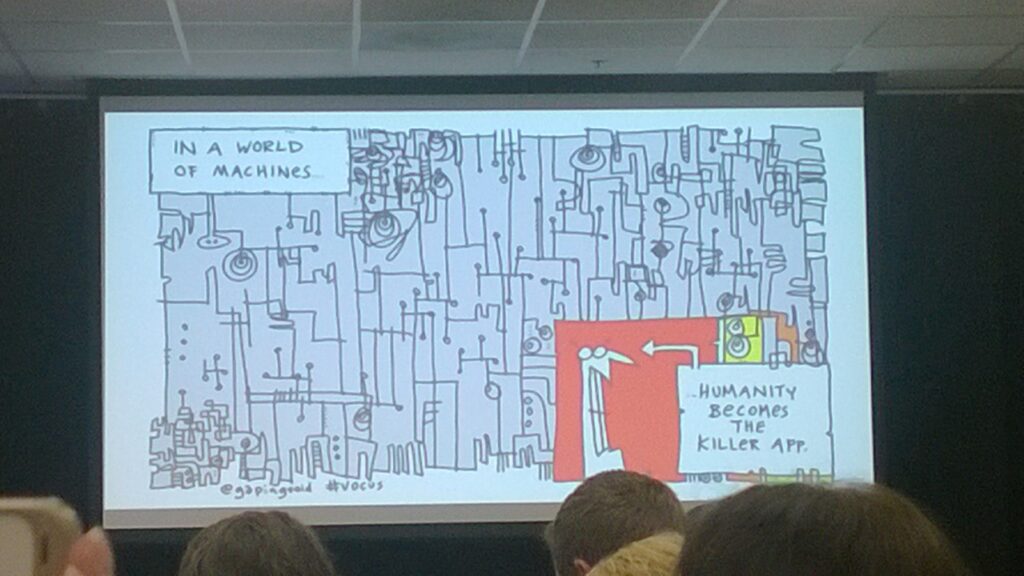
Circa 2014-2015, Created by Brian Solis and Gapingvoid
That is the paradox.
I’ve worked largely in B2B throughout my career. But I’ve also worked in B2C and D2C to know that, no matter what the model, the most useful reminders I can give myself is remarkably simple, there is still a person on the other side. And even in a world where agents will represent people in a growing number of transactions, there is still a person on the other side. Though, in an agent-to-agent world, this is a much deeper conversation. But this article, is where we start.
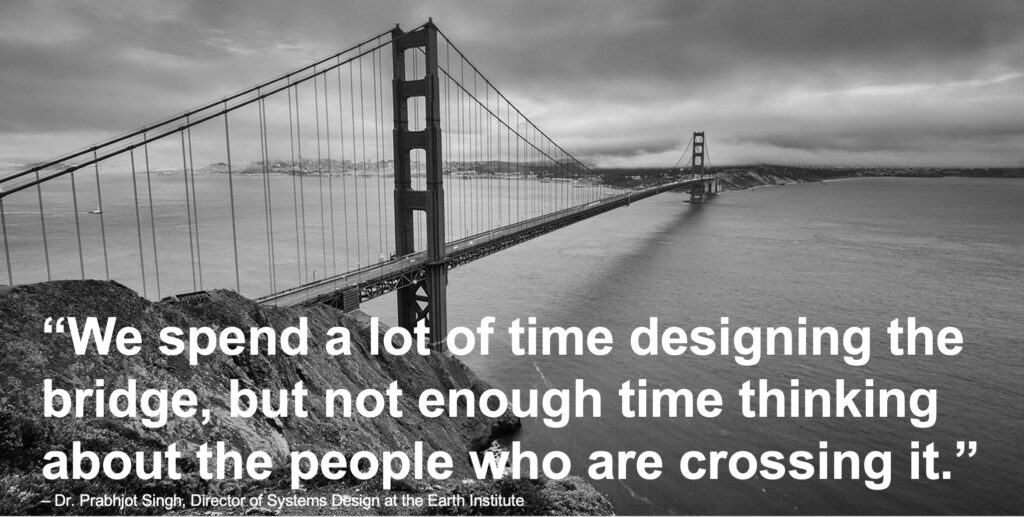
For now, most of the time, a person is reading the message, considering the purchase, putting their reputation behind a decision, struggling with a service experience, trying to solve a problem, or hoping to accomplish something meaningful.
We might call them a prospect, account, lead, buyer, stakeholder, decision-maker, subscriber, user, or customer. But first, they’re human. They’re not synthetic. They’re a person.
We know that technology changes, for better and worse. But humanity remains the operating system.
And there is growing evidence that people feel as though we’re losing some of that humanity.
WordPress VIP’s Future of the Web 2026 research found that 74% of consumers say the internet feels less human than it did 10 years ago. The same study of 1,200 U.S. consumers found that people reach what it calls “bot fatigue” after an average of roughly 40 minutes, the point when interactions begin to feel synthetic.
We have never had more sophisticated technologies for communication, personalization, content creation, customer intelligence, and engagement, yet the people we’re trying to reach are telling us that the digital world feels less human.
This is a design problem. This is an experience problem. It adds up to a brand problem, which means it represents a leadership problem. And ultimately, it’s a choice for the customer.
As I shared in the WordPress VIP report, “No customer or user wakes up and says, ‘I hope I get to talk to a chat bot or an AI agent today.’ Human-centered design is truer today with artificial intelligence. Ironically, the answer is using AI to be more human.”
That is the opportunity in front of us.
Experience is the emotion someone has when they encounter you
I’ve spent much of my career studying customer experience.
Years ago, while writing X: The Experience When Business Meets Design, I went looking for a useful definition of the word “experience.” What I found was mostly business jargon…click-through rates, engagement, impressions, transactions, NPS, conversions, touchpoints.
None adequately described what an experience actually is.
So here’s how I defined it…an experience is an emotional reaction to a moment.
It’s how someone feels when they encounter your brand, product, service, employee, application, website, message, or content. And that feeling becomes part of the story they remember about you.
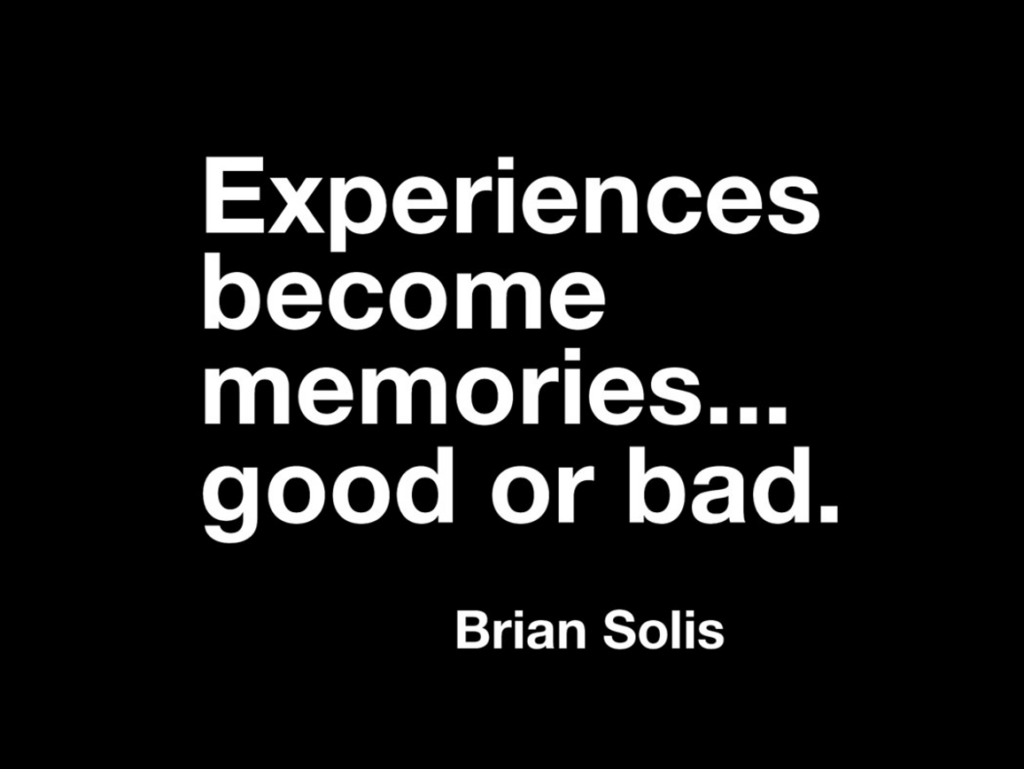
This is why the best brands aren’t simply recognizable or recallable, they are felt. These brands elicit memories and a visceral reaction.
That distinction becomes even more important as AI increases everyone’s ability to produce more copy, more images, more campaigns, more personalization, more video, more messages, and more content.
When supply becomes infinite, volume isn’t the advantage. The goal becomes meaning. And that’s still human.
In a world where almost anything can be generated, experiences that people genuinely choose to remember become extraordinarily valuable…and, unforgettable.
Customers are being spoiled forward
There is another dynamic leaders must understand in the AI era, and honestly, in general. Customer expectations don’t stand still.
Jeff Bezos has described customers as “divinely discontent.” What delighted someone yesterday quietly becomes what they expect tomorrow. In the presentation, I summarized it this way: Yesterday’s wow is today’s ordinary.
Customers don’t experience innovation in neat industry categories and patiently wait for the next. They evolve into accidental narcissists, and it continues.
The frictionless experience they have ordering dinner influences what they expect when dealing with a bank. The personalization they experience from a streaming service changes how they perceive an enterprise portal. The immediacy of one digital experience quietly resets their patience for another.
Technology spoils us forward.
AI will accelerate that cycle because it increases what companies can know, anticipate, personalize, automate, and create. The strategic question therefore isn’t simply, How should our company use AI? It is also, How is AI changing our customers, and what will they expect from us as a result?
The answer shifts AI strategy from deployment toward empathy.
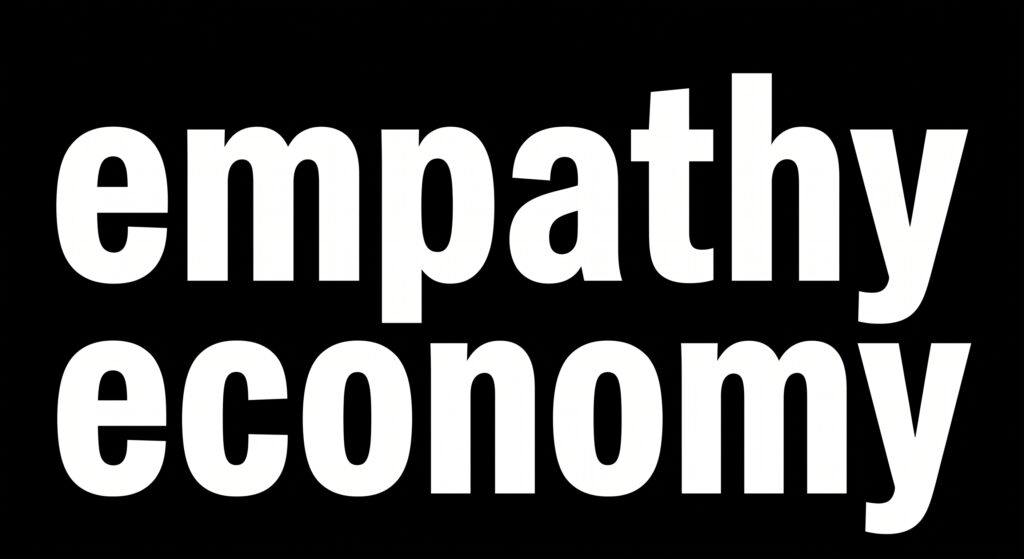
We are entering an empathy economy
We often describe our world as an attention economy, and of course it is. Attention is finite, fragmented, and increasingly difficult to earn.
But attention is only the beginning.
My dear friend Joe Pine also described, and it’s still true, an experience economy. He described a world where consumers, customers, don’t just want products, they buy into experiences. Look at Apple, Zappos, Disney, Vans, and USAA. They remove friction, personalize service, and build deep emotional trust. They know why they exist and they know why customers value their experience. They operation by embedding “why they started” into every decision.
And now, especially in an era of AI, I believe we’re also operating in an empathy economy.
Think about the volume of noise that surrounds someone every day: notifications, email, messages, advertising, feeds, AI-generated content, meetings, recommendations, alerts, news, and more feeds within feeds.
Now think about what happens when something appears that feels as though somebody genuinely understood you.
You notice. You feel seen, heard, understood.
It creates a pause in the noise.
That’s an empathy advantage.
The WordPress VIP findings make this especially important. Sixty percent of consumers say AI in a brand’s messaging is a turnoff, not a feature.
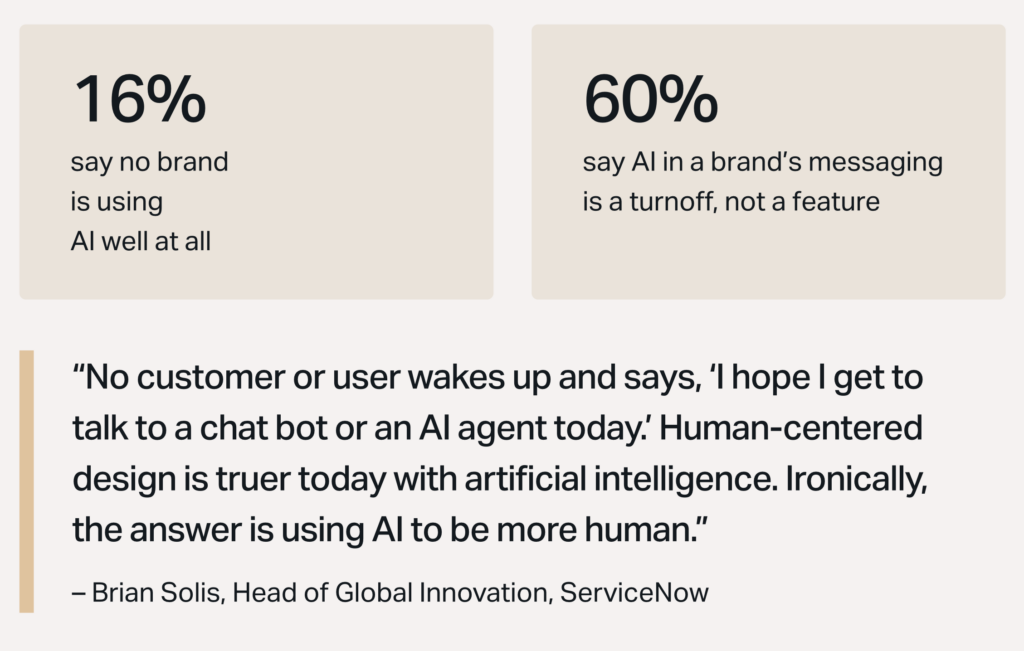
I interpret this as consumers rejecting experiences that feel artificial.
Most people don’t care which model helped analyze customer signals, identify an opportunity, generate a first draft, personalize an experience, or accelerate creative development. They experience what reaches them.
Does it feel generic? Does it feel manipulative? Does it save me time? Does it recognize what I’m trying to accomplish? Is it actually useful? Does it feel as though the brand understands me, or merely understands my data? When I need help, does the brand value my time, investment, and desired outcome?
The answers help to improve experiences.
As artificial intelligence scales, digital warmth becomes more valuable
This is where I believe we need another idea in our vocabulary…“Digital Warmth.”
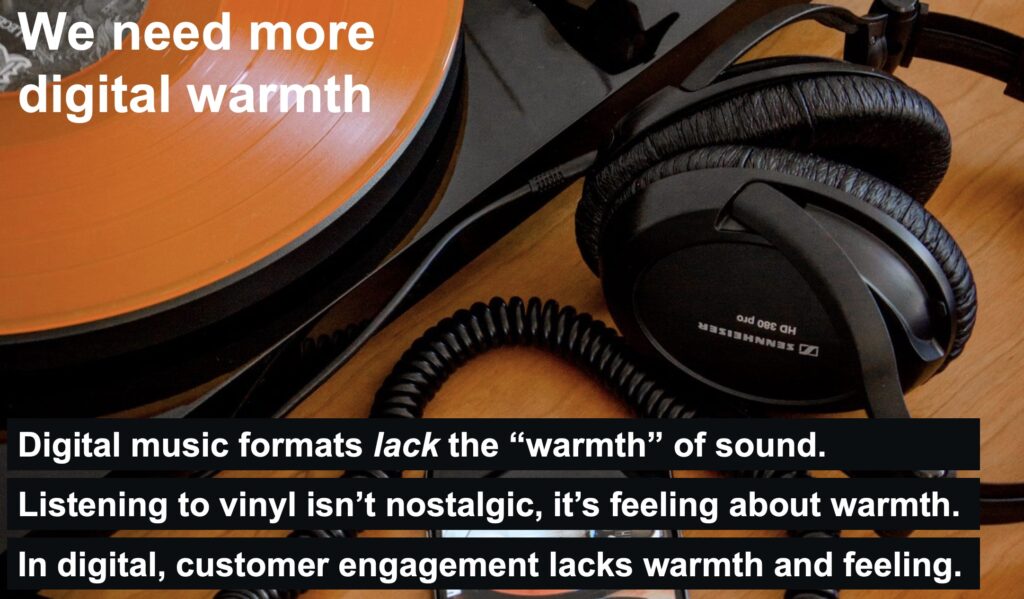
Digital warmth doesn’t mean pretending a chatbot is human. It doesn’t mean adding friendly language to a bad automated experience or asking AI to manufacture intimacy. And it certainly isn’t using technology to trick people into believing there is a person present when there isn’t.
Digital warmth is when intelligence makes an experience feel more attentive, relevant, intuitive, considerate, personal, and respectful of someone’s time.
It’s the difference between knowing something about a customer and demonstrating that you understand something for them.
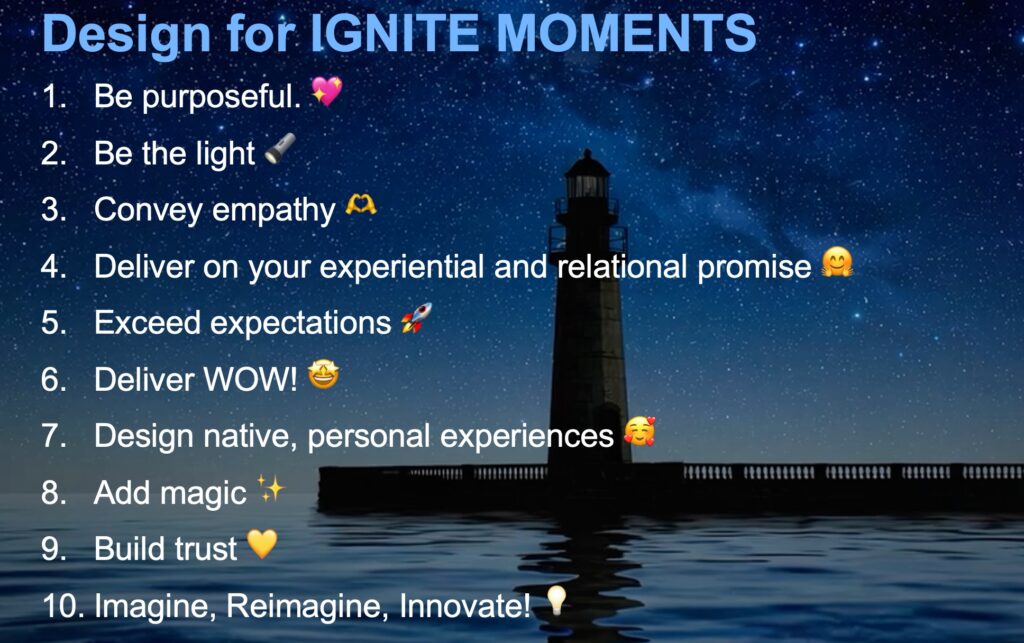
In Johannesburg, I called the most meaningful of these interactions Ignite Moments, the moments when we have someone’s attention and decide to do something worthwhile with it. We show them that we didn’t take their time for granted.
Great marketing creates these moments. Great experiences create them. Great leaders do, too.
They communicate something surprisingly powerful…
I heard you. I listened. I understand. I did my homework.
AI can analyze signals, synthesize information, simulate personas, recognize patterns, and help us see things we might otherwise miss. But technology doesn’t absolve us from caring.
That’s the human contribution. And as artificial intelligence becomes more abundant, genuine digital warmth becomes more scarce, and therefore more valuable.
The new unit of brand design is the moment of truth
Screenshot
One of the traps in customer experience is that we talk about “the journey” as though a customer experiences an elegant journey map hanging in one of our conference rooms.
They don’t.
They experience moments…the email they weren’t expecting. The answer they needed. The friction that disappeared. The letter they received. The person who remembered. The recommendation that felt unusually relevant. The website that anticipated what they were trying to accomplish. The service recovery when something went wrong. The interaction that made them feel understood instead of processed.
These are moments of truth…enlivened.
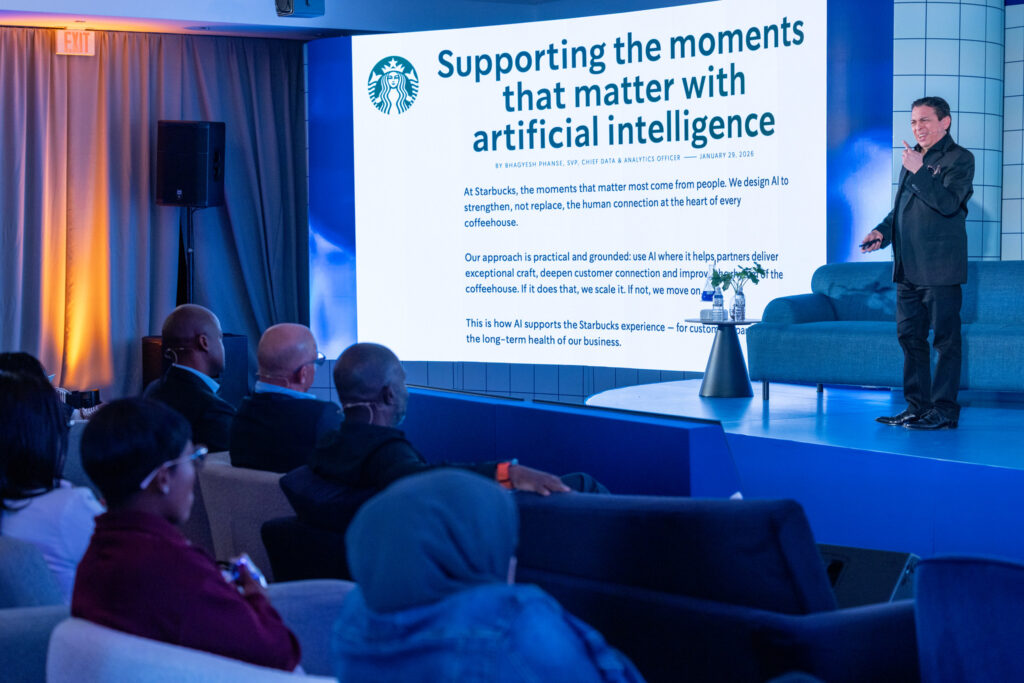
The presentation challenged the audience to ask a very specific question: What is the experience your customers feel in each moment of truth?
This is where AI can become much more interesting.
Instead of starting with, “How can AI help us produce more, better performing campaigns?” we can ask, “How can AI help us understand, anticipate, and improve the moments that compose the customer’s journey?”
Insights foster empathy.
AI unlocks scale.
The opportunity is to make the moments more relevant, intuitive, personal, useful, and memorable. That’s why I call them “ignite moments.”
Stop designing customer experience. Design the customer’s experience.

There is a simple grammatical trick I’ve used for years.
Add an apostrophe and an “s” to “customer experience.” Think about the customer’s experience. It’s a small linguistic change with an enormous psychological effect.
“Customer experience” can easily become a department, discipline, technology stack, metric, initiative, or program. “The customer’s experience” forces you to leave your perspective and temporarily enter theirs.
What are they trying to accomplish? What are they worried about? Where are they confused? What matters to them right now? What does value look like through their eyes? Where are they frustrated or neglected? What would delight them? How do we want them to feel?
When we remain inside our own point of view, we design based on our knowledge, processes, incentives, past successes, limitations, and organizational politics.
We design what we think should work for them.
Empathy requires us to cross that distance. And AI gives us an extraordinary new ability to listen, learn, experiment, test, adapt, and personalize at scale.
The irony is beautiful.
Artificial intelligence may become one of the most powerful technologies we’ve ever had for scaling empathy, provided empathetic humans are directing it.
The brand isn’t the hero
This also changes how we think about storytelling.
For years, we’ve told marketers they need to become better storytellers. I used to interpret that primarily as learning how to tell more compelling stories.
Then a friend (Nick Sung) who worked as a Pixar storyboard artist helped me see storytelling differently.
A storyboard isn’t simply a tool for organizing scenes. It helps creators test whether the story works from the audience’s perspective. Does the character feel believable? Is the situation relatable? Does the emotion land? Will someone care?
The best storytellers aren’t simply arranging what a brand wants to say. They’re imagining how someone else will experience the story.
Which brings me back to a principle I return to again and again, something most marketers miss.
The brand isn’t the hero. The CMO isn’t the hero.
The customer is the hero.
The person on the other side is the hero.
The role of the brand is to help that person accomplish something, overcome something, feel something, or become who they’re trying to become. The presentation framed storytelling around relatability and believability, with the customer, not the brand, as the hero.
That changes storytelling from promotion into service.
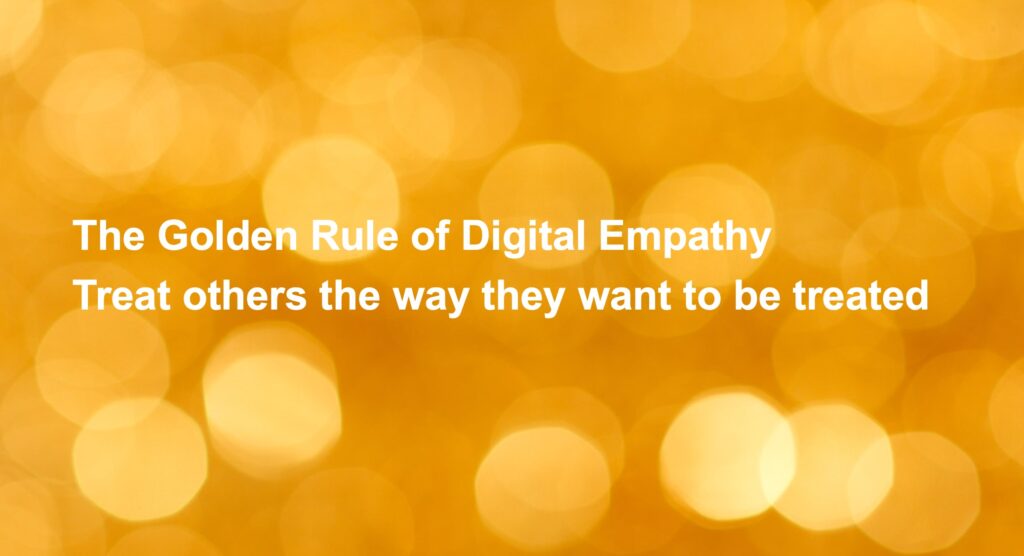
It also updates something most of us were taught as children. I grew up learning the Golden Rule, treat other people the way you want to be treated.
But empathy requires a more difficult and less explored version, Treat people the way they want to be treated.
I think of that as the Golden Rule of Digital Empathy.
AI can help us understand those people more deeply, recognize patterns faster, experiment with narratives at greater speed, and create experiences at a scale that would have been unimaginable only a few years ago.
But scale is not the purpose. It’s about helping someone move forward.
Every brand needs a relational promise
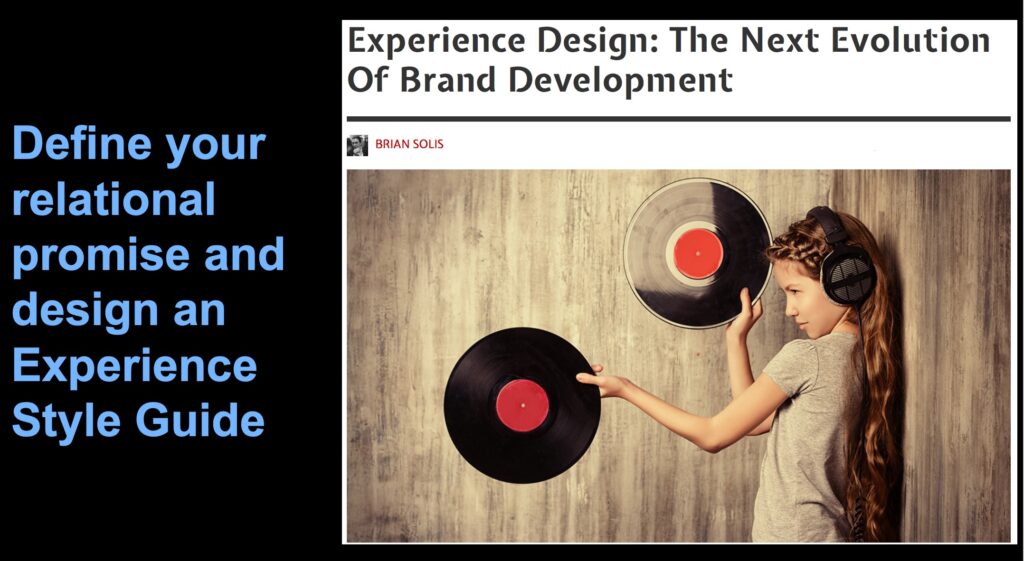
We already know how to create and follow brand guidelines.
Here are our colors. Here is our typography. Here is our voice. Here are our logo treatments. Here is what we say. Here is what we don’t say.
But AI introduces another question that organizations should start asking, Do we have an experience style guide?
This becomes especially urgent when 61% of consumers say they can’t name a brand that uses AI well in its messaging. WordPress VIP’s research essentially finds that the category has no clear incumbent. No brand has yet become the obvious consumer reference point for what excellent AI-enabled brand communication should feel like.
That means the standard hasn’t been set.
There is still whitespace.
And I don’t believe the brands that define that standard will necessarily be those that make AI most visible. They will be the ones that make intelligence most valuable.
They’ll use AI to make an interaction more useful, intuitive, personal, timely, creative, and trustworthy without sacrificing the qualities that make the relationship feel human.
That’s where an experience style guide comes in.
What should someone feel when they interact with us? What should they remember? What should an interaction consistently communicate about who we are? How should AI behave on our behalf? What must never be sacrificed for efficiency? When should personalization feel helpful rather than invasive? Where must a human remain present? When should we disclose AI’s role? What boundaries should intelligence never cross?
And perhaps the most important question, What is the experience we are promising?
I think of this as a brand’s relational promise.
Before applying AI to an interaction, imagine that customer sitting directly across from you. What promise are you making to them by using this technology?
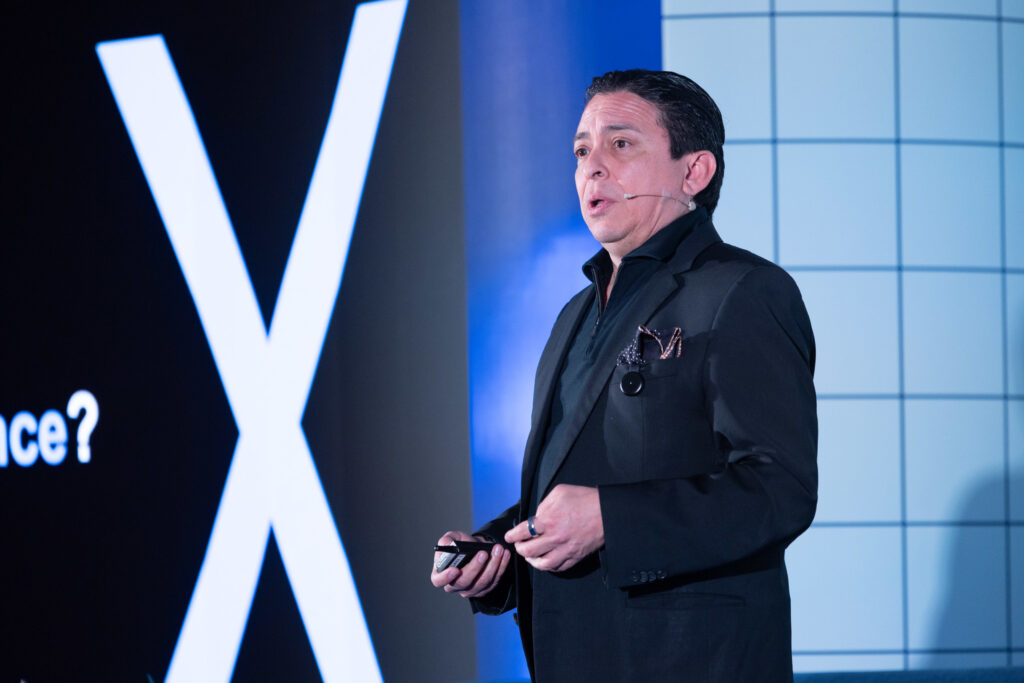
Suddenly AI isn’t an abstract technology being deployed against a segment. You’re making a decision about a relationship. And relationships involve trust, transparency, intent, authenticity, ethics, consistency, and care.
An experience style guide can translate those values into how AI shows up across touchpoints. The presentation framed the opportunity explicitly…define the relational promise, then design an experience style guide around it.
If traditional brand guidelines protect how a brand looks and sounds, the experience style guide should protect how the brand feels.
That may become one of the most important forms of brand governance in the AI era.
Ask better questions of AI
There was one final personal lesson I shared in Johannesburg.
When generative AI first emerged, I realized I was using it a lot like Google. I knew approximately what I wanted, typed something into a box, received an answer, and became faster.
Useful? Absolutely.
Transformative? Not really.
Eventually I realized the problem wasn’t the AI.
It was me.
I was using the system to produce answers I already imagined I needed. I wasn’t giving myself the space, permission, or curiosity to explore what I didn’t know.
That realization led me to a practice I call WWAID: What Would AI Do?
Before asking AI to complete the task in front of me, I try to ask different questions.
What am I not thinking about? What assumptions am I making? How might AI approach this differently? What becomes possible now that wasn’t possible before? What questions haven’t I asked? What might surprise me? What would have to be true for an entirely different outcome to become possible? How could this create new value rather than simply accelerate existing work?
The purpose isn’t to surrender thinking to AI.
It’s to use AI to expand thinking.
WWAID also becomes more powerful when it becomes a practice rather than a clever prompt. Begin some sessions without a predetermined answer. Frame questions around “What if?” and “How might we?” Allow ambiguity into the conversation. Ask what you may be overlooking. Save the prompts that unexpectedly change how you see the problem, and revisit them.
That’s where the magic started for me. I moved from using AI primarily to retrieve and produce toward using it to explore.
And exploration is where augmentation begins.
The future belongs to augmented humans
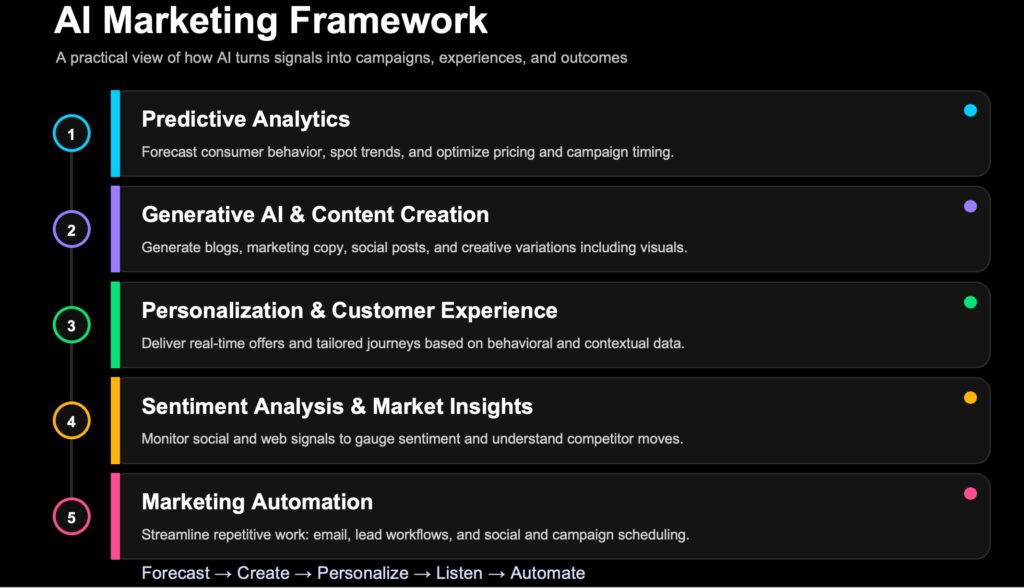
AI is going to continue getting better. Models will become more capable. Agents will become more autonomous. Content will become easier to produce. Personalization will become more sophisticated. Intelligent systems will increasingly participate in workflows, decisions, experiences, and relationships.
That trajectory is largely outside any one person’s control.
What remains very much within our control is how we choose to show up alongside it.
We can use AI primarily to produce more, or we can use it to imagine more. We can automate what already exists, or reconsider what should exist. We can scale communication, or scale understanding. We can generate content, or create moments worth remembering. We can optimize a customer journey, or deeply understand the customer’s journey and help them become the hero of it.
The greatest opportunity in artificial intelligence may ultimately be surprisingly human.
It gives us a reason to rediscover qualities that industrial processes, digital systems, social media, and organizational life sometimes conditioned out of us: curiosity, imagination, experimentation, empathy, courage, wonder.
The goal isn’t to become more like the machines.
It’s to use the machines to become more capable versions of ourselves.
That was the message I wanted to leave with the extraordinary Standard Bank CIB team in Johannesburg, and it’s the message I hope more leaders bring into their organizations as they navigate what comes next.
As intelligence becomes abundant, being intelligent will not, by itself, make a brand remarkable.
Be understood.
Be trusted.
Making someone’s life better.
Create a moment that actually means something.
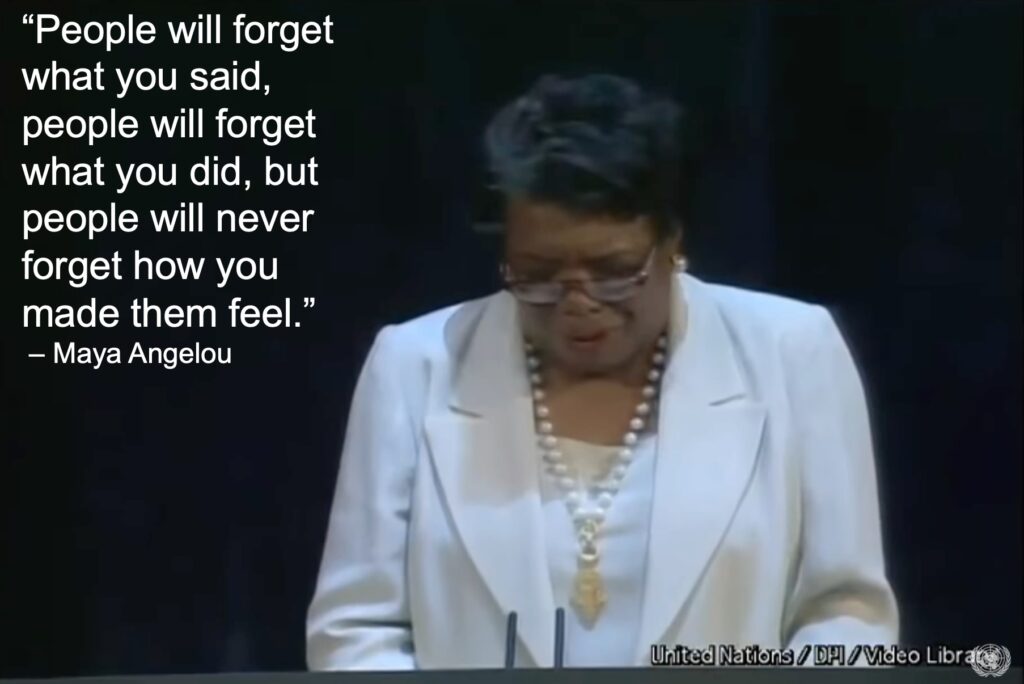
Long after someone forgets the campaign, the presentation, the prompt, the technology, or perhaps even the words we chose, they will remember something else.
How we made them feel.
No matter how intelligent our technology becomes, that remains our responsibility.
And perhaps our greatest opportunity.
Infinite ∞ | Mindshift | Subscribe | Keynote Speaker


Leave a Reply