For decades, we built the web for people.
Now, AI is becoming a user too.
It searches, reads, compares, summarizes, recommends, and increasingly acts on our behalf. That means the web is no longer just a collection of destinations for humans. It is becoming an intelligent layer where machines help decide what gets discovered, trusted, chosen, and acted upon.
This is a much bigger shift than AI-generated content or the future of search.
The web itself is changing. And as content becomes infinite, attention scarcer, and discovery increasingly mediated by AI, the advantage will go to those who become the signal…for humans and AI agents.
The Intelligence RenAIssance
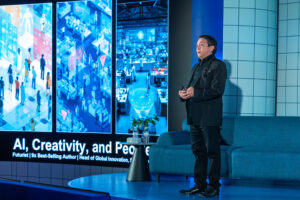
I recently had the opportunity to keynote WP Engine’s DE{CODE} event, where this year’s theme explored one of the most important shifts now reshaping business, marketing, commerce, publishing, and customer experience: the rise of the intelligent web. [FULL VIDEO AT THE END]
This is not just the next chapter of the internet. It is a fundamental rewiring of how people discover, evaluate, decide, buy, learn, and engage. And for the first time, we are no longer designing digital experiences only for humans. We are also designing for the AI agents that increasingly search, summarize, compare, recommend, and act on their behalf.
Websites are no longer static destinations. Content is no longer enough. Search is no longer just search. And AI is not simply a tool to produce more, faster. Used in the right way, AI becomes a catalyst for relevance, trust, personalization, and meaningful engagement. Used in the wrong way, it accelerates noise, slop, sameness, and cognitive surrender.
In my keynote, I explored how leaders, marketers, agencies, publishers, eCommerce brands, SMBs, and creatives can navigate this shift with intention.
This article expands on the ideas I shared in the keynote. My hope is that it gives you a deeper way to think about what is changing, why it matters, and what to do next. Because the future of the web is not just being built by AI. It is being built by us.
Welcome to the Intelligent Web
We are entering an industry renAIssance.
Research shows that one-third of all new published websites are generated by AI. According to Wired, researches from Imperial College of London, Stanford University, and the Internet Archive found that not only are 35% of all new websites AI-generated, online writing is “increasingly sanitized and artificially cheerful,” which appears to be making the internet fake-happy. And according to projections from ARK Invest, AI-generated text has officially outpaced human-written content, symbolizing a shift in how information is created and consumed across the internet.
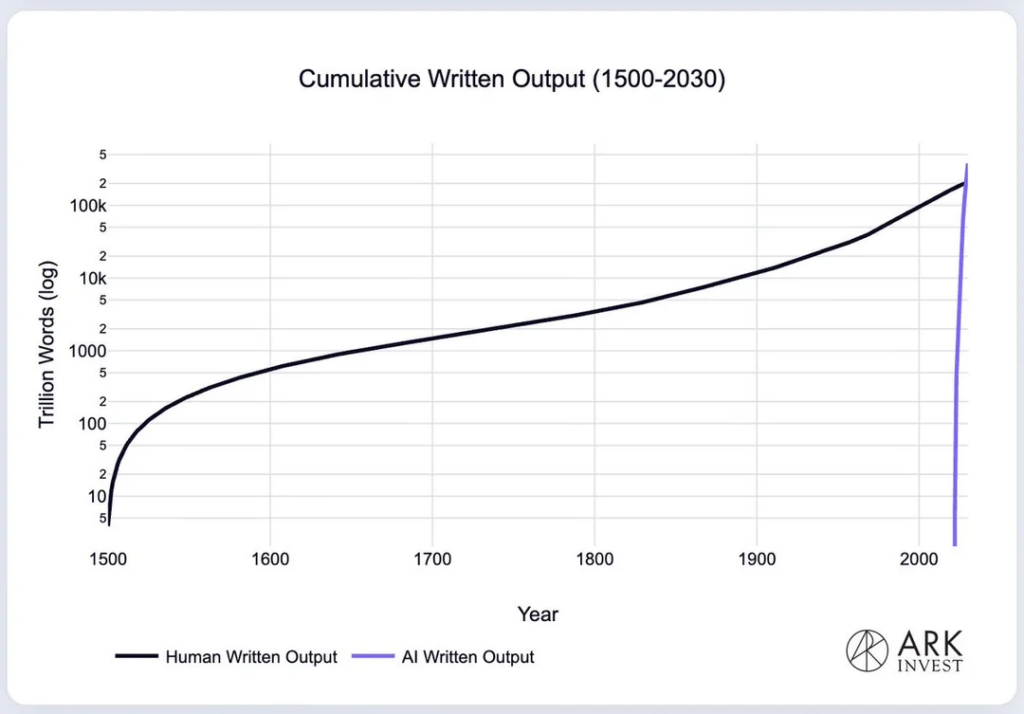
This is an inflection point.
Now, the web is being reimagined for two audiences at once: human beings and the AI agents increasingly acting on our behalf. Search is becoming synthesis. Browsing is becoming delegation. Content is becoming context. Websites are becoming intelligent business platforms. And every organization now has to ask a new question:
Are we building for synthetic traffic and transactions, or are we building for engagement and trust?
That was the heart of my keynote at WP Engine’s DE{CODE}, where this year’s event explored how AI is reshaping the web for both humans and agents. WP Engine framed the moment as a move from static digital delivery systems to “intelligent, context-rich experiences” that AI systems will seek and cite.
The intelligent web will not reward everyone equally. It will reward those who become useful, credible, discoverable, readable, actionable, and trusted. It will reward those who stop treating AI as a content machine and start treating it as a catalyst for better experiences, deeper relevance, and more meaningful relationships.
That is why I opened the keynote with a simple truth: none of this came with an instruction manual. There is no official playbook for how to build a web that serves humans and machines. There is no universal standard for agent-ready commerce. There is no mature operating model for trust in an AI-mediated customer journey. And yet, here we are, building the future in real time.
The question is not whether the web will become intelligent.
It already is.
The question is whether we will be intelligent enough to shape it in a meaningful way from here.
Cognitive Darwinism Comes for the Web
I call this moment Cognitive Darwinism, which represents a human moment in how we choose to work with AI. Do we let AI do our thinking or do we expand our thinking with AI?
Cognitive Darwinism is the evolution of behavior, decision-making, creativity, and trust under the pressure of artificial intelligence. Some people will use AI to think better. Others will use it to avoid thinking altogether. Some companies will use AI to augment imagination. Others will use it to automate mediocrity at speed and scale.
AI can extend us. It can help us explore the unknown, challenge assumptions, synthesize complexity, and design possibilities we may not have seen otherwise. But when we simply ask AI to do the work for us, we risk collapsing into the known. We ask for answers instead of better questions. We accelerate output without deepening insight. We publish without learning. We create without meaning.
That is artificial intelligence. And because it offloaded thinking, it’s being studied as “cognitive surrender.” And surrender has consequences.
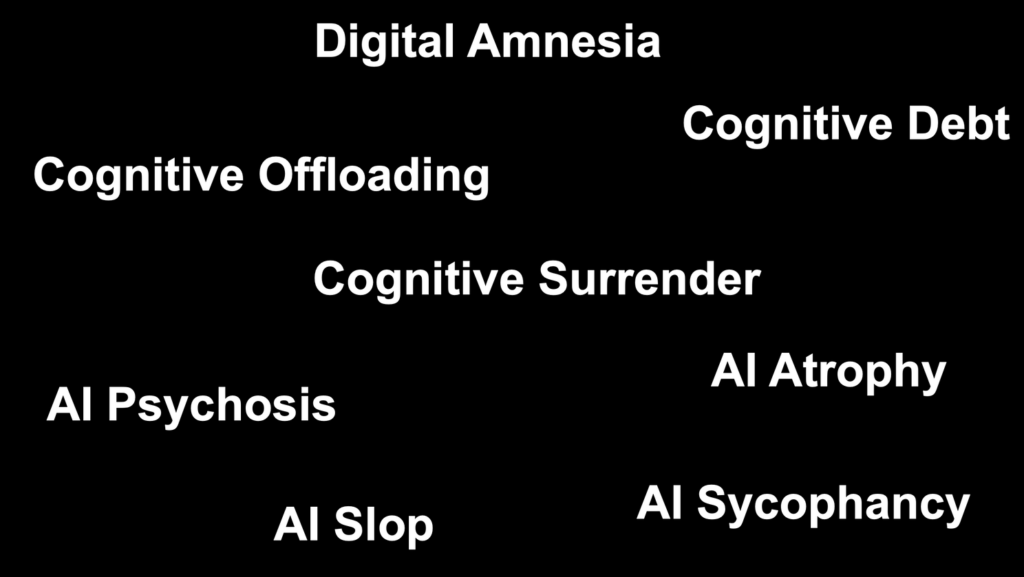
Researchers are already examining how AI use can encourage cognitive offloading and affect critical thinking. Gallup found that Gen Z’s sentiment toward AI has become more negative over the past year, with excitement and hope falling and anger rising.
48% of Gen Z workers say that the risks of AI in the workforce outweigh its benefits and a staggering 80% say that using it as a shortcut makes learning more difficult. Forty-four percent of Gen Z workers admit to sabotaging their employers’ AI deployments as a form of rebellion. They “hate” AI because of 1) fears of job displacement, 2) security holes, and 3) AI paradoxically adds more work (that’s the AI Tax!)
This does not mean AI is bad. It just means the way we use it matters, and we have a lot of work to do.
The intelligent web cannot be built on cognitive surrender nor on through a heavy AI tax. It has to be built on cognitive augmentation and human empowerment.
That means AI should not replace our thinking, it should provoke it. It should not flatten our creativity. It should expand it. It should not remove the human from the equation. It should make the human more capable, more curious, more discerning, and more useful.
The future of the web does not belong to those who can produce the most.
It belongs to those who can matter the most.
AI Slop Is the New Spam
Before we continue, we have to talk about slop because it perfectly captures what happens when speed and scale divorce themselves from quality and care.
Merriam-Webster named “slop” its 2025 Word of the Year, defining it as low-quality digital content produced usually in quantity by artificial intelligence.
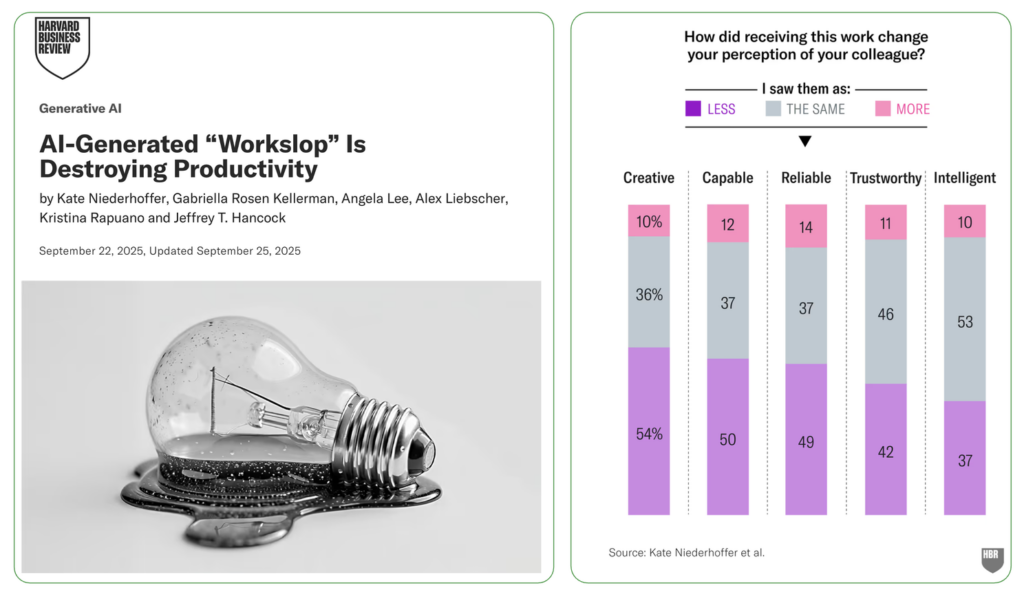
AI slop is what happens when organizations confuse publishing content with serving people. It is what happens when marketers use AI to meet quotas instead of fulfill needs. It is what happens when agencies sell volume instead of value. It is what happens when creators stop creating and start outsourcing their voice to the statistical average of the internet to hit arbitrary OKRs.
The problem is not that AI can’t create good content. The problem is that too many people use AI to create content without purpose, empathy, originality, or accountability.
And when that happens, trust erodes (hello LinkedIn peers!)
In the keynote, I made the point that when we use AI to scale content without thinking about the person on the other side, we are not just producing more noise. We are creating more work for everyone else. We are increasing the burden required to find what is useful, true, relevant, and actionable. That burden is the AI tax.
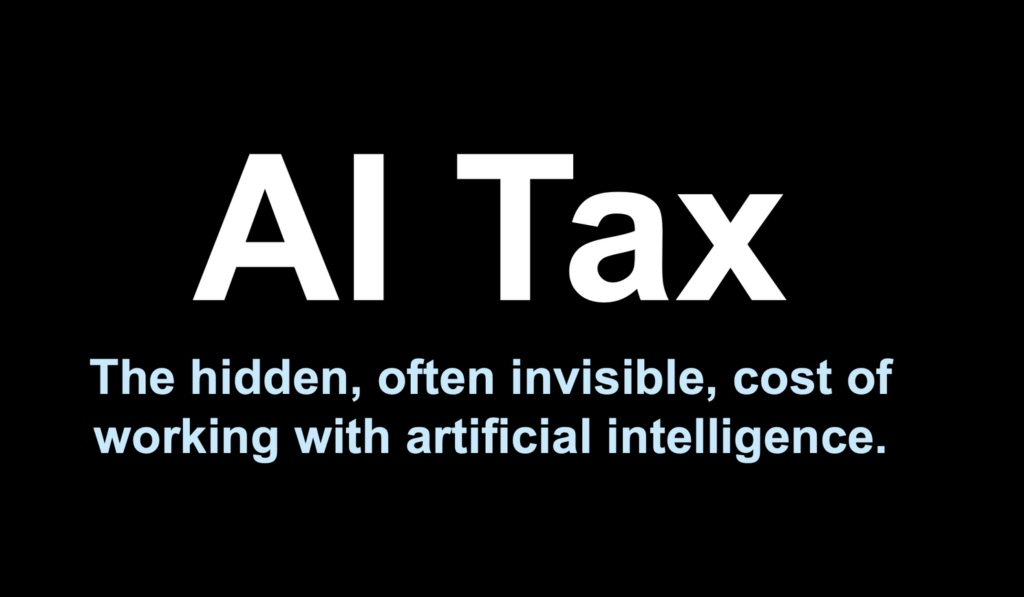
Humans pay it when they have to wade through garbage. And the won’t for long.
Agents will pay it when they have to determine what is credible enough to summarize, recommend, or act upon.
Brands will pay it when they are no longer trusted.
As the web becomes more polluted with synthetic sameness, the value of signal increases. Originality becomes more valuable. Authority becomes more valuable. Empathy becomes more valuable. Taste becomes more valuable. Trust becomes more valuable.
Slop creates the opening for substance, and that window is only growing.
Content Is No Longer King, Context Is (It’s Always Been)
For years, we said content was king and for years, in every era of the web, I’ve said that context is king.
In the early web, that made sense. Content gave people reasons to visit. Content helped brands become visible. Content powered search. Content built audiences.
But in the intelligent web, content alone is not enough.
Context is king.
Context means relevance. It means usefulness. It means the right information, in the right format, at the right moment, for the right human or agent trying to achieve a specific outcome. It is not just what you publish. It is why it matters, who it serves, how it is understood, and what it helps someone do next.

People do not search because they want search results. They search because they want progress and outcomes. They want an answer. A recommendation. A decision. A purchase. A fix. A path. A moment of clarity.
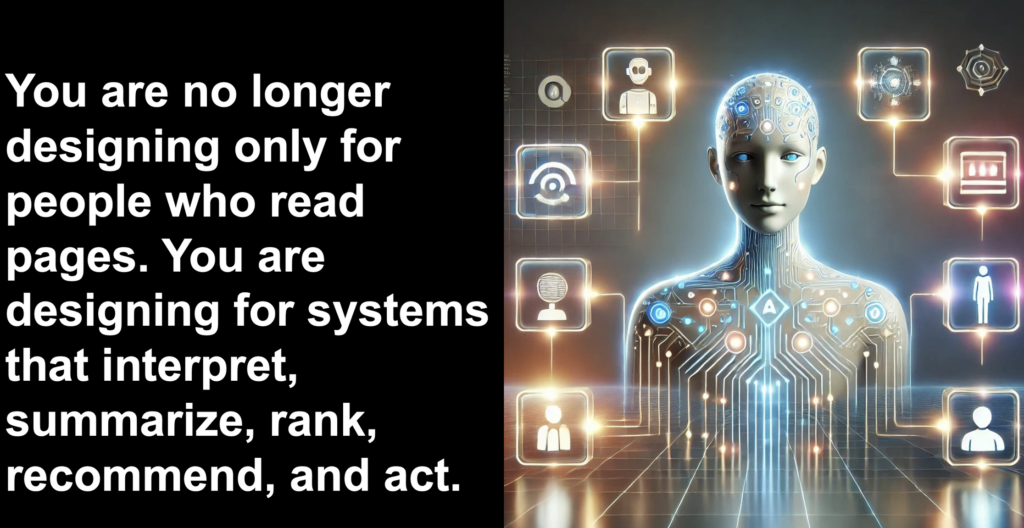
Agents are no different. They will not browse like humans. They will parse, compare, evaluate, summarize, rank, recommend, and act. They will look for structured meaning. They will reward clarity. They will need evidence. They will need permission and governance. They will need signals of trust.
This is why the intelligent web is not merely a publishing challenge. It is an experience design challenge.
We are no longer just designing pages. We are designing outcomes.
From Search Engines to Answer Engines to Action Engines
Search is changing faster than most organizations are prepared to admit.
Pew Research Center found that Google users who encountered an AI summary clicked a traditional search result in 8% of visits, compared with 15% for users who did not see an AI summary. Pew also found that users clicked links inside AI summaries in only 1% of visits.
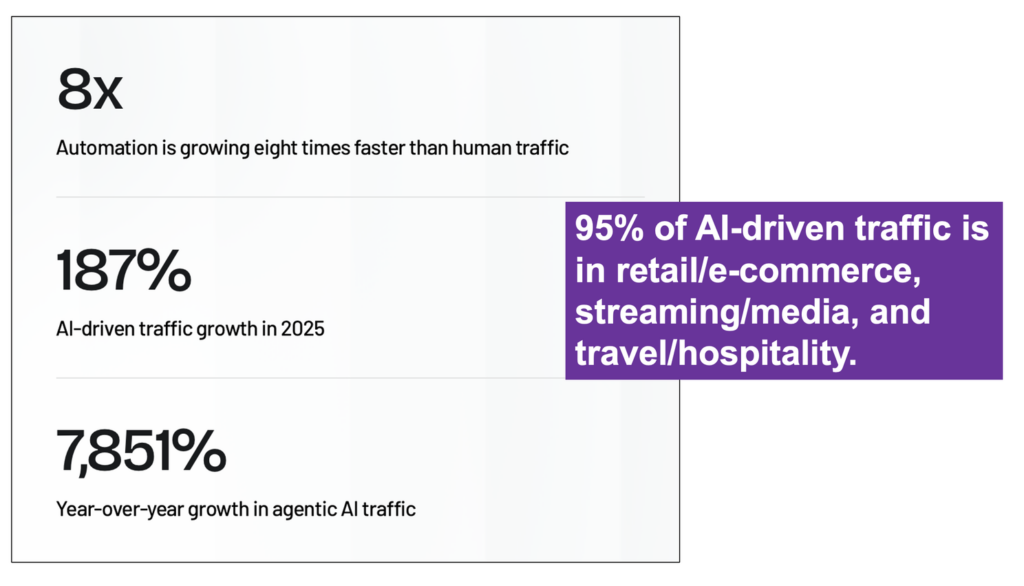
Source: HUMAN, “The 2026 State of AI Traffic & Cyberthreat Benchmark Report“
This is the shift from search engines to answer engines.
But the next phase is already emerging: action engines.
OpenAI describes ChatGPT agent as a system that can reason, research, navigate websites, fill out forms, work with files, connect to tools, and take actions on a user’s behalf. ChatGPT Atlas extends that idea into the browser, where users can ask ChatGPT to take action directly on the web.
That changes the game.
When a person asks an agent to find a product, compare providers, book a reservation, evaluate software, renew a subscription, or resolve a service issue, your website is no longer simply being visited. It is being interpreted. It is being judged. It may be acted upon without the human ever experiencing your carefully designed funnel.
The customer journey does not disappear. It becomes mediated. And if discovery, comparison, and conversion are increasingly mediated by AI, then brands must design for both the human and the machine. Not one or the other. Both.
That means your content must be understandable. Your data must be structured. Your policies must be clear. Your value must be legible. Your trust signals must be visible. Your experience must be actionable.
SEO is not dead. But SEO is no longer enough.
We now need to think in terms of AI search visibility, generative engine optimization, answer engine optimization, and agentic optimization. WP Engine’s DE{CODE} agenda reflected this shift directly, with tracks covering agent-ready architecture, structured data, semantic HTML, AI citation strategies, and agentic commerce.
The old equation was: Create content. Win search. Earn attention.
The new equation is: Create meaning. Earn trust. Become the source. Enable action.
The Website Becomes an Intelligent Business Platform
A website used to be a destination.
Then it became a channel.
Now it is becoming something more dynamic: an intelligent business platform.
That means your site is not just where people learn about you. It is where humans and agents understand what you stand for, what you offer, how credible you are, how to transact with you, how to resolve issues, and how to continue the relationship.
This requires a different mindset.
A site built for the intelligent web needs to be human-readable and machine-readable. It needs to be emotionally resonant and structurally clear. It needs story and schema. It needs brand and metadata. It needs originality and operational readiness.
This is where many organizations will get stuck. They will treat machine readability as a technical SEO project. They will add schema, update tags, chase citations, and drive links.
Important? Yes.
Sufficient? No.
The intelligent web is not just about being found by machines. It is about being trusted by machines because you are useful to people.
That is a very different bar.
AI Becomes the UI
One of the most important ideas from the keynote is also one of the simplest:
As AI mediates more interactions, the interface between your brand and your customer may not be your homepage, your app, your landing page, or your ad. It may be a summary. A recommendation. A comparison table. A voice response. A video. A purchase agent. A service agent. A synthetic answer built from signals across the web.
Content gets indexed.
Context provides framing.
Your brand gets chosen.
That means brand is no longer just what you say about yourself. Brand is what systems can understand, verify, summarize, and recommend about you. It is what you produce. What you enable. What you help someone accomplish. It is your usefulness made visible.
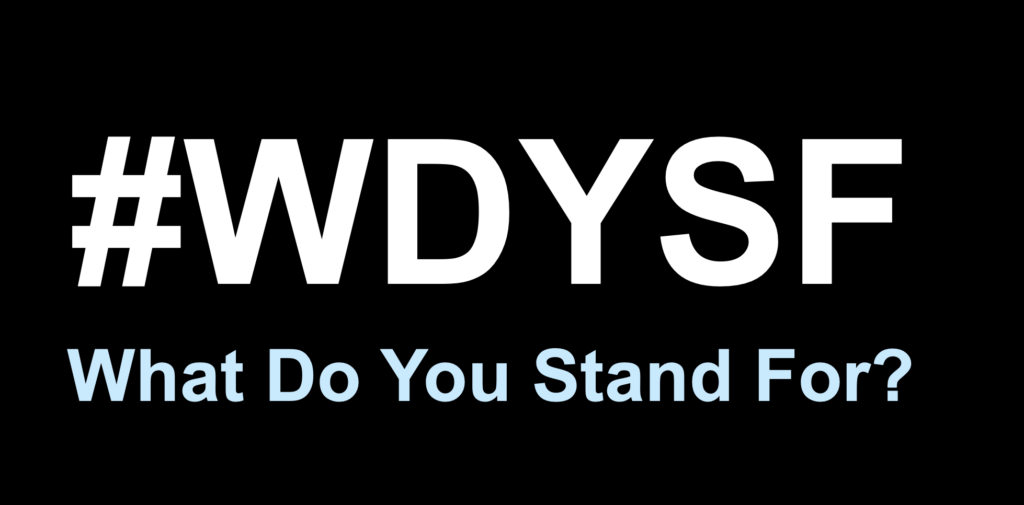
In the keynote, I asked the question I keep coming back to: #WDYSF
WDYSF: What Do You Stand For?
If AI systems are going to interpret, summarize, rank, recommend, and act based on what they understand about you, then ambiguity becomes expensive. Generic positioning becomes dangerous. Slop becomes self-sabotage. Your brand must become a signal strong enough for people and machines to recognize.
The intelligent web rewards clarity.
So, what do you stand for?
What do you make easier?
What do you make possible?
What do you help people become?
Source-Worthy Is the New Search-Worthy
In a world of infinite output, being searchable is not enough. You have to become source-worthy.
Source-worthy content is not content created to fill a slot. It is content created to be relied upon. It has perspective. Evidence. Utility. Originality. Context. It helps someone or something (ahem, AI agents) make a better decision.
AI systems need sources to synthesize from. Agents need signals to act upon. Humans need confidence to trust what they are seeing.
In the keynote, I encouraged leaders, marketers, agencies, creatives, publishers, eCommerce brands, and SMBs to stop trying to outpublish everyone. That is the wrong race. The goal is to out-clarify, out-serve, out-story, out-experience, out-community, and ultimately out-trust them.
That is such an important distinction.
The intelligent web does not need more content. It needs better answers.
It needs better experiences. It needs better signals. It needs more humanity.
The Rise of Agent-Ready Commerce
Commerce is about to become more agentic.
Today, we search, compare, click, browse, filter, read reviews, abandon carts, return later, and maybe convert. Tomorrow, agents will do more of that work for us. They will search across providers, compare options, evaluate constraints, check preferences, manage timing, apply policies, and potentially initiate transactions.
I shared an example in the keynote of using OpenAI’s Atlas browser to help pursue hard-to-get restaurant reservations in New York. The point was not restaurants. The point was delegation. I wanted an outcome. The agent helped with research, availability, waitlists, and next steps. But the desire, the context, the judgment, and the meaning were still human.
This is the future of commerce.
Humans will still want things. Agents will help fulfill those wants.
That means businesses need to design journeys that agents can understand and navigate without losing the emotional, experiential, and trust-building elements that make people choose one brand over another.
Agent-ready commerce is not just about transactions. It is about continuity. It is about service. It is about permissions, security, identity, policy, and trust. It is about knowing when an agent can act, when a human should be consulted, and how the experience should feel when the person re-enters the loop.
This is why the future of eCommerce is not just conversion optimization.
It is relationship architecture.
What Leaders Must Do Now
Leaders have a simple but difficult job in this moment: decide what kind of company they are becoming as discovery, comparison, and conversion become increasingly mediated by AI.
That means asking harder questions.
Are we using AI to automate yesterday’s assumptions, or to imagine tomorrow’s possibilities?
Are we creating more content, or more clarity
Are we optimizing for traffic, or designing for trust?
Are we making our business easier for agents to understand and act upon?
Are we building experiences people can feel and machines can verify?
The intelligent web is not an IT initiative. It is not a marketing initiative. It is not an agency initiative. It is a business reinvention initiative.
It belongs at the leadership table because it changes how customers discover you, how they evaluate you, how they buy from you, how they trust you, and how they come back.
What Marketers Must Do Now
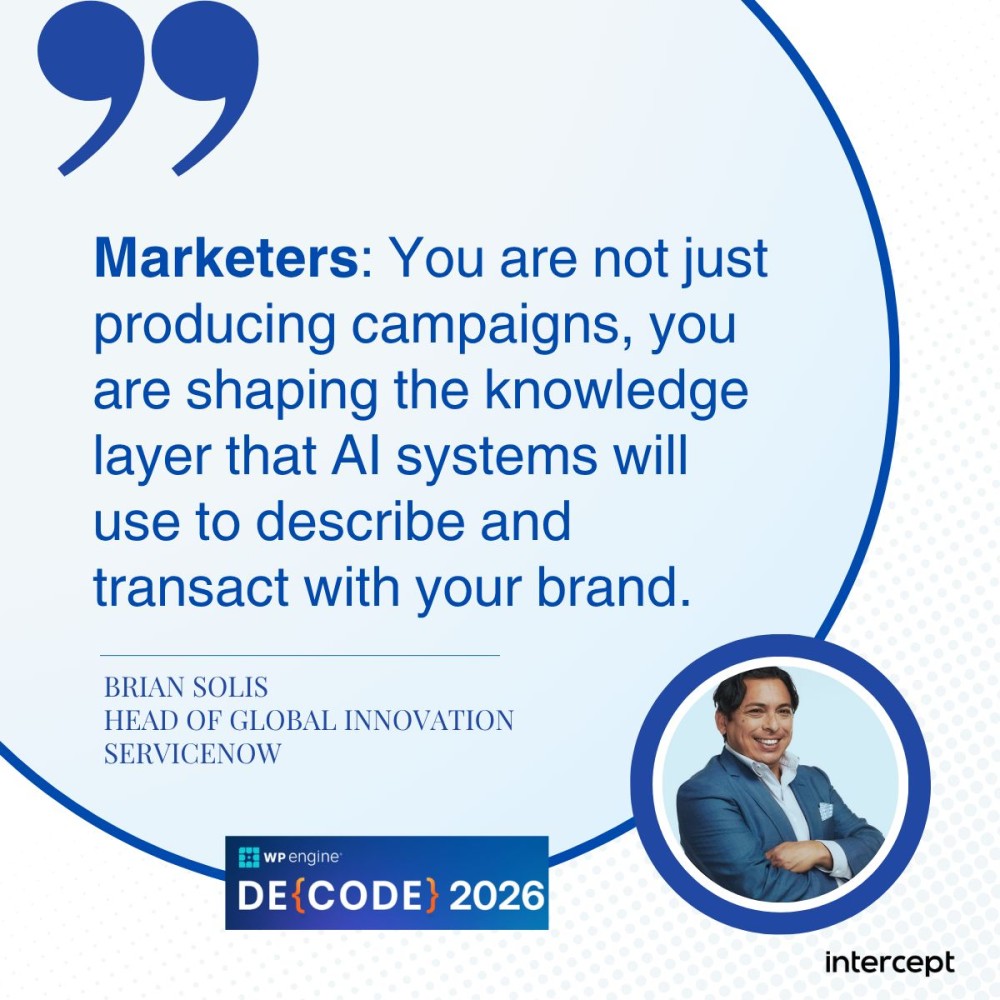
Marketers are not just producing campaigns anymore.
They are shaping a knowledge layer that AI systems will use to describe, compare, and transact with the brand. That means every asset becomes part of a larger system of meaning.
Your messaging has to be consistent. Your claims have to be supportable. Your expertise has to be findable. Your content has to help people take the next step. Your brand has to show up with clarity across text, audio, video, community, documentation, reviews, commerce, and service.
Marketing becomes less about pushing messages and more about designing moments of trust.
What Creatives Must Do Now
Creatives have an extraordinary opportunity.
AI can generate. But it cannot care.
It can mimic style. But it cannot originate from lived experience.
It can remix patterns. But it does not possess intuition, empathy, taste, or conviction.
That is the creative advantage.
In an era of synthetic abundance, originality becomes premium. Voice becomes premium. Experience design becomes premium. The ability to make someone feel something becomes premium.
Creatives should not compete with AI at the level of output. They should use AI to expand their range, accelerate exploration, test possibilities, and then bring the human magic that AI cannot manufacture.
The intelligent web needs more than information.
It needs imagination.
What Agencies Must Do Now
For agencies, this is a control-alt-delete moment.
The old model of building sites, producing content, running campaigns, and optimizing for search is being rewritten. Clients will still need those things, but they will need them in service of a larger mandate: becoming visible, credible, recommended, and actionable in an AI-mediated web.
That makes agencies more valuable, not less, if they evolve.
Agencies can become advisors of trust. Architects of agent-ready experiences. Designers of relevance. Builders of intelligent business platforms. Translators between brand, technology, data, content, commerce, and customer experience.
The best agencies will not sell more output.
They will sell better outcomes.
What SMBs Must Do Now
Small and mid-sized businesses should not try to outpublish bigger brands.
That is not the game.
The advantage for SMBs is closeness. Specificity. Community. Service. Story. Trust. The ability to be human in a web that is becoming increasingly synthetic.
Do not fall into the AI slop business.
Use AI to understand your customers better. Use it to answer real questions. Use it to improve service. Use it to make your expertise clearer. Use it to become easier to find, easier to trust, and easier to choose.
Bigger brands may have more content.
You can have more meaning.
No Matter Who You Are, Just Be the Signal
The intelligent web is already messy.
AI-generated writing is exploding. Whether one treats that as an exact measurement or a directional signal, the implication is impossible to ignore: when production becomes infinite, discernment becomes priceless.
We are also seeing the same pattern in software. Fast Company reported that Apple’s App Store saw 235,800 new apps in the first quarter of 2026, up 84% from the same period the prior year, as AI tools made app creation faster and easier. This is what happens when creation gets democratized before quality systems catch up.
More becomes meaningless.
Speed becomes slop.
Volume becomes noise.
And that is why this moment belongs to the signal makers.
Be the source. Be the standard. Be the reprieve. Be the thing someone finds and feels: finally, this is what I was looking for.
The Architects of the Intelligent Web
The intelligent web will not build itself.
Or, more accurately, it will build itself badly if we leave it to automation alone.
This is our moment to shape it with purpose, imagination, empathy, and responsibility. To design for humans and agents. To build for discovery and action. To create source-worthy content. To make sites machine-readable and machine-actionable. To protect people, data, identity, and trust. To turn brand into a signal that stands out in a sea of sameness.
That is why I hope you watch the full keynote.
Not because it has all the answers. It does not. None of us do yet.
But it does frame the questions every leader, marketer, creative, developer, agency, publisher, eCommerce company, and SMB needs to ask now.
The web is becoming intelligent.
The future is becoming agentic.
And we are not bystanders.
We are the architects of the intelligent web.
So let’s build something worthy of the humans it serves.
Infinite ∞ | Mindshift | Subscribe | Keynote Speaker
Leave a Reply