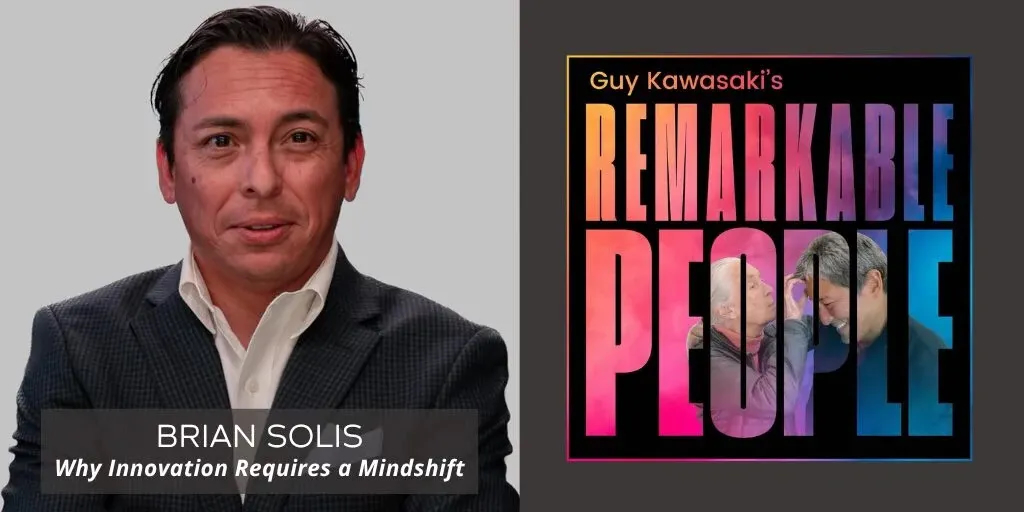
What a gift to spend time with an old friend (meaning we’ve been friends for a long time. He’s not old!)
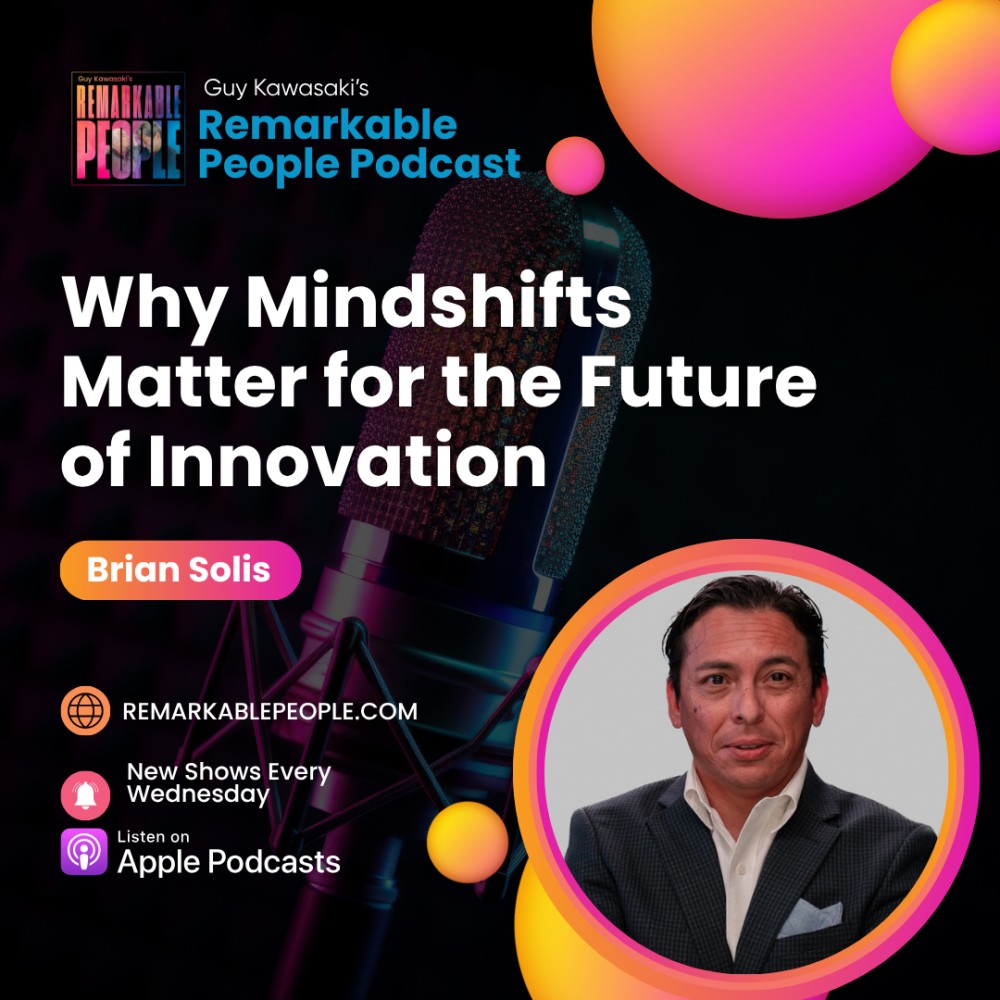
My latest conversation with Guy Kawasaki on his show, Remarkable People, reminded me that the future is never just a technology story. It is a human one. AI may change how we work, compete, and create, but it also exposes something deeper: whether we are using new tools to do yesterday more efficiently, or to imagine something genuinely better. This exchange is an invitation to think differently about leadership, transformation, storytelling, and the kind of future we are actually choosing to build. It’s a choice to shift one’s mindset.
Guy and I covered a lot of ground, from old-school Silicon Valley to AI and the future of leadership, but these are the headlines I hope inspire you to listen/watch the conversation (it’s a rare moment for the two of us to be together!)
It’s really about the difference between reacting to change and building the future before it happens.
Listen (Spotify). Watch (Youtube).
I think the last time we were on camera together was 15 years ago!
TL;DR
A Mindshift is not just open-mindedness. It’s the discipline of looking ahead and shaping the future instead of reacting to it.
Most leaders are trapped in the daily swirl of iteration, not innovation.Emails, meetings, urgency, and noise keep people busy, but not necessarily aligned with where they actually want to go.
Self-awareness is the real starting point for transformation. Most people think they’re self-aware. Very few actually are. And those who lack self-awareness don’t know they do!
AI exposes the difference between doing yesterday better and inventing tomorrow. That becomes the core tension in the conversation.
Automation and augmentation are not the same thing. Automation improves existing work. Augmentation unlocks work, outcomes, and possibilities that did not exist before. And “you can’t automate your way to innovation!”
Linear growth is not enough anymore. The bigger opportunity is exponential or “logarithmic” thinking, where leaders stop optimizing the past and start designing new value.
Positive disruption is the goal. Don’t wait to be disrupted. Invest in disrupting yourself first.
Storytelling is strategy. The hero in the story is not the company, product, or executive. The hero is the person you’re trying to help and the future they can achieve with you.
Movements are built, not wished into existence. Complaining is easy. Making excuses is commonplace. Manifesting a better future takes vision, action, and belief.
Culture determines whether mindshift is possible. In some organizations, possibility wins. In others, perpetuation wins. Culture is the shared beliefs, mindsets, mental models, and values that inform the behaviors that become the people operating system of the business. “People like us, do things like this,” as Seth Godin says.
Psychological safety matters. People won’t challenge assumptions or imagine new futures if they fear punishment or resentment for doing so. You can’t stigmatize asking questions or trying something new and expect different results.
The critical skills for the AI era are still deeply human. Curiosity, imagination, empathy, critical thinking, and openness become more valuable, not less. AI cannot feel empathy. AI cannot exercise judgement. AI does not possess intuition.
AI should be treated as a cognitive exoskeleton. The question is not only what it can automate, but what it can help humans do that was previously impossible.
The real subtext is bigger than the book. In the end, we’re just two friends, industry veterans, comparing notes on what still matters in leadership, innovation, optimism, and reinvention after decades in Silicon Valley.
This is your invitation to listen to or watch a rare moment between two geeks.
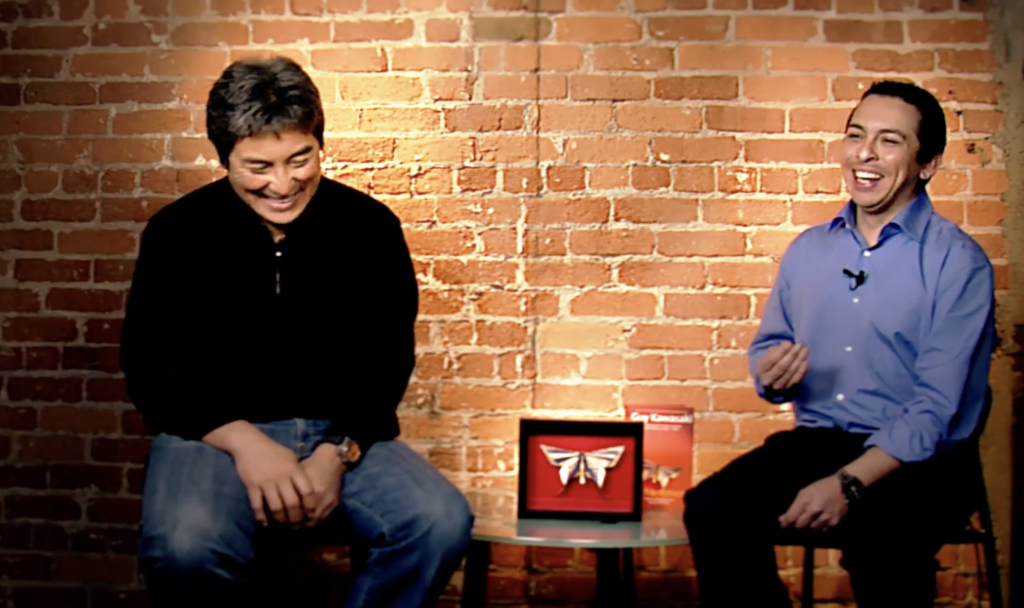
Our Relationship Goes Back to a Time Before Web 1.0
Guy and I go way back…back to the 1990s, back to a different Silicon Valley, back to a time when the future felt more handcrafted than automated, when belief systems were built in coffee shops, garages, in hallways and lobbies at conferences, in startup offices, and in long conversations about what technology could become if people were bold enough to imagine it differently.
That’s part of what made this conversation so special. It took me back to the early days of Silicon Valley.
The theme of our conversation was about my book, Mindshift. But more so, it was two old friends (as in long-time, not age!), two longtime students of innovation, two champions for change, comparing notes after decades of watching industries evolve, leaders rise and fall, technologies overpromise and underdeliver, and every so often, something genuinely world-changing emerge from the noise.
Recognizing Guy Kawasaki
For those who know Guy’s name but may not know the full scope of his legacy, he’s one of the people who helped define modern Silicon Valley storytelling. He was Apple’s chief evangelist and helped write the playbook for what technology evangelism would become. He later co-founded Garage.com, which evolved into Garage Technology Ventures, and has spent decades at the intersection of entrepreneurship, venture thinking, product conviction, and storytelling. Today, he’s chief evangelist at Canva and the creator of the Remarkable People podcast.
So, when Guy asks questions about innovation, he’s asking as someone who has lived through multiple eras of technological reinvention and helped shape how many of us learned to talk about change in the first place.
He is a truly remarkable person.
The Thread Beneath the Conversation
On the surface, we talked about Mindshift. We talked about what it means to stop reacting to change and start shaping the future. We talked about the need to ask better questions, not just work harder on old answers. We talked about the difference between automation and augmentation in AI, and why too many organizations are still using breakthrough technologies to do yesterday faster and efficiently instead of inventing tomorrow on purpose.
What we really explored though, is what happens when optimism enters the room. If it’s one thing you can say about my body of work, every vision, every report, every scenario, every prediction was rooted in optimism…not doom.
Both Guy and I came of age professionally in a version of Silicon Valley that believed deeply in possibility. It’s certainly not what we’re hearing today for the most part. But that belief of optimism and possibility still matters…maybe more than ever.
Time teaches you that innovation alone is not enough. Vision is not enough. Intelligence is not enough. You also need self-awareness. You need courage. You need discernment. You need the discipline to separate momentum from meaning.
That’s part of what made this exchange feel so personal to me. It wasn’t just about trends, tech, or futurism. It was about the human work required to navigate them.
Key Takeaways
You’re going to hear more than a conversation about a book.
1) You’ll hear two people wrestling with the same question from different angles: How do you build a future you actually want to live in?
2) Why self-awareness is the starting point for any real transformation. Because if you don’t understand where your time, energy, assumptions, and attention are going, you can’t meaningfully change direction.
3) Why so much business transformation stalls. It’s usually because leaders keep trying to fit profoundly new capabilities into old mental models. AI is not a strategy.
4) Automation matters, but augmentation matters more. One improves the familiar. The other unlocks what was previously impossible. One helps you optimize the past. The other helps you invent a different future.
5) Storytelling is not a soft skill no is it simply a way of telling stories. It’s one of the most powerful leadership tools we have. People do not move simply because the data is there. They move when they can see themselves in the story of what comes next. One of my favorite parts of the conversation was exploring the idea that the hero of the story is not the company, not the product, not the leader. The hero is the person whose life, work, or future changes because they chose to believe in a new possibility.
6) We hope you’ll experience the genuine warmth, candor, and shorthand that only comes from experience and living through and shaping Silicon Valley history and lore. The stories between the stories. The laughter that comes from having been around long enough to know how much of innovation is conviction, how much is timing, and how much is stumbling into the future before you fully understand what it is.
There’s something powerful about hearing two old friends and industry lifers talk honestly about what we got right, what we got wrong, what still matters, and what leadership requires now. Truthfully.
In a moment when so much conversation about AI, innovation, and transformation feels manufactured, overproduced, doomsday rhetoric, or agenda-driven, this one is sincerely human. Reflective. Curious. Real. We’re just two old friends who’ve spent decades trying to build the future.
And maybe that’s the point.
The future doesn’t just belong to the loudest people in the room. It belongs to the ones who can still learn, still imagine, still challenge themselves, and still invite others into building something better.
This is Your Invitation To Join Us
Please listen or watch and let us know what you think and feel after…
Read Mindshift | Subscribe to my Substack | Consider me as your next speaker

Leave a Reply