Maybe people aren’t rejecting AI as much as they’re rejecting a future that’s being imposed on them.
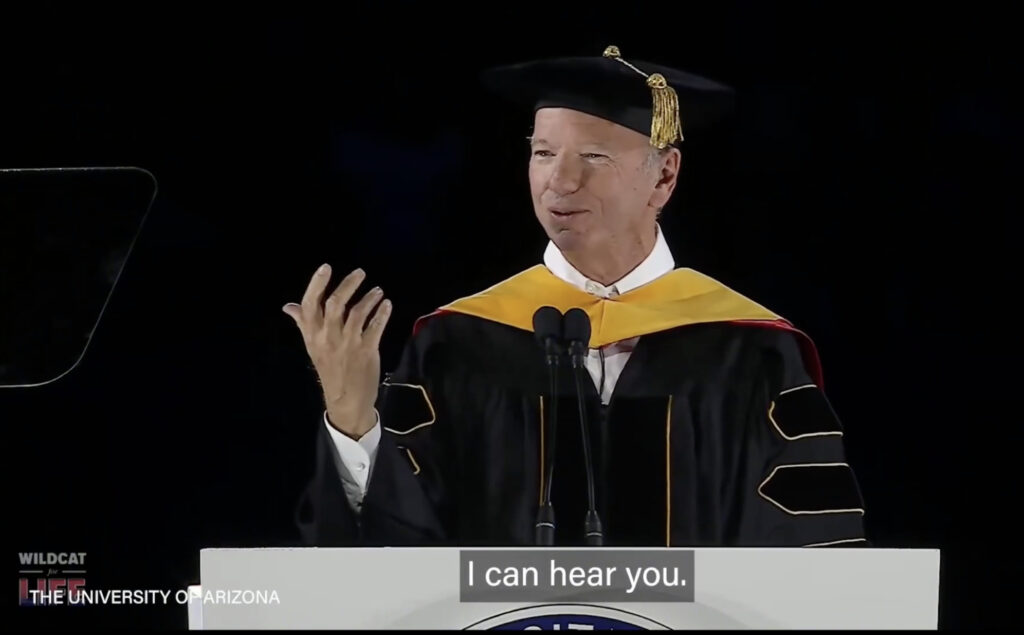
When students boo the mention of AI at commencement speeches, it’s a signal of a societal undercurrent quietly, and eventually, loudly, pushing back against a perceived threat. And it’s not the technology that’s a threat as much as how AI, or at least the AI narrative, is wielded by doomer CEOs of frontier AI companies (AI will take jobs!) and the decisions executives make in the workplace for efficiency and profitability gains (over 100,000 employees were impacted by AI-driven layoffs in 2025 and nearly 80,000 employees have already been impacted in 2026!) 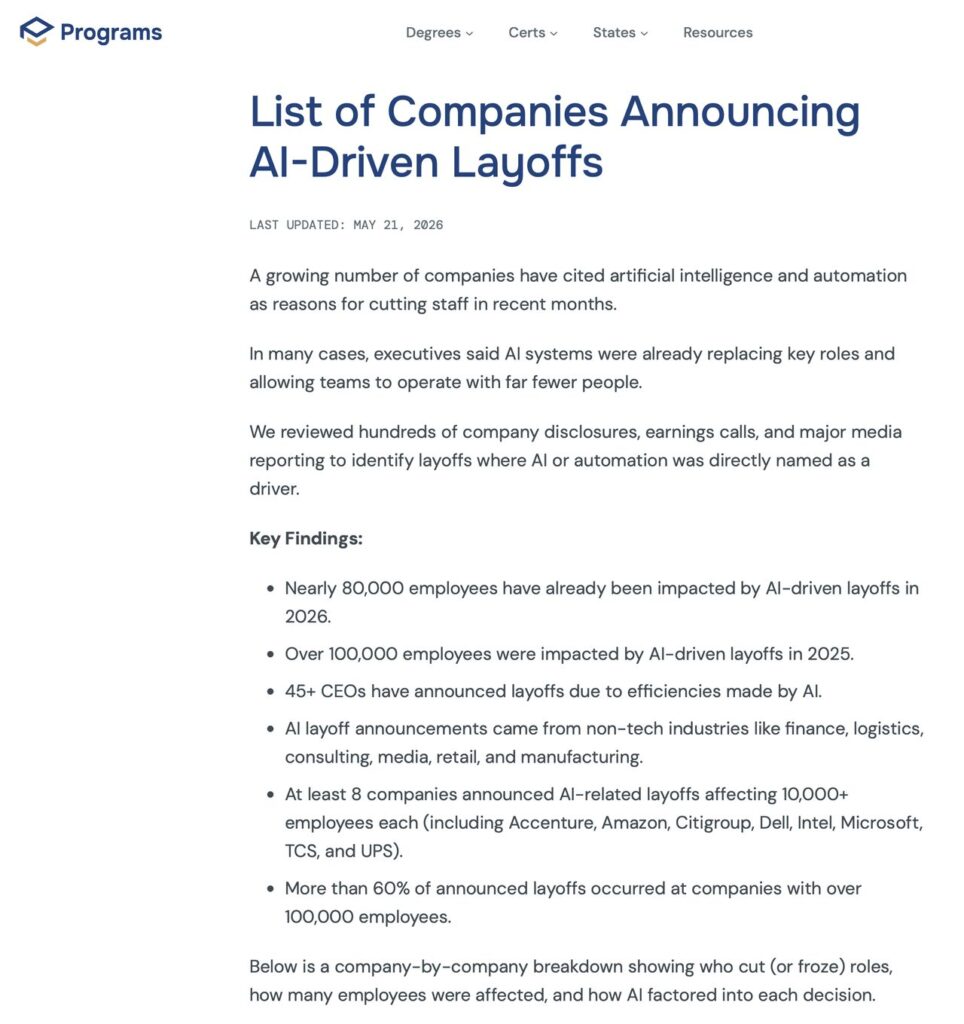
So it should come as no surprise that a new NBC News survey put a number to the societal signal stirring the public booing of AI. As Amrith Ramkumar worded it in the WSJ, “The only thing growing faster than the artificial-intelligence industry may be Americans’ negative feelings about it.”
In a survey of 1,000 registered U.S. voters, NBC News found that only 5% were very positive about AI, while 22% were very negative. Another 21% were somewhat positive, 24% somewhat negative, and 27% neutral.
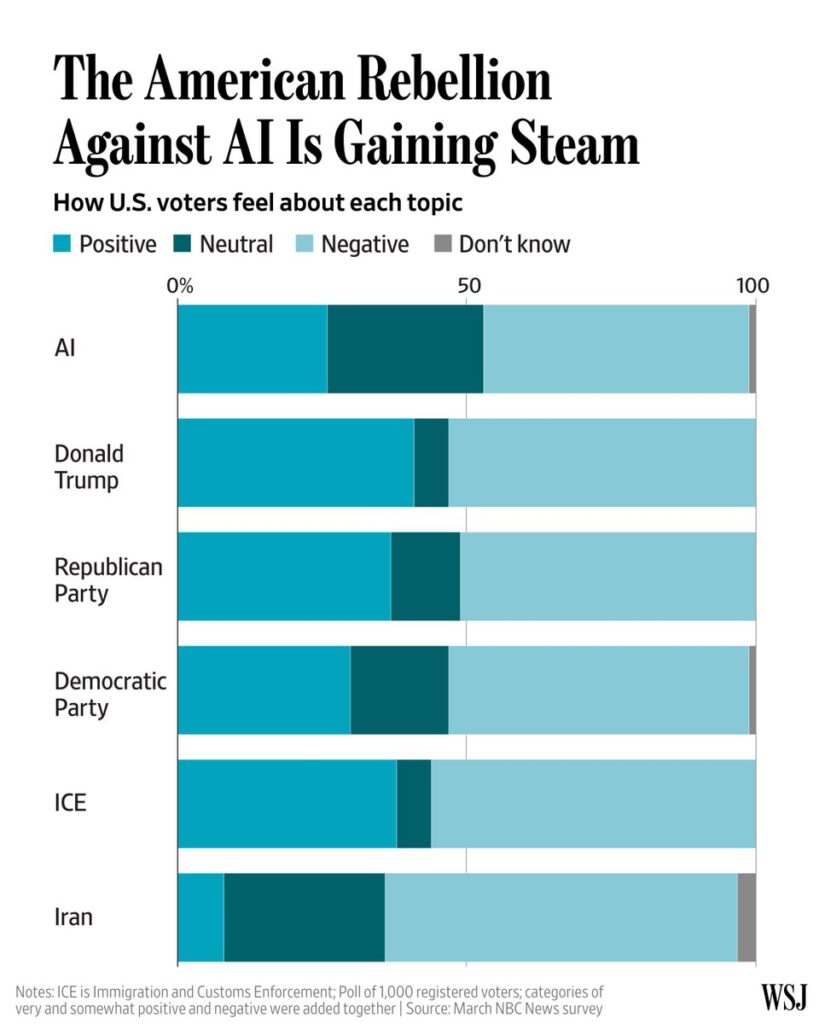
In the very least, AI has a branding problem. And this is the moment to do something about it. The survey shows that AI has a large persuadable middle, but the emotional center of gravity is negative. Negative sentiment is almost 2x positive sentiment. The comparative finding is striking: AI’s net favorability, -20, is worse than Trump, the Republican Party, and ICE, and only slightly better than the Democratic Party. Iran is the clear outlier at -53.
A Quinnipiac poll released later found 80% of Americans concerned about AI, only 21% saying they trust AI-generated information most or almost all of the time, 70% expecting AI to reduce job opportunities, 76% saying businesses are not transparent enough about AI, 74% saying government is not doing enough to regulate it, and 65% opposing an AI data center in their own community.
People also feel that AI is also moving too fast. A poll conducted in May 2026 by The Economist and YouGov found that Across every age group, a clear majority believes AI is moving too fast. This is not just an older-generation concern. Even among 18–29-year-olds, roughly two-thirds feel the pace is too rapid.
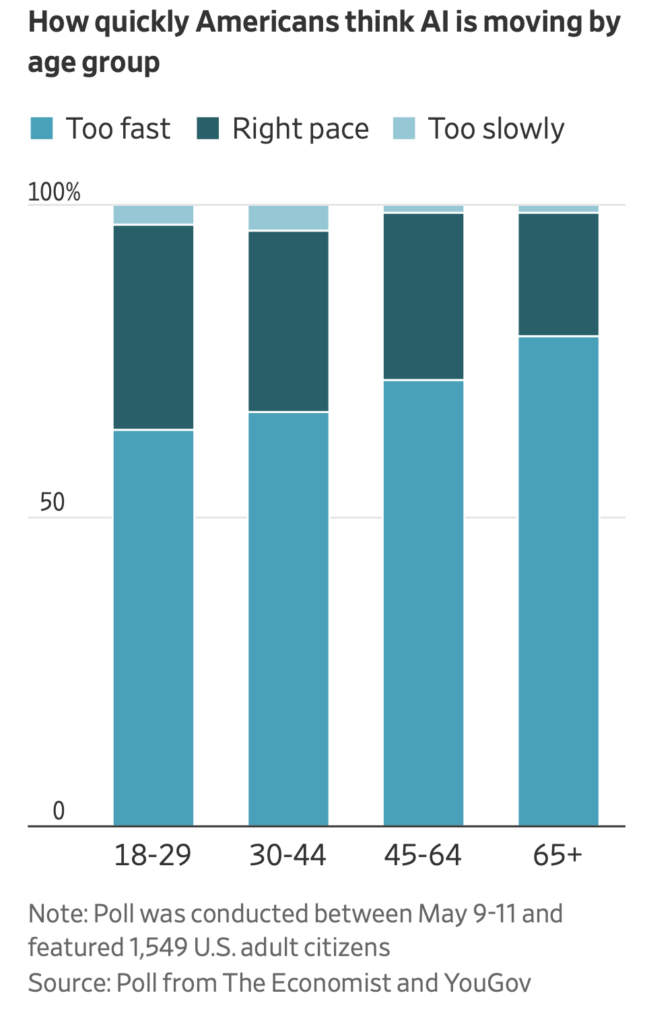
The concern intensifies with age. The 65+ group shows the strongest discomfort, with nearly 8 in 10 saying AI is moving too fast and fewer than 1 in 5 saying it is moving at the right pace.
Very few Americans think AI is moving too slowly. That is important because, in addition to booing, the public is basically saying,“Hey! Slow down! Help us understand, protect us, and give us more control.”
The rebellion against AI isn’t really about AI.
And that’s really what this is about. It’s about trust and transparency. It’s also about psychological safety and empowerment.
Said another way, the revolt against AI isn’t just fear of technology. It’s fear of losing agency.
People are asking, “Will AI take my job?”
They’re also asking:
“Who decides?”
“Who benefits?”
“What happens to my data, my work, my community, my future?”
“And what power do I have in the process?”
That means human agency and trust are now part of the AI stack.
The AI stack can no longer be defined only by chips, models, data, compute, apps, and interfaces.
It also includes:
Consent. Do people understand how AI affects them?
Control. Can people opt in, opt out, appeal, override, or redirect outcomes?
Transparency. Can people see how decisions are made?
Accountability. Who is responsible when AI causes harm?
Participation. Were workers, parents, students, artists, communities, and citizens included before systems were deployed?
Shared value. Does AI make people stronger, safer, more capable, and more prosperous, or merely more efficient for someone else?
It’s About Agency
People are rejecting a future that feels imposed on them.
AI is moving faster than institutions, communities, and workers can process. The result is anxiety and loss of control. When people feel they have no voice in the systems reshaping their lives, resistance becomes rational. Booing is just a symptom for the percolating undercurrent.
This is the real wake-up call for AI leaders, and leaders in politics, at work, on Wall Street and Sand Hill, in schools and universities…leaders everywhere.
Human agency and trust are now part of the AI stack.
The future of AI will not be accepted through persuasion or force. It will be earned through trust.
The companies that win will help people feel more powerful because of AI.
Read Mindshift | Subscribe to my Substack | Consider me as your next speaker
Leave a Reply