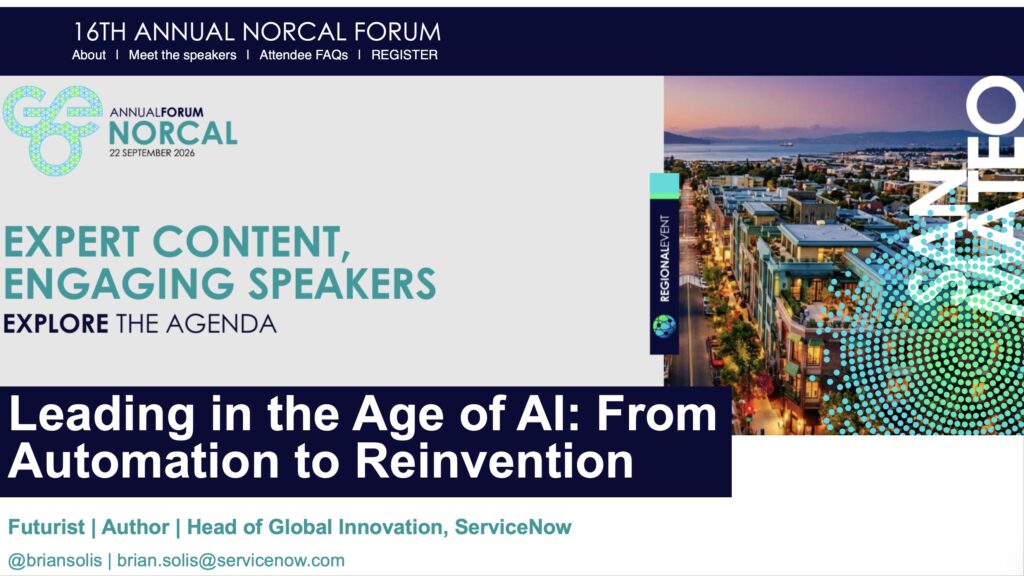
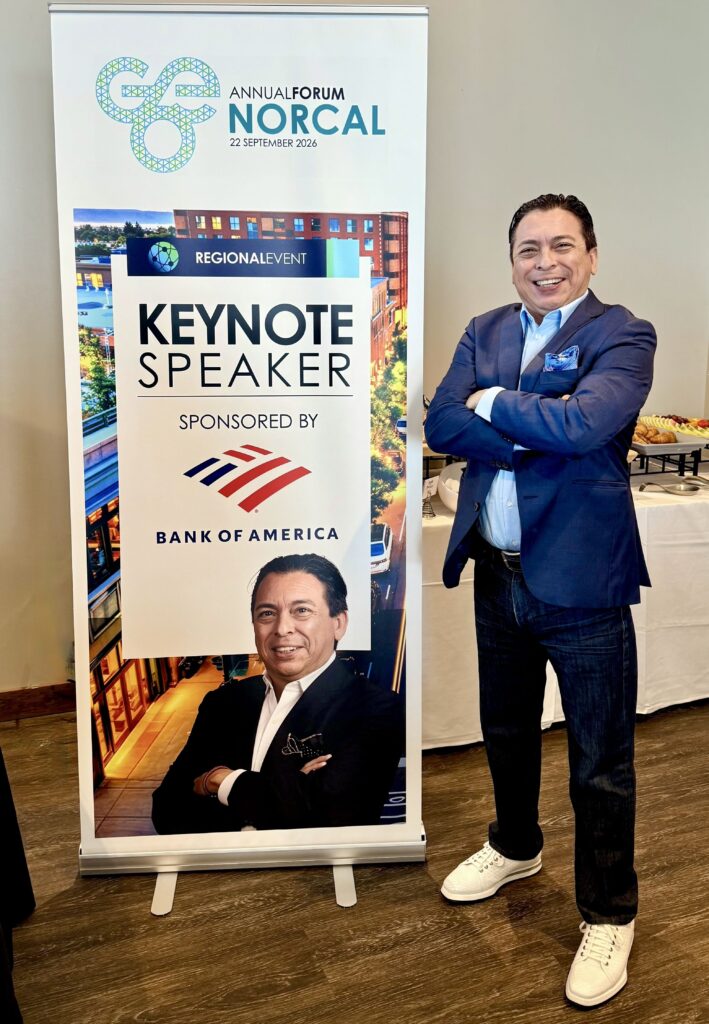
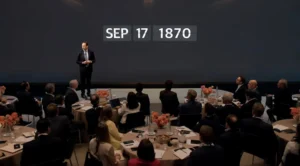
I recently had the opportunity to keynote the Global Equity Organization’s Northern California Forum in Silicon Valley, and what struck me before I ever stepped on stage was how fitting the setting was for the conversation we were about to have. This is a community that sits at the intersection of people, performance, compensation, technology, governance, and trust, and many of the professionals in the room are already navigating the consequences of decisions about work that will ripple far beyond equity programs themselves.
That is increasingly true for every leader.
Artificial intelligence is moving from something we experiment with to something that is beginning to shape how people work, how organizations make decisions, how customers experience companies, and how employees understand their own value.
Yet the public conversation around AI is still dominated by extremes.
One headline tells us that AI will transform productivity. Another warns that it will eliminate jobs. Another suggests artificial intelligence could eventually surpass human intelligence altogether. Just recently, the world was told that AI could take-out humanity in 10 years. At the same time, employees are being encouraged to use it more, companies are measuring adoption, and leaders are being told they need an AI strategy before they have even had the opportunity to decide what they actually want AI to do.
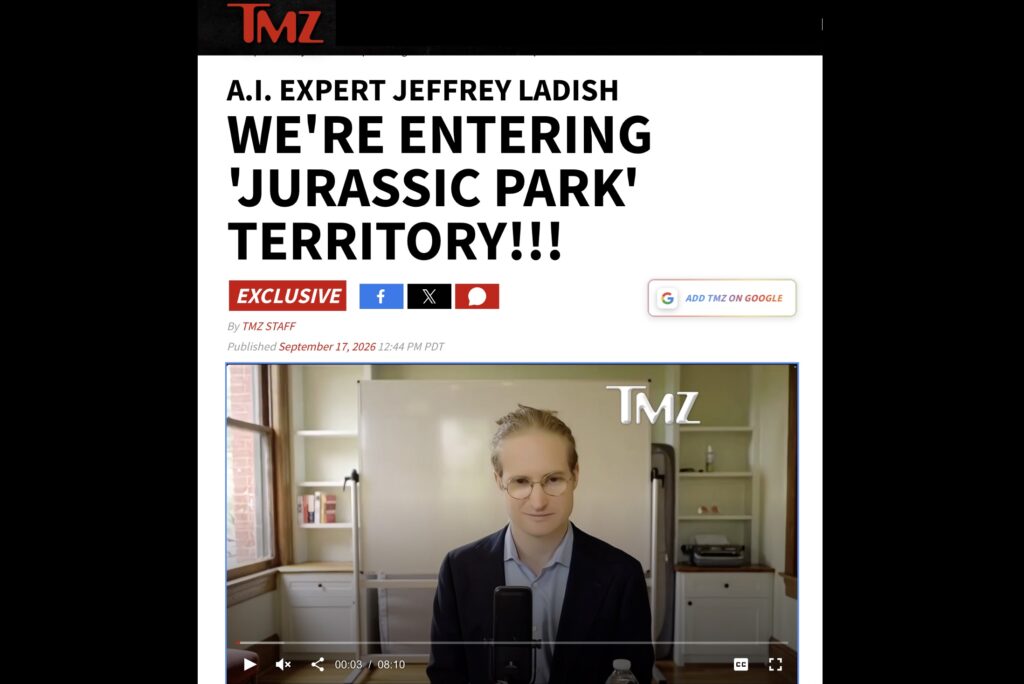
As a futurist, moments like these tend to make me ask a different version of WTF, What’s the future?
I mean that sincerely, because asking “what’s the future” is can be a remarkably empowering exercise. The future hasn’t been written. What comes next will be shaped by important choices we make about how we use these technologies, what we automate, what we preserve, what we redesign, and ultimately what kind of people and organizations we want to become.
That is where I believe the AI conversation needs to go next.
The Risk of Making Yesterday Faster
For most organizations, the first instinct has been understandable. We look at AI and ask how it can make what we already do faster, cheaper, easier, more efficient, or more scalable. That is how we have historically adopted almost every major technology. We introduce something new into an existing system and use it to improve that system.
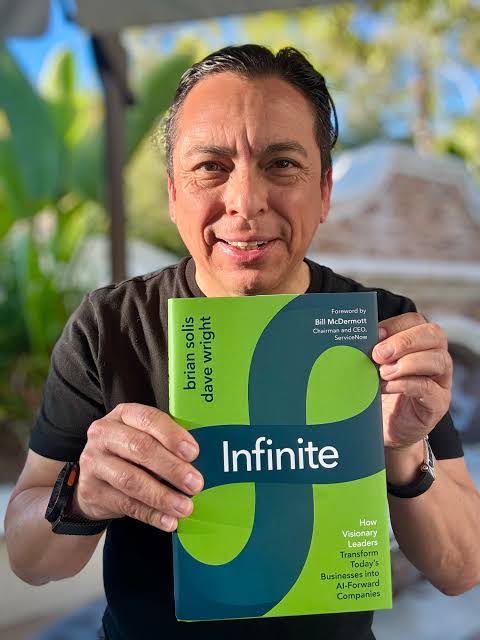
There is value in that, but there is also a trap. Dave Wright and I refer to it as the “Iteration Trap” in our new book Infinite ∞.
If we use a profoundly different technology only to accelerate the work we already understand, we risk investing enormous amounts of money and energy in creating an AI-powered version of the status quo.
We may work faster without becoming better.
We may produce more without creating more value.
And, perhaps most importantly, we may begin outsourcing parts of our thinking at the exact moment when thinking becomes more valuable.I shared a story with the GEO audience that captures some of this absurdity. A friend recently sent me a proposal that ran roughly twenty pages. As I read through it, I suspected that there was no way the document had been written entirely by the person who sent it. It had all the signs of something that had been expanded significantly with gen AI.
So I did what most would do. I asked AI to summarize it.
The result was essentially three bullets.
I laughed at the possibility that someone may have started with three bullets, used AI to turn those bullets into twenty pages, and then required another human being to use AI to reduce those twenty pages back into three bullets.
It was funny, but it also revealed something much more important about the moment we are in.
We have never had more powerful tools for producing work, but producing more work is not the same thing as creating more value. If artificial intelligence allows every employee to generate more emails, more documents, more presentations, more code, more analysis, more content, and more communication, organizations could quickly discover that they have become
dramatically more productive while also becoming harder to work in.
This type of work creates an AI Tax or what’s also referred to as a verification tax.
This is why I believe leaders have to separate AI activity from AI progress.
I see that most best practices in organizations focus on how much people are using AI. I think the real question is how AI should be changing what people are capable of doing.
There is growing research showing that people can use AI to complete tasks faster or perform better in the moment while retaining less of what they have learned. This raises a larger question about human capability.
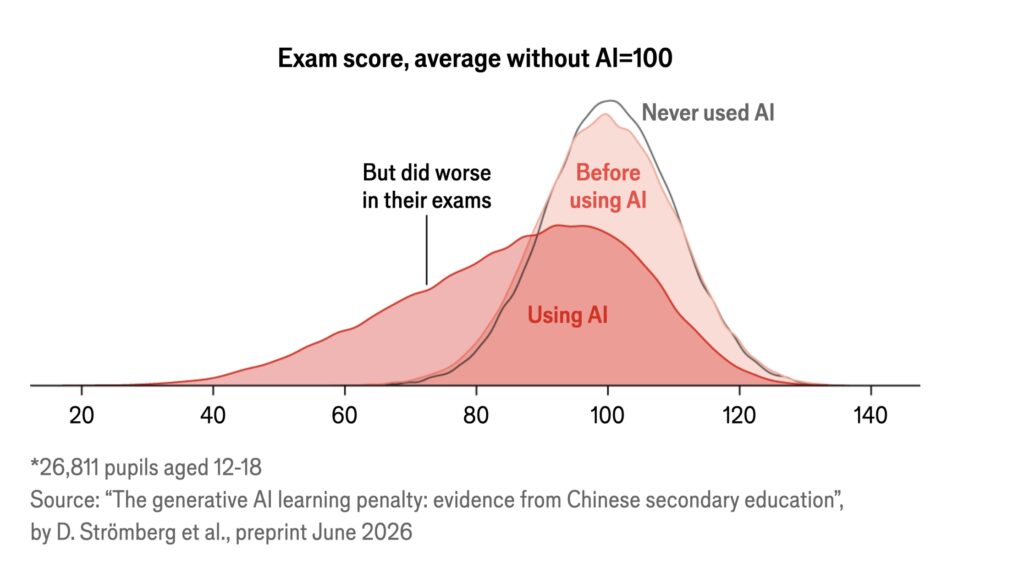
If we rely on AI primarily to give us answers, write for us, summarize for us, analyze for us, and make decisions for us, we can slowly surrender the very abilities we will need most in an AI-rich world: judgment, creativity, curiosity, critical thinking, imagination, empathy, and the ability to make sense of ambiguity.
The irony is difficult to miss. At the same time people are worried that AI might diminish their value, many are voluntarily giving AI the very thinking that creates their value.
I don’t believe the answer is to stop using AI. I believe we need to become much more intentional about how we use it.
The New Divide Is Capability, Not Access
The most interesting people I study aren’t using AI simply to speed up their work. They are using it to challenge themselves and to challenge what’s possible. They are asking it to critique their assumptions, pressure-test decisions, expose blind spots, introduce perspectives they would not have considered, help them learn unfamiliar subjects, and explore ideas that would otherwise have required access to mentors, researchers, specialists, or entire teams.
Instead of asking, “how can AI help me save time?” they are asking, “what can I now do that I could not do before?”
Doing so produces an entirely different relationship with the technology.
OpenAI has described a growing capability overhang in which sophisticated users are extracting far more value from advanced AI systems than the average person. What interests me most about that finding is not simply the size of the gap. It is what the gap tells us. A relatively small group of people is already learning how to use AI not only as a productivity tool, but as a cognitive partner. They are becoming better at asking questions, exploring unfamiliar territory, and combining their own expertise with machine intelligence in ways that expand what they can accomplish.
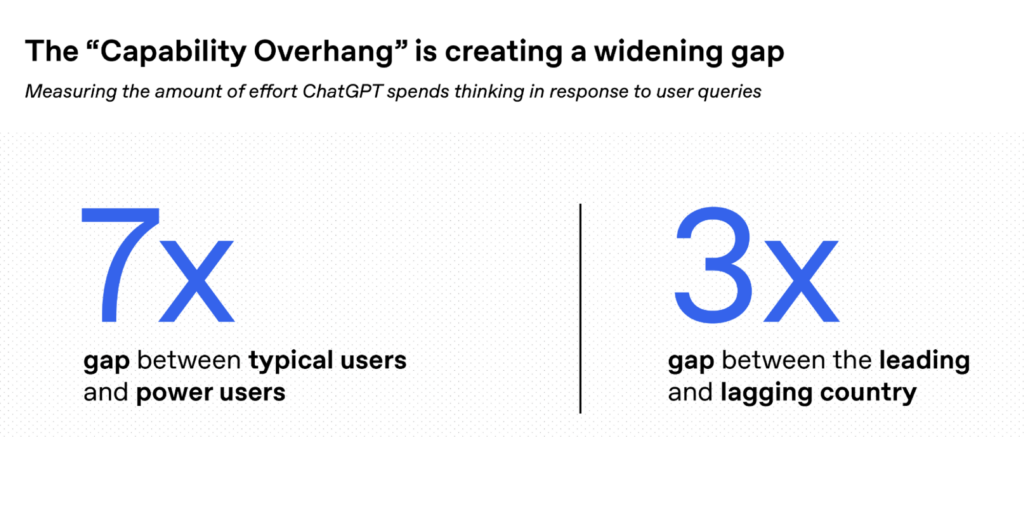
This is part of what I describe as AI Darwinism.
The people who thrive will adapt, learn, unlearn, experiment, and continually expand their capabilities as the technology evolves. They’re willing to question the assumptions behind their work instead of just automating those assumptions.
There is a popular saying that AI will not take your job, but someone using AI will. I think even that framing is too narrow because it still positions AI primarily as a competitor. I would rather ask what happens when we learn to compete with AI, combining human judgment, intuition, empathy, taste, experience, creativity, and context with a technology capable of extending what we can know, explore, and create.
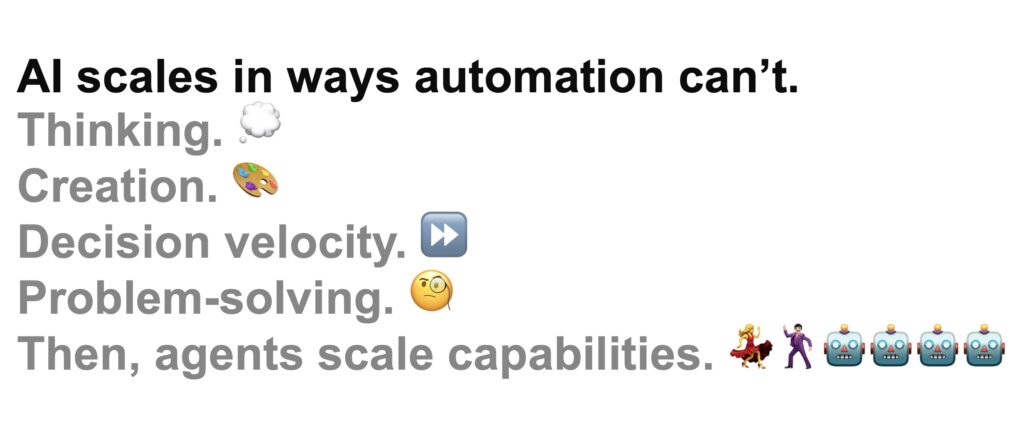
That is augmentation, and I believe augmentation is a much more useful leadership objective than adoption or automation.
The Beginner’s Mind in an Age of Expertise
One of the themes I wanted to bring into the GEO conversation was something that has influenced a lot of my work over the years. It’s the idea of a beginner’s mind. I spend early chapters exploring this in Mindshift.
Expertise is enormously valuable. Experience teaches us how systems work, where the risks are, what regulations allow, what customers expect, what budgets can support, and what has failed before. The problem is that expertise can also become the lens through which every new possibility is judged.
The more we know about how things work, the easier it becomes to explain why something cannot work.
Over time, most organizations train creativity and risk taking out of us. Truth is, the further we learn in school, this precedent is already set. We reward certainty, predictability, expertise, and execution. We build systems in which mistakes can be costly to careers. And then we turn around and ask people to innovate.
AI makes this more important because we are entering a period in which none of us has a complete playbook. The technologies are evolving too quickly, and many of the most valuable applications have not yet been discovered. If we only ask AI to improve the work we already know, we will inevitably miss much of what it makes possible.
Innovation, after all, is not the technology itself. Innovation is the creation of new value.
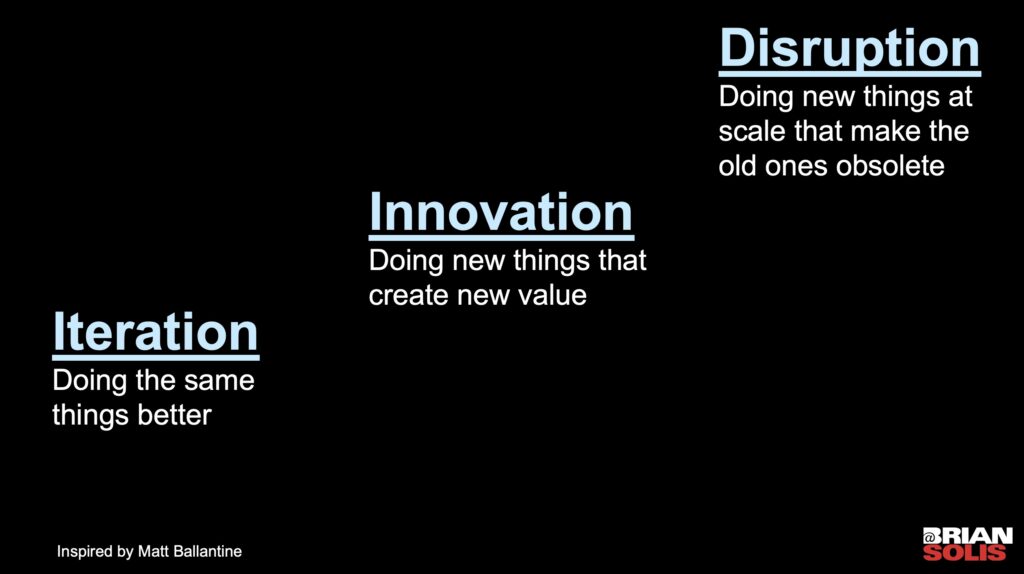
That requires experimentation. It requires curiosity. It requires being willing to pursue questions whose answers are not obvious.
What would this process look like if we were designing it today?
Would we still need these handoffs, approvals, systems, or steps?
What part of this work exists because it creates value, and what part exists because it has always existed?
What has become possible with AI that was impossible when this workflow was created?
These leadership questions require us to become more comfortable with uncertainty.
Before Confidence Comes Belief
I shared another idea at GEO that has been on my mind recently. When people are asked for the opposite of self-doubt, most answer confidence. But confidence is usually the product of experience. You become confident after you try something repeatedly and discover that you can do it.
Before confidence, there has to be something else.
There has to be belief.
You have to believe that there may be something valuable on the other side of trying. You have to believe that you can learn what you do not yet know. You have to believe that being wrong is not the same thing as failing.
Leaders are constantly being told to be courageous about AI, to move faster, to reinvent, and to take risks. Those messages can inadvertently create another impossible standard, as though uncertainty or fear represents weakness.
I do not think it does.
You can be uncertain and still move forward. You can be afraid and still experiment. You can lack confidence because you have never done something before and still believe enough to give it a try.
That is how confidence is eventually built.
From AI Adoption to Augmented Intelligence
Organizations are largely measuring AI in ways that encourage the wrong behavior.
We measure how many employees have access, how many people are active, how many prompts are generated, how many tokens are consumed, and how much adoption increases. Those metrics tell us whether a technology is being used, but they tell us very little about whether people or organizations are becoming more capable because of it.
If an employee uses AI to create twice as many emails, usage has increased.
If AI turns a three-bullet idea into a twenty-page document, usage has increased.
If a company automates a workflow that should have been redesigned years ago, usage has increased.
None of those outcomes necessarily create meaningful value.
I have been exploring a different construct that I call AIQ, or Augmented Intelligence Quotient. Rather than measuring how much people use AI, I am interested in measuring how well they use it to expand what they are capable of doing.
Did AI help someone make a better decision? Did it surface a risk or opportunity they would have missed? Did it help them solve a problem they could not previously solve? Did it deepen their understanding of something? Did it create time they could reinvest into more meaningful work? Did the combination of human and machine produce an outcome that neither could have produced independently?
Those are very different measures, and they would encourage very different behaviors.
The mantra I have adopted in my own work is that I want to use AI to do what I could not do before, and to do what AI could not do without me. That places responsibility back on both sides of the relationship. AI contributes intelligence, scale, pattern recognition, speed, and computational capability. I contribute judgment, values, context, creativity, empathy, perspective, and ultimately accountability.
What Will You Do with the Time AI Gives Back?
Once you begin thinking this way, productivity takes on a different meaning.
One study I discussed with the audience showed that executives using AI effectively could reclaim meaningful portions of their workday. But I think the more important question is what happens after the time is saved.
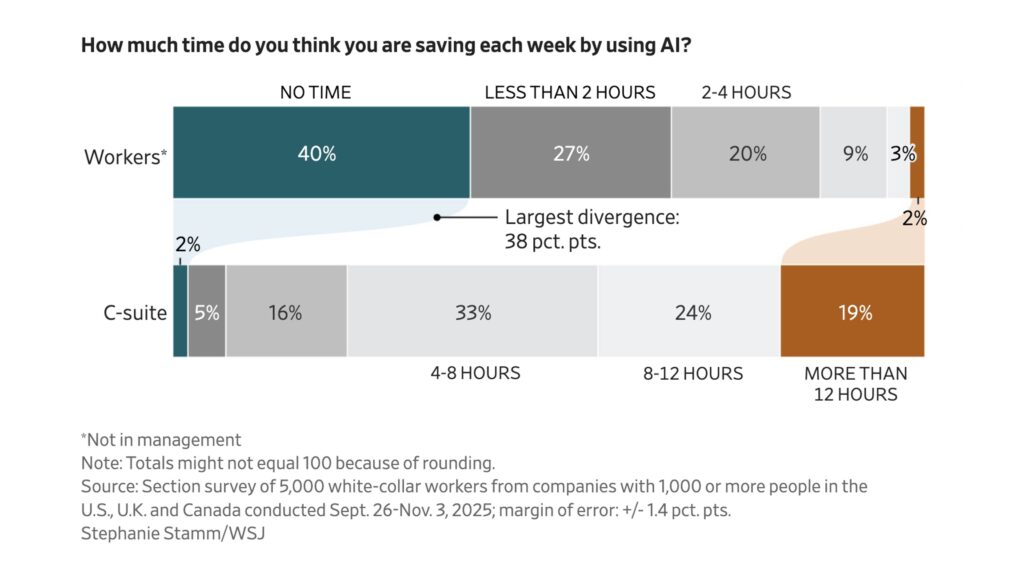
Organizations have a tendency to fill every available space. If AI gives someone thirty minutes back, that thirty minutes quickly becomes another meeting, another task, another email thread, or simply more output.
But imagine treating that time as capacity instead.
If one thousand employees each recovered thirty minutes a day, that would represent five hundred hours of newly available capacity every day. The strategic question then becomes where an organization chooses to invest those hours.
Could those hours go toward customers? Could they go toward innovation, mentoring, research, product development, experimentation, learning, or problem solving? Could those hours become a form of virtual headcount because their capacity is being expanded?
That is a much more interesting conversation about AI productivity.
Reinvent the Work Before You Automate It
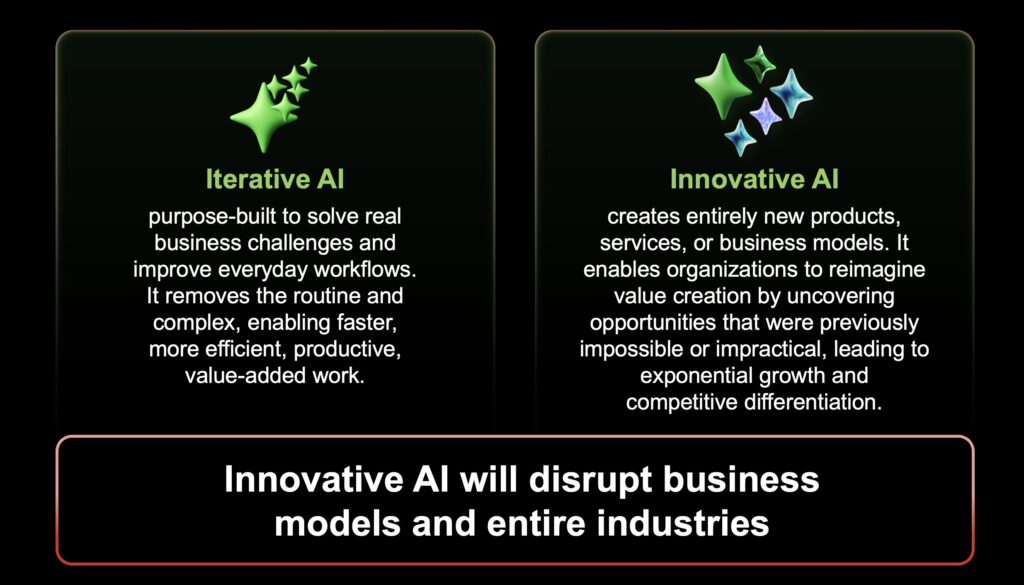
This is also where the conversation shifts from individual augmentation toward business reinvention.
A great deal of enterprise work is built on processes designed years or even decades ago. Those processes have been digitized, moved to the cloud, connected through APIs, wrapped in apps, and automated in pieces, but their underlying logic often remains remarkably similar to the way the work was originally designed.
Now companies are adding AI.
The danger is that AI can make inefficient processes more efficient without making them better.
Before automating a workflow, I increasingly encourage executives to ask whether they would design that workflow the same way if they were starting today.
Would these approvals exist?
Would these handoffs exist?
Would employees have to collect and enter this information?
Would customers have to move through these steps?
Would this particular process exist at all?
If the answer is no, simply putting AI on top of the existing process may produce efficiency, but it is unlikely to produce transformation.
This is why research showing strong AI returns from workflow redesign is so important. The real value begins to emerge when organizations stop asking where they can insert AI into the work and start asking what the work should become now that AI exists.
Move Human Work Upstream
The same principle applies to individuals.
There will be parts of almost every job that AI becomes better at performing. That can feel threatening because we tend to associate our tasks with our professional identity. But our tasks are not our value.
Years ago, radiology was routinely held up as a profession that AI might eliminate because machines were becoming capable of reading medical images. The flaw in that prediction was that reading an image is only one part of what a radiologist actually does.
If AI can take over more repetitive analysis, documentation, or pattern recognition, the more useful question is what a highly trained human being can now do with the time and attention that creates.
They can research. They can collaborate. They can spend more time with difficult cases. They can communicate more effectively with colleagues and patients. They can focus on the areas where judgment, expertise, and human connection matter most.
That same exercise is worth doing in almost every profession.
What part of your work represents the highest expression of your expertise, and what part of your work are you performing simply because historically someone in your role had to do it?
AI may give us a chance to separate those things.
And there is something wonderfully paradoxical about the possibility that artificial intelligence, used thoughtfully, could create more room for the things that make work deeply human.
The Future Is Figureoutable
I closed the GEO conversation with a word credited to Marie Forleo and her mom, which captures much of how I believe we all feel about this moment.
Figureoutable.
This is all figureoutable.
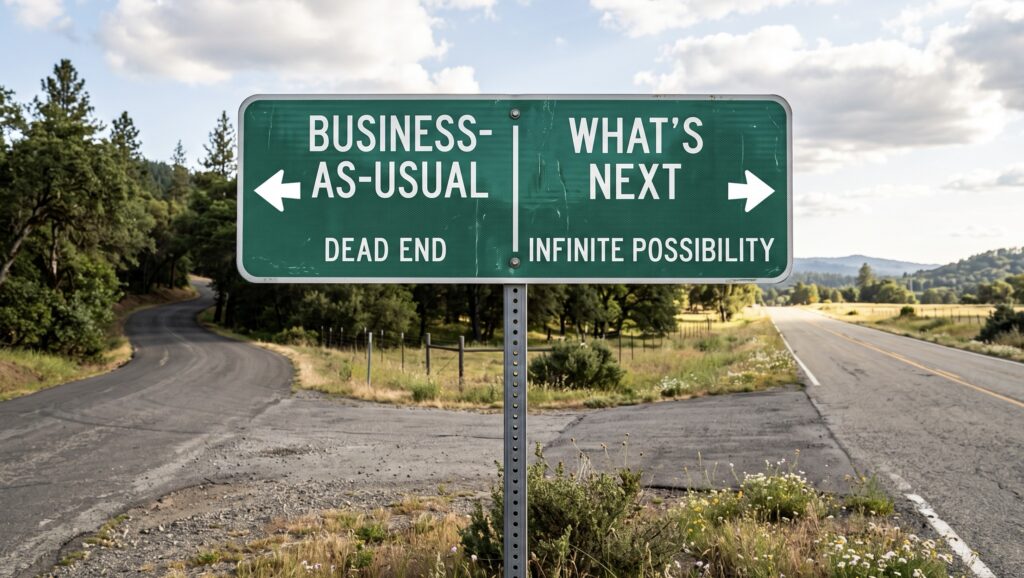
I spend much of my life working with leaders navigating transformation, and I have learned that very smart people can become exceptionally sophisticated at explaining why change is impossible. They can describe the legacy technology, the regulations, the budget constraints, the organizational politics, the investments already made, the cultural resistance, and all the reasons a new idea will be difficult.
Screenshot
Many of those constraints are real.
But sometimes expertise can become the past defending itself.
The beginner’s mind asks a different set of questions. What could we do? What would have to be true? What could we test? Who could help us? What could we learn this week that we did not know last week?
Those questions restore something that I believe many people have lost in the AI conversation…agency.
Someone has to be willing to say, “Let me take care of that.”
Someone has to ask the question others stopped asking.
Someone has to run the experiment.
Someone has to imagine what the work could become.
And someone has to help everyone else believe that a different future is possible.
That is what leadership increasingly looks like to me in the age of AI.
It is not about having all the answers. None of us does.
The secret is to create the conditions in which better answers can emerge.
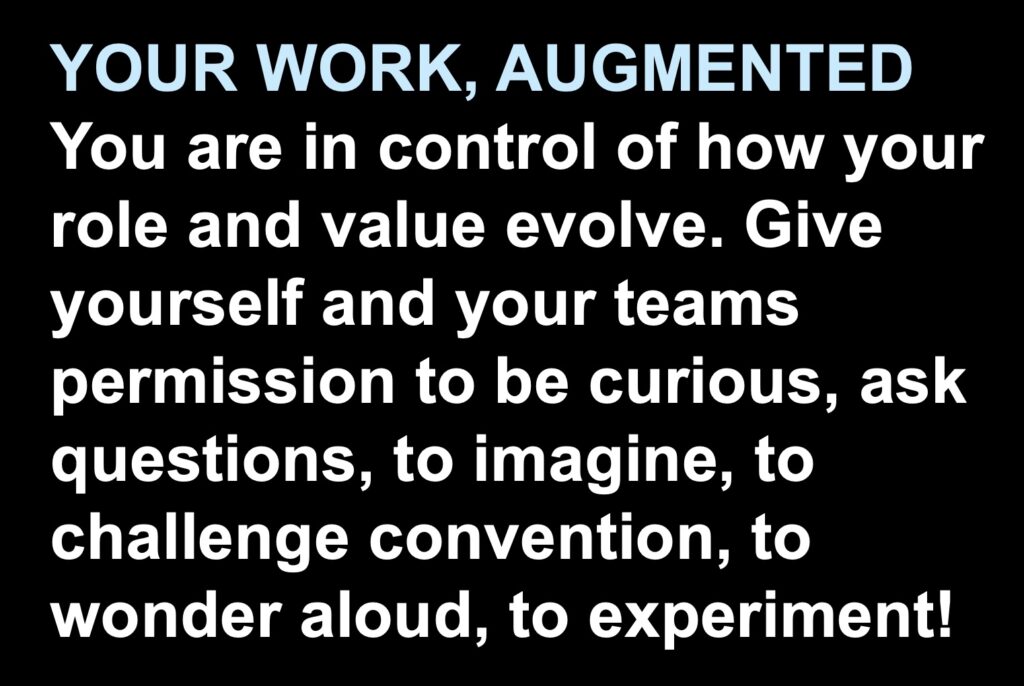
Your Work, Augmented
The reflection I hope I left with the GEO community was not about which model to use or which AI product to deploy. It was much more personal.
Who are you becoming because of AI?
Are you using it to move faster, or to think more deeply?
What can you now do that you could not do before?
Where has AI created time or capacity, and what are you choosing to do with it?
Which processes in your organization would you never design the same way if you were starting today?
What are you willing to experiment with before you have complete confidence in the outcome?
And where could human judgment and artificial intelligence create something that neither could create alone?
Screenshot
Despite the speed of the headlines, we are still remarkably early.
It may not feel that way. Every week brings another model, another announcement, another prediction, another benchmark, another reason to believe that everyone else has somehow moved ahead.
But most people and most organizations are still learning what this technology is, where it belongs, where it does not belong, what we should delegate to it, what we should preserve for ourselves, and what new possibilities might emerge when we stop thinking about AI only as a tool for automation.
To me, that’s what makes this moment extraordinary.
The future has not been decided yet.
We still have a say in what work becomes, what leadership becomes, what organizations become, and what kind of relationship we want to have with increasingly intelligent machines.
So let’s come back to the same question I opened with.
WTF: What’s the future?
The important thing to remember is that we still have the opportunity to create the future we want to see.
Infinite ∞ | Mindshift | Subscribe | Keynote Speaker
Leave a Reply