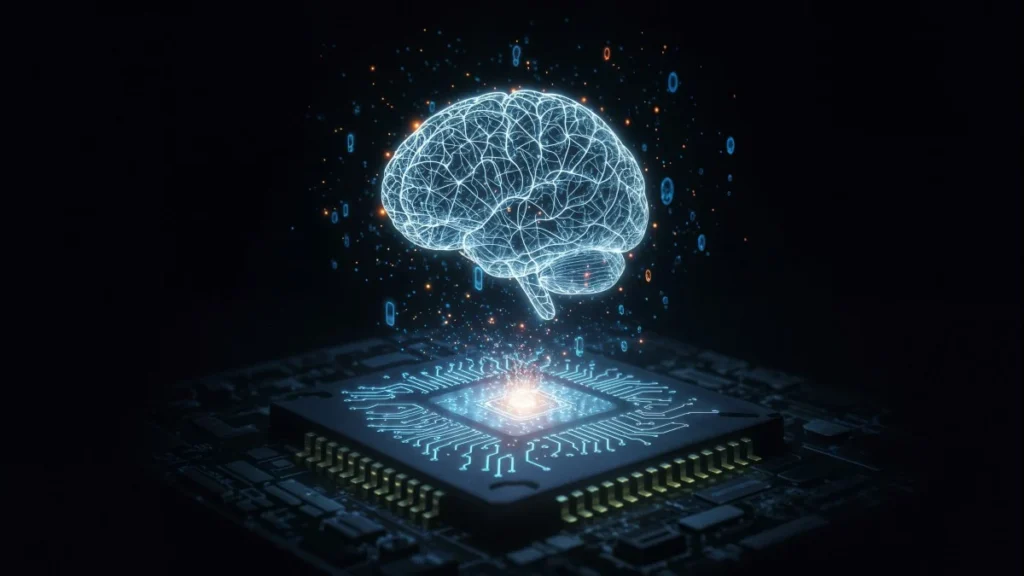
Photo: Freepik
By Gustavo Meirelles, Futuro da Saúde
After a few years of enchantment with artificial intelligence, 2026 begins to impose an adjustment of expectations. At SXSW, in Austin, the discourse changed: less dazzle, more questioning.
One of the most relevant provocations came from anthropologist and futurist Brian Solis, in the session “Augmented IQ: Scaling Human + AI Potential”. Solis went straight to the point, and brought a necessary annoyance to the audience: we are using AI to automate the past, not to build the future. And the consequence is deeper than it seems. Instead of expanding capacities and optimizing processes, many organizations are just accelerating old models, now at scale, often generating superficial content without creativity.
It is in this context that the concept of QIA (Augmented Intelligence Quotient) gains strength. After IQ (Intelligence Quotient), QE (Emocinal Quotient) and QS (Social Quotient), the differential becomes the ability to use AI to enhance human thinking – without outsourcing it.
Solis’ central alert is the risk of the so-called “Cognitive Darwinism”. As professionals delegate reasoning to AI, they lose exactly what differentiates them: critical thinking, repertoire and interpretation capacity.
The signs are already everywhere. The growth of the so-called AI Slop – shallow, homogeneous and uncured content – and a diffuse sensation of cognitive fatigue, the AI Brain Fry. Everyone produces more. Not everyone produces better.
The impact is not only creative, but also relational. As content is standardized, trust weakens. It becomes more difficult to know what was thought, what was just generated – and, especially, who to trust.
The promise of productivity also begins to show cracks. A Wall Street Journal survey, presented by Solis, showed that 19% of C-level executives perceive earnings greater than 12 hours per week with AI. However, among other professionals, this number drops to 2%. Efficiency, at least for now, is not equally distributed.
There is also an invisible cost: the so-called “AI Tax”. Estimates suggest that up to 40% of productivity gains are consumed in the review, correction and validation of what the AI itself produces. Instead of exponentiality, many teams operate in rework mode.
In marketing and communication, the risk is clear: the homogenization of brands. If everyone uses the same tools, with the same prompts, the result tends to converge, generating what another speaker, Gulay Ozkan, called “The Age of Sameness” (The Age of Sameness).
In health, the alert is even more sensitive. The risk is not only of standardization, but of erosion of clinical reasoning – replaced by automated responses that do not always capture the complexity of care.
The way out is not to slow down the AI, but to reposition it. Automate what is repetitive, such as processes, flows and organization. And, more than preserving, expanding what is human: creativity, empathy, curiosity and vision.
As Solis summarizes: “The future of AI does not belong to those who ask for answers, but to those who ask better questions.” In the end, the discussion ceases to be technological and becomes strategic. It’s not enough to adopt AI. It is necessary to develop increased intelligence. Those who use technology only to repeat the past may even gain efficiency – but will hardly build relevance in the future.
“The future of AI does not belong to those who ask for answers, but to those who ask better questions.”
Mais que IA: por que saúde e comunicação correm risco sem a Inteligência Aumentada
Depois de alguns anos de encantamento com a inteligência artificial, 2026 começa a impor um ajuste de expectativas. No SXSW, em Austin, o discurso mudou: menos deslumbramento, mais questionamento.
Uma das provocações mais relevantes veio do antropólogo e futurista Brian Solis, na sessão “Augmented IQ: Scaling Human + AI Potential”. Solis foi direto ao ponto, e trouxe um incômodo necessário para a plateia: estamos usando IA para automatizar o passado, não para construir o futuro. E a consequência é mais profunda do que parece. Em vez de ampliar capacidades e otimizar processos, muitas organizações estão apenas acelerando modelos antigos, agora em escala, muitas vezes gerando conteúdos superficiais e sem criatividade.
É nesse contexto que ganha força o conceito de QIA (Quociente de Inteligência Aumentada). Depois do QI (Quociente de Inteligência), do QE (Quociente Emocinal) e do QS (Quociente Social), o diferencial passa a ser a capacidade de usar IA para potencializar o pensamento humano — sem terceirizá-lo.
O alerta central de Solis é o risco do chamado “Darwinismo Cognitivo”. À medida que profissionais delegam o raciocínio à IA, perdem exatamente aquilo que os diferencia: pensamento crítico, repertório e capacidade de interpretação.
Os sinais já estão por toda parte. O crescimento do chamado AI Slop — conteúdo raso, homogêneo e sem curadoria — e uma sensação difusa de fadiga cognitiva, o AI Brain Fry. Todo mundo produz mais. Nem todos produzem melhor.
O impacto não é apenas criativo, mas também relacional. À medida que o conteúdo se padroniza, a confiança se fragiliza. Fica mais difícil saber o que foi pensado, o que foi apenas gerado — e, principalmente, em quem confiar.
A promessa de produtividade também começa a mostrar fissuras. Uma pesquisa do Wall Street Journal, apresentada por Solis, demonstrou que 19% dos executivos C-level percebem ganhos superiores a 12 horas semanais com IA. Contudo, entre os demais profissionais, esse número cai para 2%. A eficiência, ao menos por enquanto, não é igualmente distribuída.
Há ainda um custo invisível: o chamado “AI Tax”. Estimativas sugerem que até 40% dos ganhos de produtividade são consumidos na revisão, correção e validação do que a própria IA produz. Em vez de exponencialidade, muitas equipes operam em modo retrabalho.
No marketing e na comunicação, o risco é claro: a homogeneização das marcas. Se todos usam as mesmas ferramentas, com os mesmos prompts, o resultado tende a convergir, gerando o que outra palestrante, Gulay Ozkan, chamou de “The Age of Sameness” (A Era da Mesmice).
Na saúde, o alerta é ainda mais sensível. O risco não é apenas de padronização, mas de erosão do raciocínio clínico — substituído por respostas automatizadas que nem sempre capturam a complexidade do cuidado.
A saída não está em frear a IA, mas em reposicioná-la. Automatizar o que é repetitivo, como processos, fluxos e organização. E, mais do que preservar, ampliar o que é humano: criatividade, empatia, curiosidade e visão.
Como resume Solis: “O futuro da IA não pertence a quem pede respostas, mas a quem faz perguntas melhores.”. No fim, a discussão deixa de ser tecnológica e passa a ser estratégica. Não basta adotar IA. É preciso desenvolver inteligência aumentada. Quem usar a tecnologia apenas para repetir o passado pode até ganhar eficiência — mas dificilmente construirá relevância no futuro.
Gustavo Meirelles, vice-presidente Médico da Afya, é graduado em Medicina pela Universidade Federal de São Paulo. Possui MBA em Gestão Empresarial pela Fundação Getúlio Vargas (FGV) em São Paulo e realizou um pós-doutorado em PET/CT no Memorial Sloan-Kettering Cancer Center, em Nova York. É copresidente do Instituto Afya e reitor da Afya Universidade Unigranrio.


Leave a Reply