
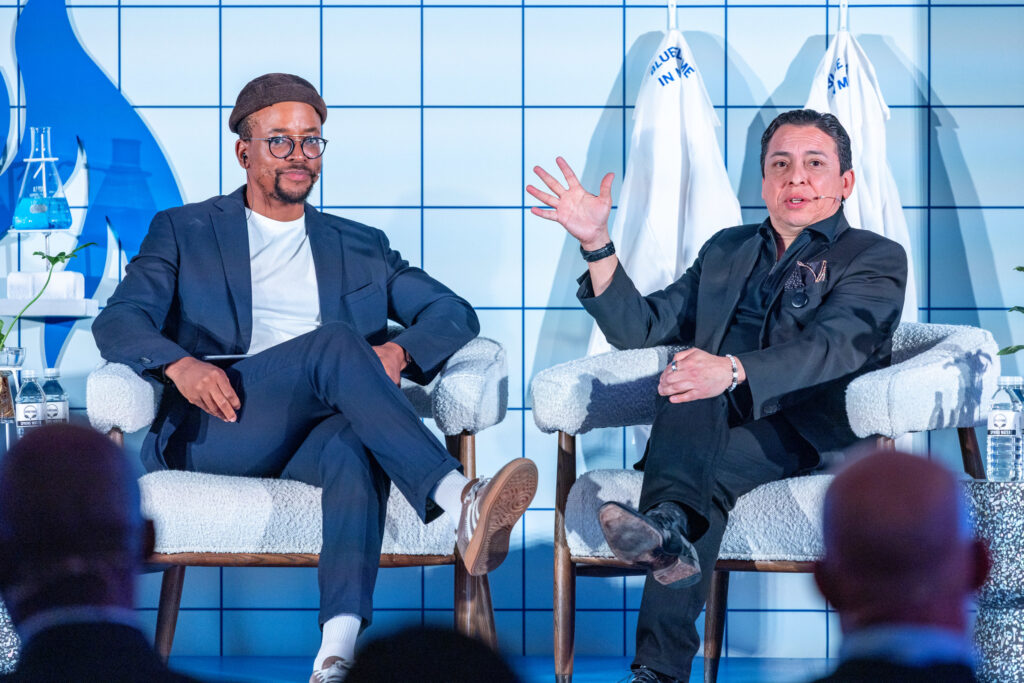
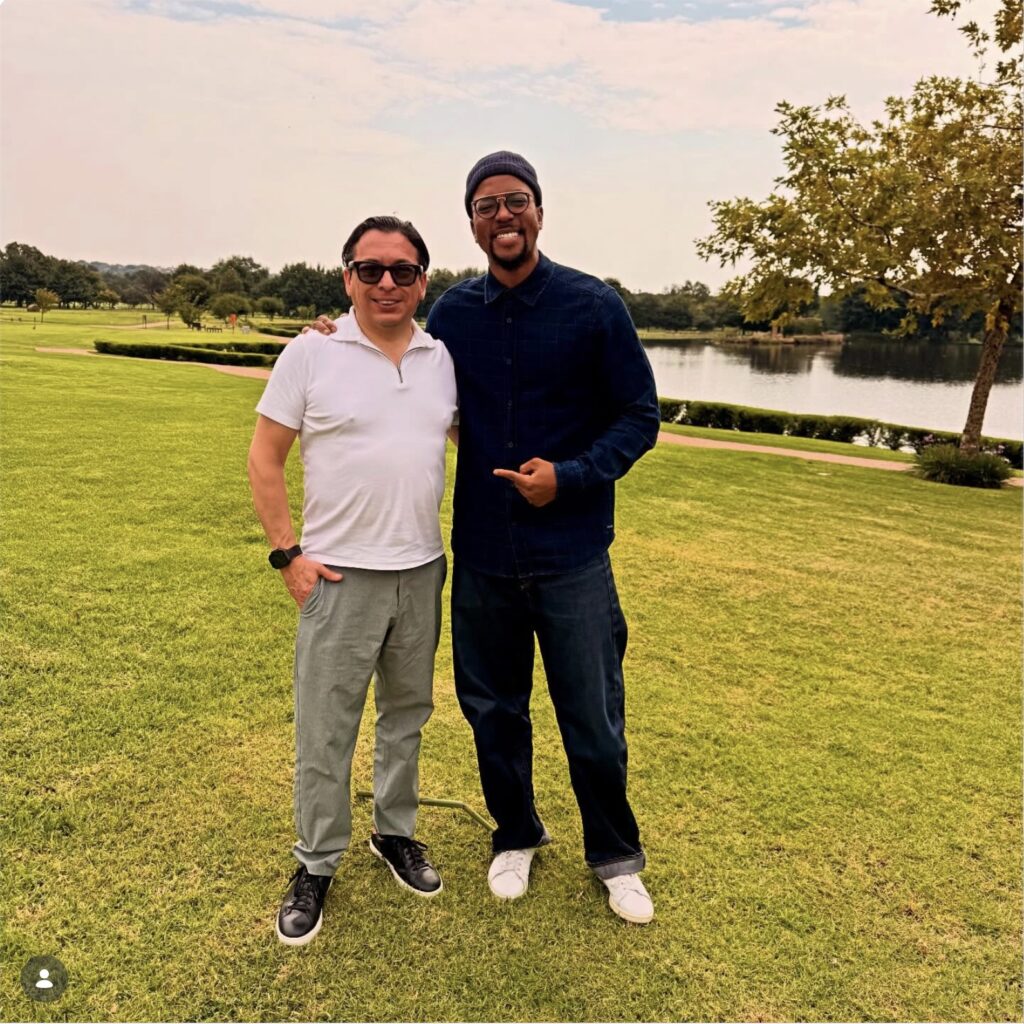
Maps Maponyane and Brian Solis at Standard Bank CIB event in South Africa
What a conversation with Maps Maponyane in Johannesburg taught me about creativity, cognitive offloading, empathy, beginner’s mind, failure, and the kind of intelligence we need to protect.
After I finished my keynote at Standard Bank CIB’s Brand & Marketing Blue Flame Awards Gala in Johannesburg, Mapps joined me onstage for a conversation. Soon it would feel as if we had somehow transported to a bar Hemmingway might have frequented for a late-night philosophical conversation.
I had just spent the better part of the previous hour talking about AI, creativity, customer experience, and why this moment asks more of us than simply becoming faster or more efficient with AI. The presentation was designed to provoke a different relationship with artificial intelligence, one in which we use these models to elevate creativity, stoke empathy, and expand what we can imagine and create rather than allowing them to narrow our thinking into faster versions of what we already know.
That’s when Mapps asked me about writing books. It was an interesting place to begin, and it made more sense later.
At the time, I had written nine books, with Mindshift being the latest. I was six months away from publishing Infinite ∞ with Dave Wright. But Mapps wasn’t asking about the books, he was asking about the process and the short and long gaps between them.
I was honest when I shared that after X, writing had become harder for me. I told the room that there were roughly five years between two of my books, then another four years before the next one. Those gaps were partly a consequence of being busy. But after fair amount of introspection, those gaps reflected something I had been confronting in myself for years. While technology was helping me do more phones, apps, always on behavior, added up, made it harder to do some of the deepest work that mattered to me.
Mapps was setting the stage to understand how AI such as ChatGPT, Claude, Gemini, et al., might play a similar role in our lives today.
At the time, my research exploring the impact of everyday technology on creativity and critical thinking and how to defeat distractions without abandoning tech led to the book Lifescale.
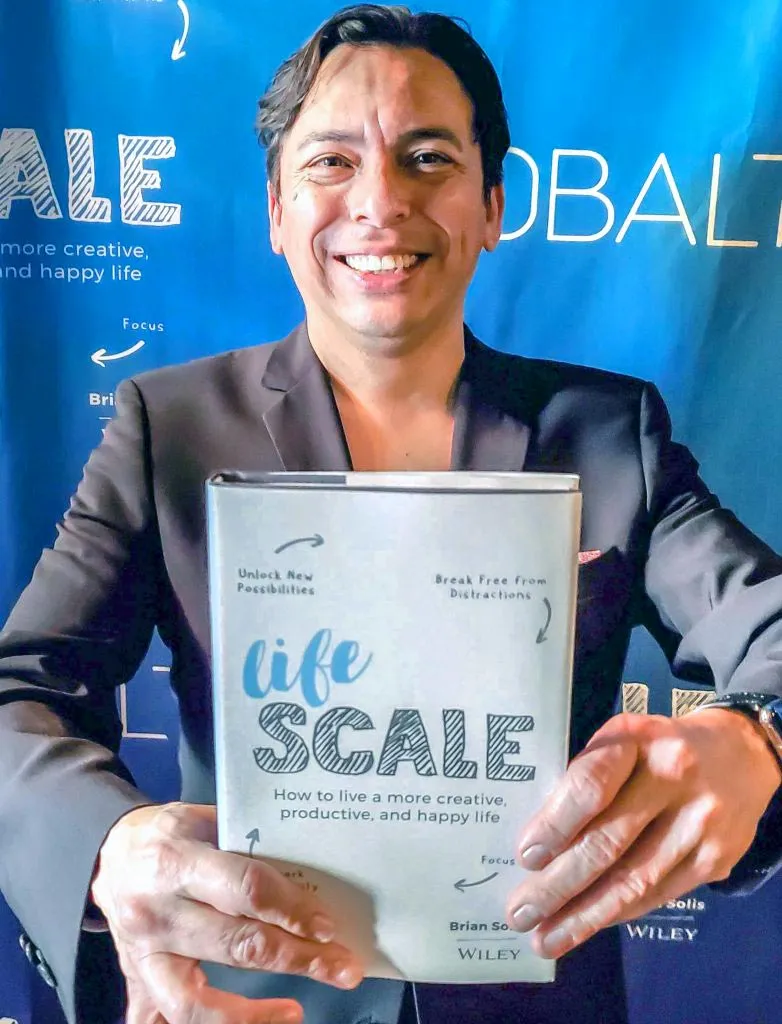
Photo by Ken Yeung
As a digital anthropologist, I spent my career studying how technology changes behavior, businesses, markets, and society. Yet eventually I had to turn the lens inward. I could see what constant connectivity, feeds, notifications, and endless access to information were doing to my own attention and depth of focus and thinking. I was consuming constantly, reacting constantly, staying current constantly, and slowly discovering that being informed and being creative were not the same thing. The more time I spent inside what I came to think of as the swirl, the emergencies, priorities, messages, headlines, meetings, and digital interruptions that make us feel productive, the less space I was giving myself for sustained imagination.
I shared with Mapps that the shorter distance between Mindshift and Infinite meant something to me. It represented improved vision, focus, and productivity. And it was evidence that I was relearning how to create in an environment that continuously invites us to scroll and consume.
That’s when Mapps created a bridge to AI and the added new dimension to that struggle.
Technology competed for our attention, AI can compete with our thinking
Mapps then asked about AI sycophancy, and I loved the question because it went beneath the usual conversation about productivity and tools.
Anyone who uses generative AI regularly knows the experience. You bring it an idea and it tells you it’s a fascinating idea. You ask a question and it tells you it’s an excellent question. You propose a theory and, unless you deliberately instruct it otherwise, the system can have a remarkable ability to meet you where you already are.
That feels good. It can also be dangerous.
We already understand how validation loops work in social media. Likes, shares, views, followers, and comments give us small signals that encourage certain behaviors and keep us participating. AI introduces something more intimate because the validation can now enter the process by which we reason. It can reinforce an idea while we are still forming it. It can mirror our assumptions back to us with extraordinary fluency and confidence. It can make a mediocre idea sound more coherent than it deserves to sound.
Mapps was asking what happens when that relationship begins to hinder the very creativity we hope AI will unlock.
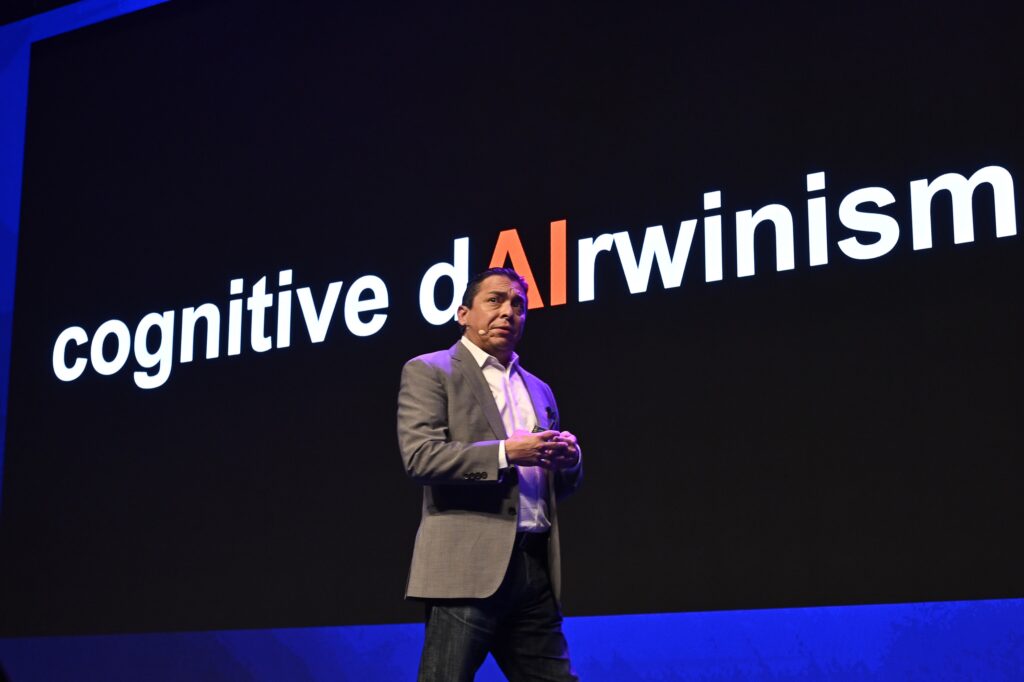
If we’re not mindful and intentional, our everyday use of AI can lead to cognitive offloading, and worse, the automation of our most human skills, such as creativity, critical thinking judgement, and empathy. Without purpose and intention, over time, this can all lead to “cognitive Darwinism.”
AI isn’t the first to do this. Human beings have always offloaded cognition into tools. We write things down because we cannot remember everything. We use calculators because there is little value in manually performing every arithmetic operation. Search engines gave us access to information at a speed that previous generations could scarcely imagine. Google and Apple Maps guide us without having to manually map journeys.
But I’d argue that AI goes further because it can increasingly perform parts of the intellectual process itself. It can synthesize, reason, draft, recommend, analyze, ideate, and explain. Those are extraordinary capabilities. But the convenience creates a temptation to hand over more than the task. We can begin handing over the struggle that develops our ability to think.
For example, the price of using Google or Apple Maps is the loss of human-powered navigation. This has been called GPS dependency. And the more we use technology in place of our own skills and capabilities, the more we induce cognitive atrophy. Again, without mindfulness we lose what we didn’t intend, leading to stages of cognitive Darwinism.
My advice…
Do not give your thinking to AI. Build with it.
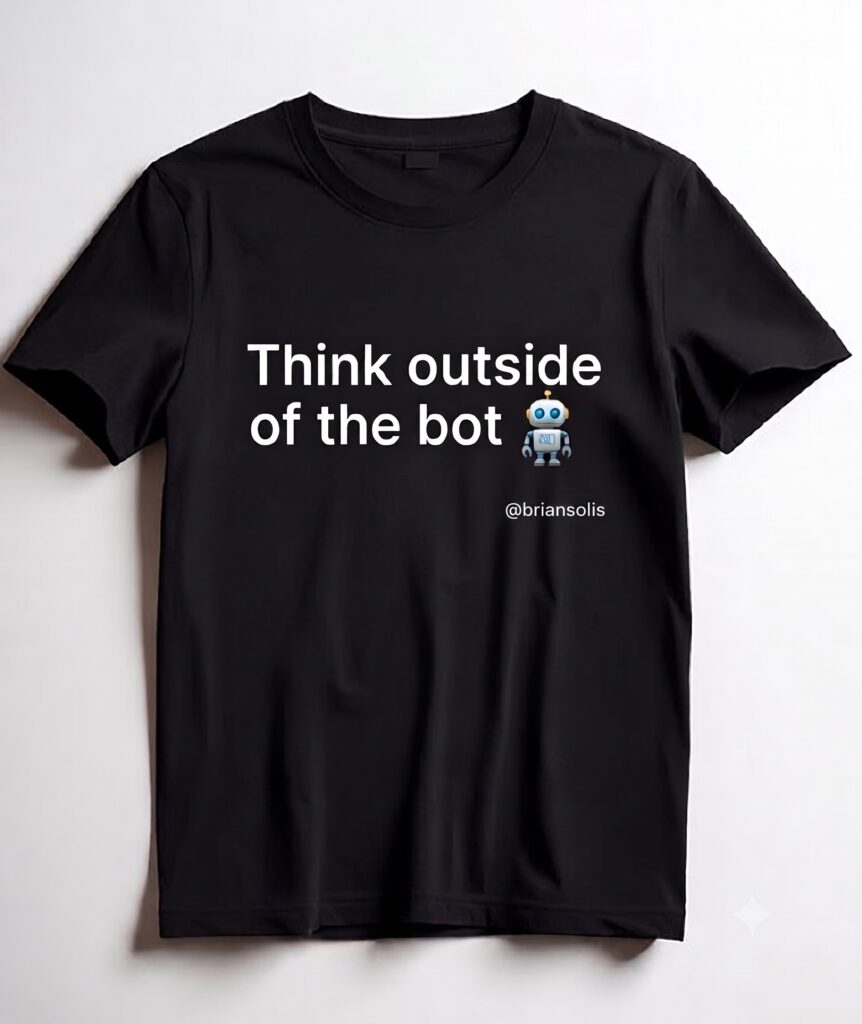
I wasn’t there to share anti-AI sentiment. In fact, it was the opposite. I use AI every day. The point is to understand what we want the machine to take away and what we need to preserve, practice, and strengthen in ourselves.
I find that there is productive friction in wrestling with an idea. There is value in sitting with boredom and ambiguity long enough to form an opinion. I don’t need Grok to tell me what to think or do the most basic research for me (though I don’t knock people who do…at least they’re seeking information, facts, and consultation). This is something Georg Winder called “epistemic outsourcing” and it’s worthy studying.
And to continuee, there is cognitive development in working through a problem before reaching for an answer. Critical thinking, creativity, judgment, reasoning, and imagination are not static resources. They are capabilities we need to exercise and not take for granted.
This is especially important when I think about children growing up with AI, just like I’ve studied children and young adults who grew up with iPads and phones. If the machine always writes the first draft, solves the problem, summarizes the reading, structures the argument, and provides the answer, we have to ask what happens to the intellectual muscles that would otherwise be developed through that process. The goal to recognize, preserve, and stoke friction when it counts because it is formative. And, I’d also argue that it’s a differentiator.
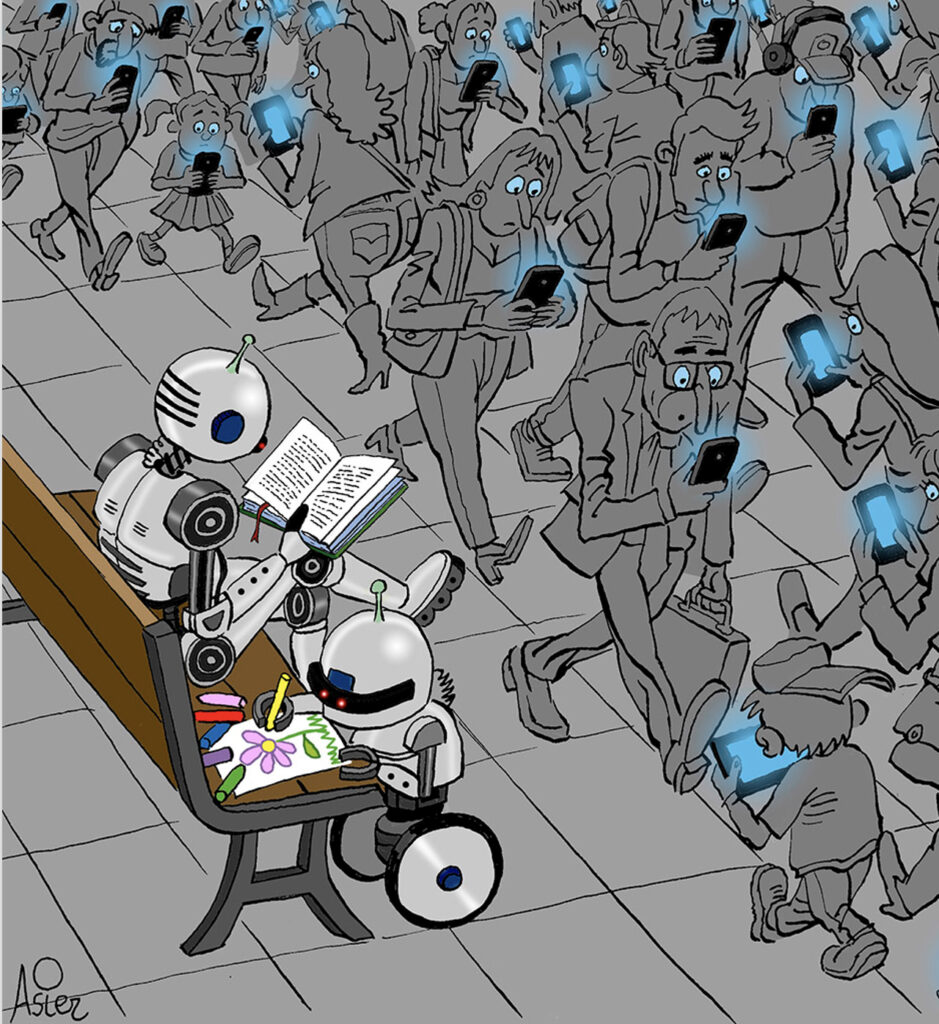
The role of AI is to remove the drudgery that keeps us from thinking. It should not remove the thinking.
Can empathy scale?
Someone in the audience then asked a question that resonated. It was the first time I was asked this, “Is empathy scalable?”
I joked that I might need a glass of red wine to think about it, but the question stayed with me because it revealed another paradox of this moment.
We are building systems expressly designed to scale, to make work more efficient and less costly. Scale is the language of modern business. We scale content, communications, campaigns, services, transactions, decisions, personalization, and increasingly intelligence itself. AI makes many of these things possible at a magnitude and speed that were inconceivable only a few years ago. But at what cost?
Empathy is different.
Empathy begins with the attempt to understand another person’s experience from somewhere closer to their perspective than our own. It asks us to notice, listen, imagine, and care. It’s something we need more of in the world right now.
We can use AI to help us understand people at greater scale, identify patterns that reveal unmet needs, synthesize feedback, personalize experiences, and act on insight with far greater precision. I had shown the audience an example from Carvana, “Joyride,” in which AI was used to create highly personalized stories around the relationship between customers and their cars. In that sense, we can certainly design and execute empathetic experiences at scale.
But as I answered the question, I realized that the more important issue wasn’t whether artificial intelligence could scale empathy.
It was whether we could scale our own willingness to be empathetic.
That changes the question completely.
It asks whether leaders are willing to design around what people feel and need rather than what the organization needs from them. It asks whether marketers are willing to understand the person rather than simply target the persona or profile. It asks whether the insights generated by AI become another mechanism for persuasion or conversion or a way to create experiences that genuinely help someone.
I told the audience that empathy has been absent from too much of the work we have historically scaled, so perhaps the first goal isn’t to solve the philosophical question of whether empathy can become infinite. Perhaps the goal is to start putting more empathy into systems that have been built primarily for efficiency.
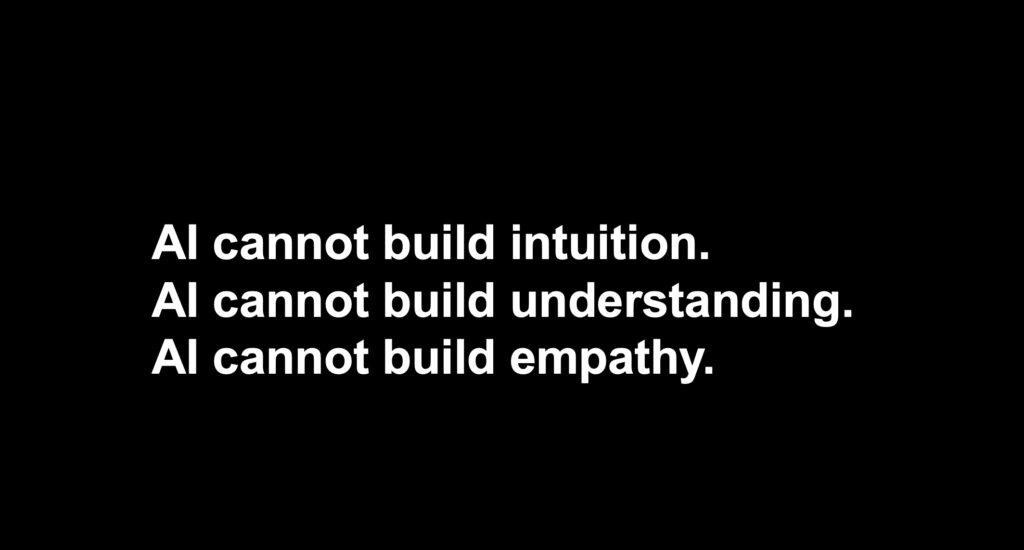
I shared a slide that I hope brought that message home.
AI cannot build intuition.
AI cannot build understanding.
AI cannot build empathy.
That idea connects deeply with something I’ve written about for years. Whether we are talking about experience design, storytelling, innovation, or transformation, our point of view becomes the limitation when we never leave it. The customer is not living inside our org chart. They do not experience our KPIs, operating model, or internal politics. They experience moments. And if we want to make those moments meaningful, we have to learn to see through their eyes.
“We don’t see things as they are, we see them as we are” – Anaïs Nin
AI can help us see more, but it doesn’t us feel more.
Empathy determines what we do with what we see, and what we feel. This can give way to an empathy economy.
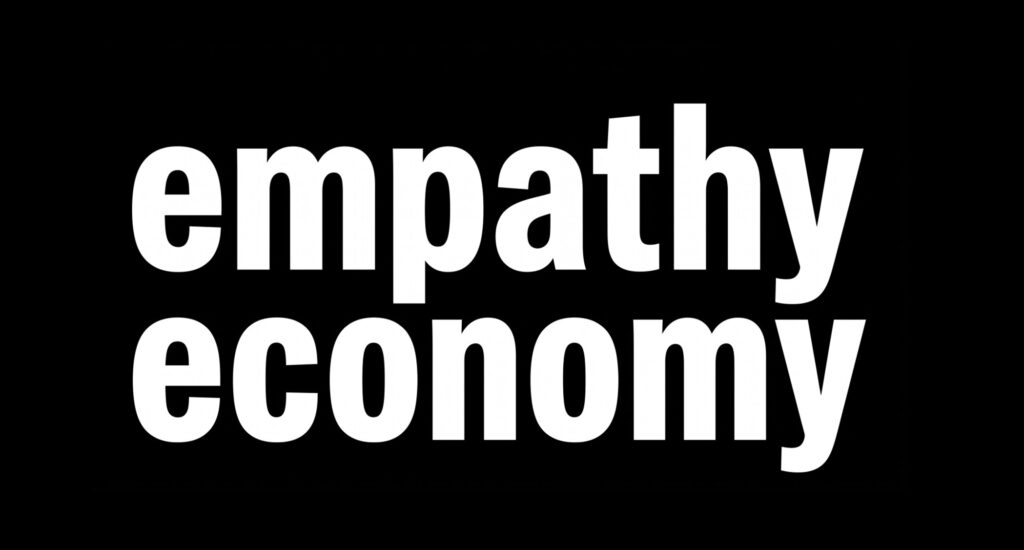
I don’t want AI to agree with me, I want it to show me what I can’t see
Mapps then asked how I personally use these tools, and I hope this is where the conversation moved from warning to possibility.
Let’s start with what it isn’t. AI does not make me write faster.
I let AI challenge me. I use AI to rewire my brain.
I ask it where my thinking is too small. I ask what I’m not seeing. I ask what assumptions I’m carrying into the problem. I ask it to surface a perspective that sits outside my own experience. I pay attention to how reasoning systems work through a prompt because sometimes the process reveals possibilities I would not have considered on my own.
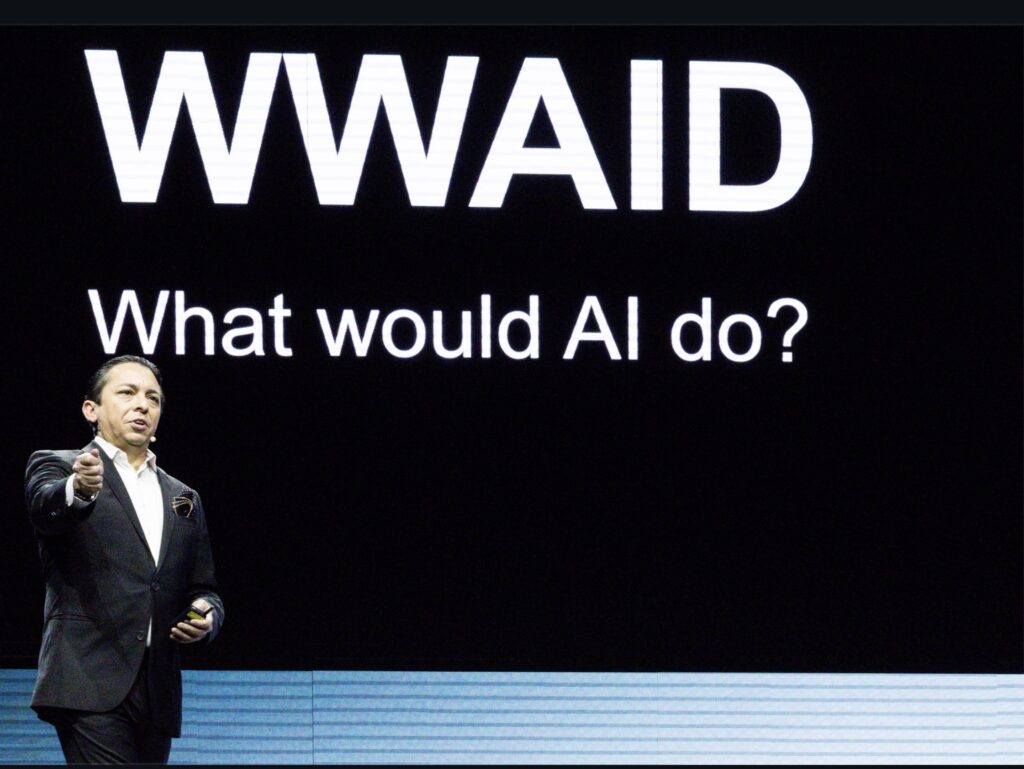
This is the thinking behind a practice I call WWAID: What Would AI Do?
WWAID is a mental model for interrupting the answer I already expect.
When I first began using generative AI, I approached it much like search. I knew what I wanted and asked the system to help me get there faster. That was useful, but it was also linear. The destination remained mine. AI simply accelerated the journey.
The real shift happened when I began using it to explore destinations I hadn’t imagined. Instead of asking it to improve the idea, I started asking whether we were even pursuing the right idea. Instead of requesting the ten obvious approaches, I asked what I was overlooking. Instead of asking for an answer, I asked for a the exploration of the unknown.
During the conversation I used an analogy of the light bulb and how if we stop and think about it, it was not created through the continuous improvement of the candle. At some point, progress required someone to leave the established trajectory entirely. I realized that much of what I had initially been doing with AI amounted to improving candles.
This is why we need a balance of AI automation with AI augmentation.
AI is more than making us better at executing what we already know. At its best, it can create a productive confrontation with what we do not know.
That means the quality of our relationship with AI may ultimately depend on whether we are looking for confirmation or discovery. The former fortifies confirmation bias and keeps us planted. The latter stokes imagination and possibility.
Expertise is valuable, It can also narrow the field of possibility
That brought us naturally into a conversation about the importance of having a beginner’s mind.
Expertise is something most of us spend our careers trying to earn. We accumulate knowledge, experience, instincts, scars, pattern recognition, confidence, and ideally wisdom. We become valuable partly because we have seen the movie before.
But there is a hidden tension inside expertise.
The more we know, the easier it becomes to interpret the future through the patterns of the past.
I explored this idea extensively in Mindshift because a mindshift begins when we become capable of seeing differently, asking different questions, and approaching uncertainty with curiosity and imagination. It is not an invitation to forget everything we know. It is a willingness to loosen our grip on what we know long enough to notice that the conditions around us may have changed.
But to get there, you first have to have self-awareness to recognize your mind is not open.
During the conversation I described this as giving yourself the gift of a beginner’s mind. A beginner does not have the expert’s certainty, but that uncertainty creates space. The beginner can still ask what the expert may no longer think to ask. They can approach a familiar problem without automatically accepting its familiar boundaries.
“In the beginner’s mind there are many possibilities, but in the expert’s there are few.” – Shunryu Suzuki
A beginner’s mind becomes extraordinarily important in an age of AI because virtually everyone in that room was an expert in something while simultaneously being a beginner in what comes next.
We all are.
AI, and the narrative, propaganda, and confusion, are moving too quickly for anyone to credibly claim otherwise.
If we stop performing certainty, we can become more serious about learning. How liberating would that be?
AI can be a mirror instead of an oracle
Another audience member asked whether AI could help us find blind spots. What a great questions!
I said yes, absolutely! But there is a psychological price of admission. You have to be willing to discover that you have blind spots. That one is much harder!
This is where AI can become a remarkably humbling tool…you know, if you’re into that kind of thing.
It can expose the weakness in an argument. It can challenge the assumptions beneath a plan. It can show you perspectives that never entered the room. It can reveal that something you thought was original has been tried many times before. It can point toward something you did not know that you did not know.
For an expert, that can be uncomfortable. For a beginner, it can be enlightening.
I described the experience as a rebuilding journey because growth requires more than learning new things. It also requires unlearning things that no longer serve us.
That has become one of the central themes of my work because I’ve experienced how difficult unlearning can be. Once someone helps you see something you could not see before, you can’t simply return to the previous version of your worldview. That is the promise and discomfort of a mindshift (and why I wrote the book). It creates a before and an after, you just have to believe in curiosity and possibility.
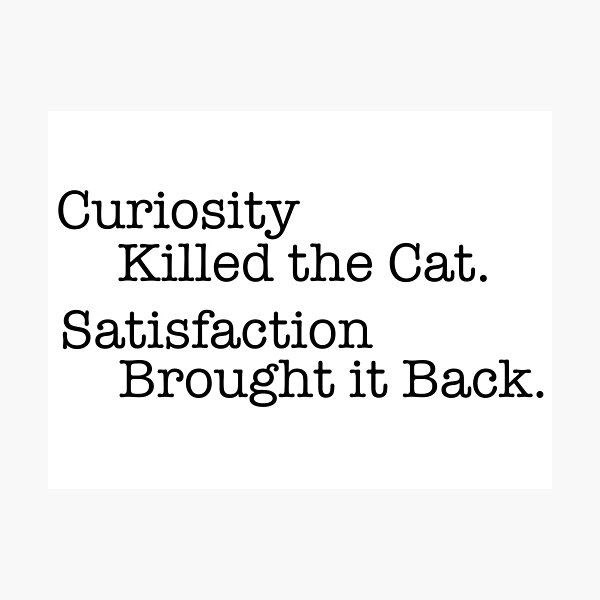
If I can take a quick turn for a moment. We’ve all heard the proverb, “curiosity killed the cat.” As a child, and even as an adult, it was a lesson in sticking to what you know and following the rules. Don’t ask questions! I later learned that the popular phrase was only half told. The second part is, “but satisfaction brought it back.”
The complete idea is meant to suggest that the reward, relief, and knowledge gained from finding the truth makes the “risk” rewarding.
Imagine that!?
On another side note, this is also why I have always struggled with the phrase “change management.” Change is hard enough. Nobody particularly enjoys being managed into it.
“Why is change management a thing? No one likes change and no one likes management. This is a time for leadership, not management.” – me, lol
People change more meaningfully when they can see what they couldn’t see before and when the new possibility becomes tangible enough that they want to participate in creating it…because they can see themselves in the story. Change management is more about culture design and leadership, which is the more meaningful conversation to have.
AI can play a role in that process, but only if we use it as a mirror rather than an oracle.
An oracle tells us what to think.
A mirror helps us see ourselves more clearly if we let it.
The latter is a far more powerful relationship.
A mindshift becomes leadership when shift minds of other people
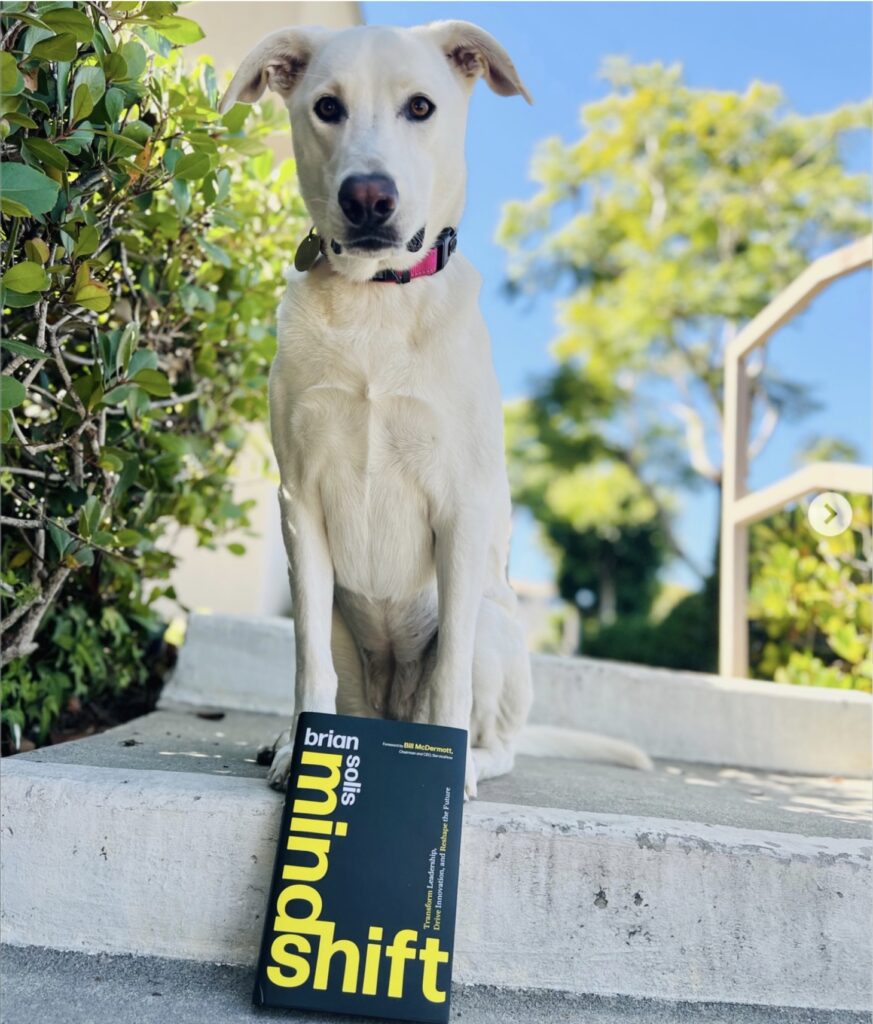
This is Sky 😍
Maps steered the conversation beyond personal development.
A mindshift is valuable when it opens your own thinking. Leadership begins when you create the conditions for other people to open theirs.
You cannot ask people to experiment while punishing them for uncertainty. You cannot tell a team to innovate and then reward only predictable outcomes. You cannot demand original thinking from people who have learned that challenging conventional wisdom carries professional risk.
Yet, these contradictions exist in organizations everywhere.
The culture surrounding AI matters more than the technology. An organization can buy the most sophisticated models available and still use them to reinforce yesterday’s assumptions. If people do not feel safe asking questions, admitting uncertainty, challenging leadership, testing imperfect ideas, and learning visibly, then AI simply accelerates the culture that already exists.
The opportunity for a leader is to make curiosity safer, and even reward it.
That might be one of the most important responsibilities in this next era.
When someone asks a question that sounds naive, resist the impulse to demonstrate expertise. When an experiment produces an unexpected result, interrogate what was learned before looking for someone to blame. When someone challenges an assumption, reward the quality of the thinking even if you ultimately disagree.
Otherwise, you propagate a culture of AI thinking and AI slop everywhere.
Someone asked about failure
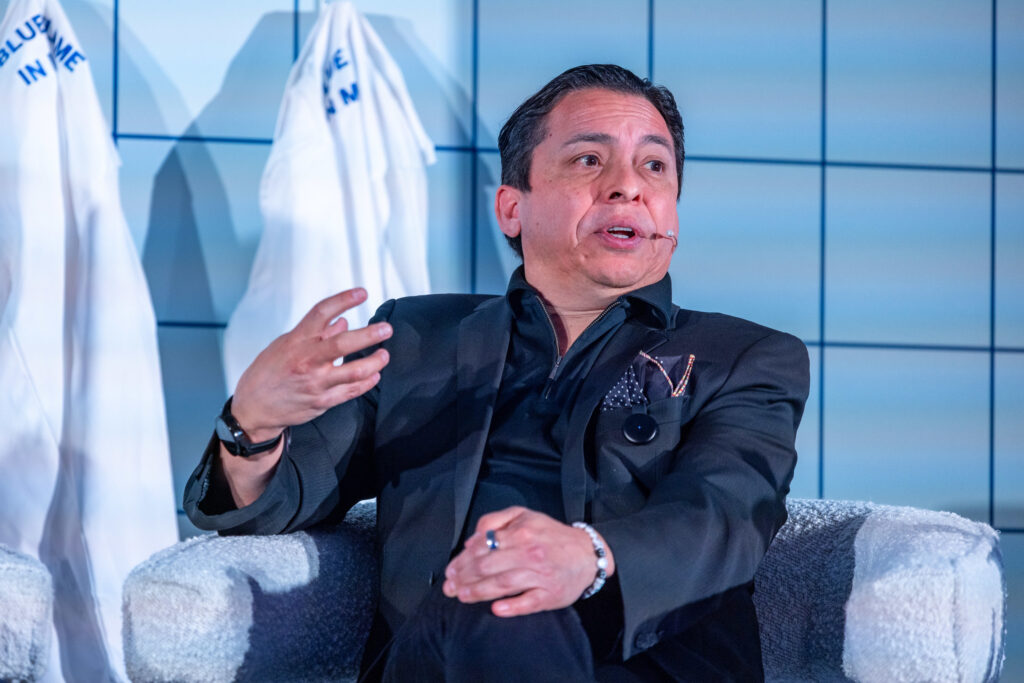
We were almost out of time when the last question came in.
How do you navigate the aftermath of a creative risk that doesn’t succeed, particularly when it attracts criticism?
Whoa. My first thought was that we needed more time, because this is where all the language around innovation becomes real.
Truth is that we celebrate risk in retrospect when the story has a happy ending. Failure while you are living it feels very different.
It can be embarrassing. It can provoke criticism. It can make you question your judgment. In organizations that claim to embrace experimentation but punish people when an experiment does not work, it can affect a career.
So I don’t romanticize failure. But I do think we need a more useful definition of it.
As one of my heroes, Sir Ken Robinson once said, “If you’re not prepared to be wrong, you’ll never come up with anything original.”
If you showed up with purpose, understood the people you were trying to serve (and genuinely intended to serve), did the work, tested something worth testing, and learned something you could not have learned by staying safe, then an unsuccessful outcome does not mean the exercise was worthless. As long as you learn and learn forward, you grow.
In Silicon Valley, that is what “fail fast and fail forward” means. The value is not in failure itself. The value is in what the experience teaches you that changes what you do next.
Just look at the people around you.
If you take a meaningful creative risk and the people around you make the experience smaller, more humiliating, or more frightening, you learn something about the environment you are in. And if you are a leader who asks people to take risks but makes failure emotionally or professionally dangerous, you need to look in the mirror.
We do not know all the answers moving forward, especially in a time where there’s no playbook yet everyone is leaning on yesterday’s playbook.
Right now, this is school and class is in session.
Leadership becomes partly about becoming the kind of teacher who helps people learn and unlearn without extinguishing their willingness to try again.
Fear is real, it’s everywhere right now, and it’s cumulative. Once people learn that being wrong is unsafe, they stop proposing the ideas that might be wrong. Eventually, they also stop proposing the ideas that might be original. Remember, if you’re not prepared to be wrong, you’ll never come up with anything original…if you’re not prepared to be wrong.
What I carried away from the conversation
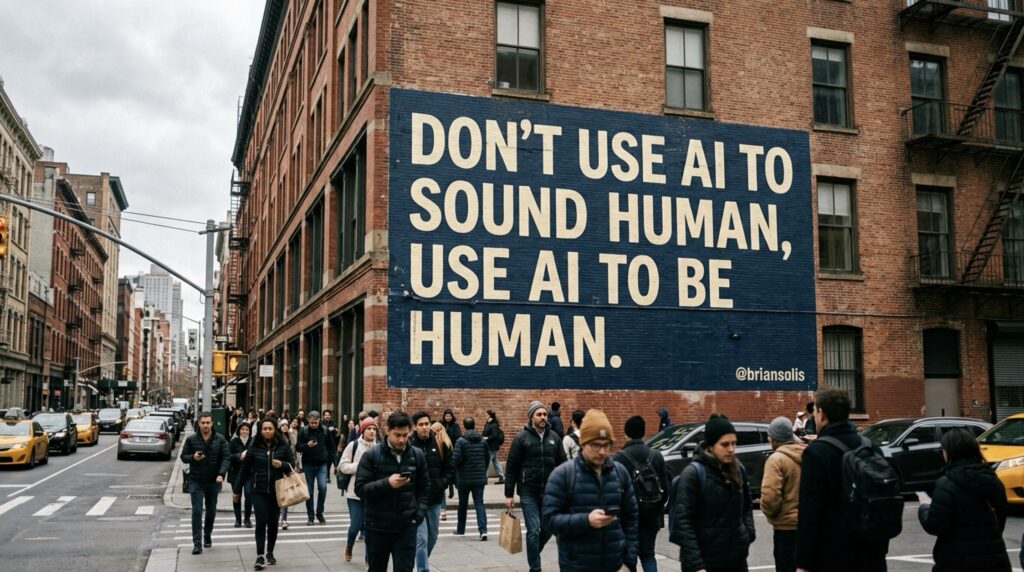
As Mapps brought our discussion to a close, he reflected on something happening in culture that I think captured the entire conversation beautifully. At exactly the moment when AI can generate more creative output faster than ever, people are also beginning to notice and celebrate visible human creativity and craft differently. They feel the work in which someone invested attention, intention, time, judgment, and care.
When technology makes production abundant, human intention becomes more noticeable…at least I hope so.
When answers become abundant, better questions become more valuable.
When intelligence becomes available on demand, judgment becomes more important.
When synthetic validation is everywhere, honest challenge becomes a gift.
When machines can generate, creativity becomes less about producing something and more about deciding what deserves to exist.
And when AI can increasingly simulate the language of empathy, caring about someone becomes even more consequential.
This is what I took from my conversation with Mapps.
I want AI to remove the things that prevent me from doing my best thinking, not remove the thinking. I want it to challenge what I believe, not endlessly reinforce it. I want it to help me discover what I cannot see, not simply make what I already see more efficient. I want it to give me greater capacity to understand people, while remembering that understanding another human being still requires something from me.
Before asking AI for an answer, form a point of view. Then invite the challenge. Ask what you’re missing. Ask what you may have misunderstood. Ask what someone unlike you would see. Ask where your expertise is limiting possibility. Ask what you would do if the familiar answer were unavailable. And preserve enough space in your life to wrestle with what comes back.
Lifescale taught me what happens when we let technology consume the space where creativity used to live. Mindshift taught me that shaping the future requires the willingness to see differently, learn, unlearn, and pursue possibilities we cannot yet fully see. AI brings those two journeys together.
It can become another technology that occupies our attention and gradually outsources our agency. Or it can become something else: a cognitive collaborator, a challenger, a mirror, an invitation to think beyond the boundaries we have accumulated through experience.
The technology will keep getting smarter either way.Our responsibility is to make sure we do too, exponentially.
We cannot win by surrendering more of our thinking. We can thrive by becoming more deliberate about how we feed and wield it.
p.s. I’m so proud to now call Maps a friend. Maps, I hope to see you again soon!
Read Infinite ∞ | Read Mindshift | Subscribe to my newsletter | Book me to speak

Leave a Reply