It had to be the algorithm.
After I received a note online from a friend who asked me why Dave Wright and I wrote the book Infinite “when no one is reading books anymore.” Shortly thereafter, I stumbled upon an article in The Atlantic that made me moue (had to look it up to describe the facial reaction I had to the headline), “The End of Reading is Here.”
Then the next day, I posted a video that showcased the marketing genius of Steve Jobs when he launched the iPod Nano in 2005. Then right after that, I saw an article in my feed, again published in The Atlantic, where the first line shared the story of Celeste Stange, a 29 year old, who recently purchased an iPod Nano for $69 on eBay as part of the emerging “analog movement.
After reading each article, I then decided to read them as if they were one…one counter-cultural movement that’s reclaiming friction, focus, and presence. And another that’s surrendering them to feeds, algorithms, and now AI.
I couldn’t help but think that one of these two very different futures may depend on which one we normalize. And without work, we might end up in a worse place. As my friend and colleague Diana Wu David recently reminded me, “well, I’ve always said we sort of suck at being humans.”
A Tale of Two Futures
On one side of the digital equation, we observe young people buying iPods, CD players, digital cameras, DVD players, first-generation iPhones, and even old Macintosh computers. They are intentionally replacing devices that can do everything with devices that do one thing, often slowly and even imperfectly. But that’s the point. As a single purpose device, it does what it needs to do without demanding their attention every eight seconds.
On the other side, The Atlantic explores whether we are entering a “postliterate age,” one in which fewer people possess the patience, desire, or cognitive stamina to read books and engage deeply with complex ideas. Think about it. In an era of AI, it’s so easy, even normalized, to take something complex and run it through ChatGPT or Claude to summarize it for you.
One movement is attempting to reclaim attention and to take back control.
The other shows what happens when we surrender it in the name of speed and scale.
Social media trained us to give away our attention. And now generative AI is raising the stakes, inviting us to give away the thinking itself. 🤯
The Analog Rebellion is not Really About Nostalgia, It’s About Agency
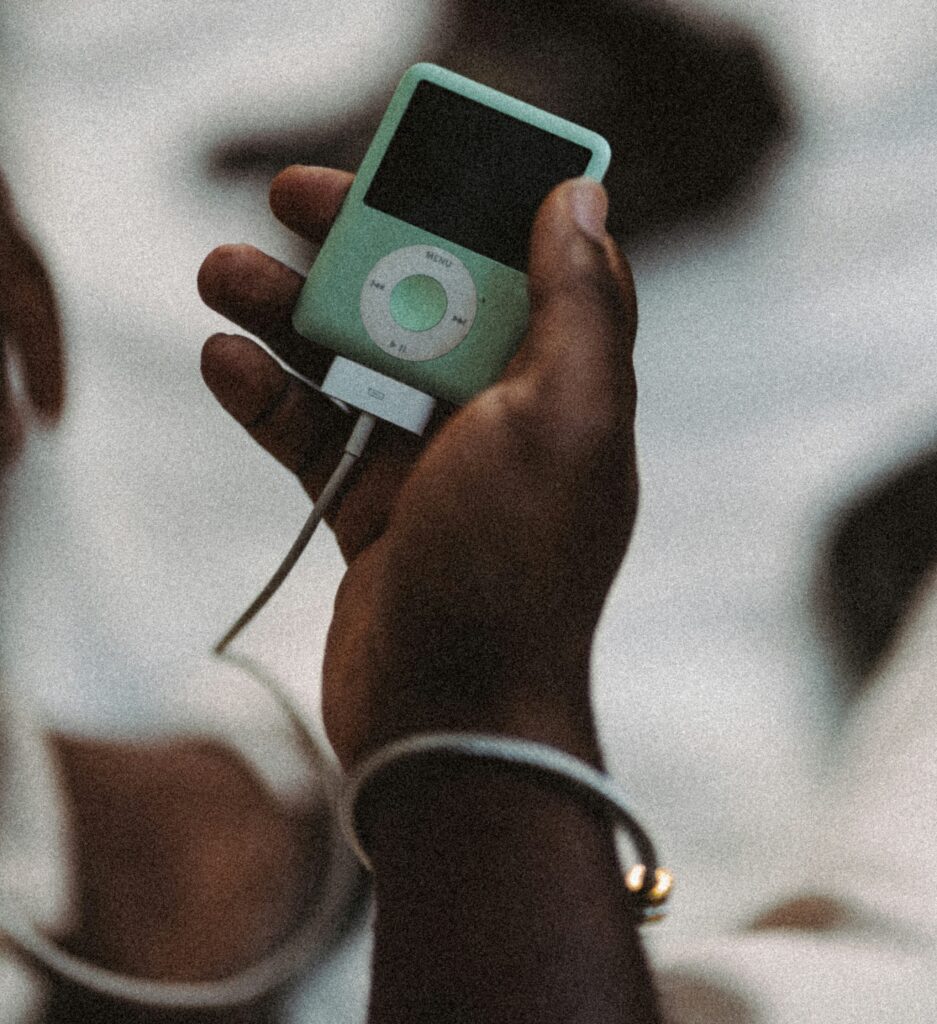
It’s easy to point to nostalgia when revisiting analog trends. Even I made the investment in a record player and vinyl. And I recently found my old iPod Nano 6th generation with a video screen that I was thinking about using again. I just don’t have wired earbuds lol! Oh, and while visiting my sister, she showed me that she still has the original iPhone. As I’m writing this, I think I’m going to ask her if she’d consider selling it to me.
The people “going analog” are not necessarily abandoning technology. Many of the devices they are rediscovering are in fact digital. The reference to analog, I guess, is intentionality. In theory, single-function devices keep you more in the moment. So, what people appear to be rejecting is not technology itself, but the conditions under which modern technology demands to be used.
The attraction of the old iPod is not merely its click wheel or its millennial aesthetic. It is that the device contains only the songs you deliberately placed there. There is no infinite library, no algorithmically generated playlist, no notification informing you that someone you barely remember has posted something you do not need to see.
In The Atlantic’s reporting, one woman described feeling paralyzed by the millions of songs available through streaming services. On her iPod Nano, she has only the music she chose. Others described buying CDs, waiting for them to arrive, and sitting down to listen to an album with intention. Interest in these older devices is substantial enough that eBay reported an average of 1,300 searches an hour for iPods last year, while prices for some models rose by more than 50%.
What looks like retro enthusiasm may actually be a quest for agency (a word that I am using more and more since the launch of ChatGPT in 2022).
People are rediscovering something modern product design spent years trying to eliminate…friction. Selecting an album, loading music onto a device, inserting a DVD, developing a photograph, or finding your way without GPS requires intent, focus, and effort. But that work creates participation. Participation creates memory. And memory helps transform consumption into experience.
We engineered friction out of our lives in the name of convenience and speed. Then we discovered that some of that friction was where life was happening.
This prompted me (get it!?) to think about that profound line from the series finale of the U.S. version of The Office when the character Andy Bernard observed, “I wish there was a way to know you’re in the good old days before you’ve actually left them.”
Convenience Became Connectivity, and Connectivity Became Captivity
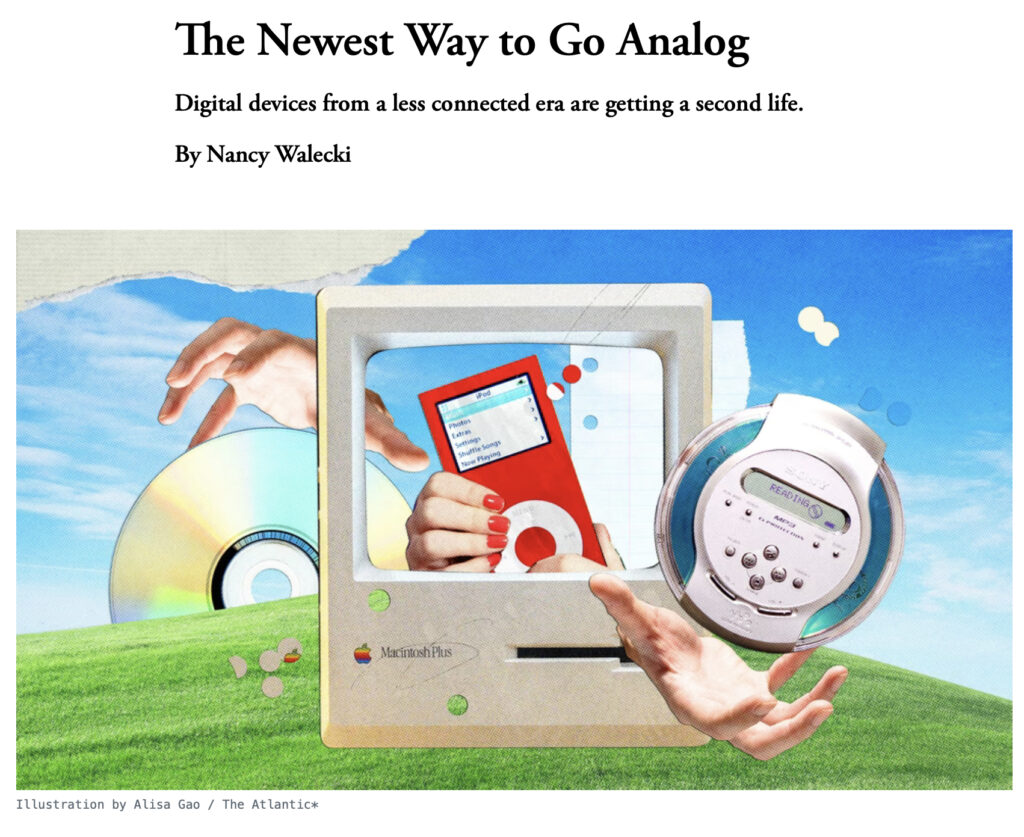
There was a period when technology was useful without being omnipresent. As former Apple executive and “father of the iPod” Tony
Fadell describes it in the article, devices were once “convenient, but not connected.” Your camera took pictures. Your music player played music. Your phone made calls.
Then those products converged into the “everything device.”
The smartphone became our camera, map, newspaper, television, office, shopping mall, social life, entertainment center, memory, and increasingly our emotional support system. Convenience and connectivity became inseparable. Every activity became an opportunity to capture attention, gather data, recommend something, or keep us engaged for just a little longer, and then a lot longer.
The problem with an everything device is that it eventually wants everything from us.
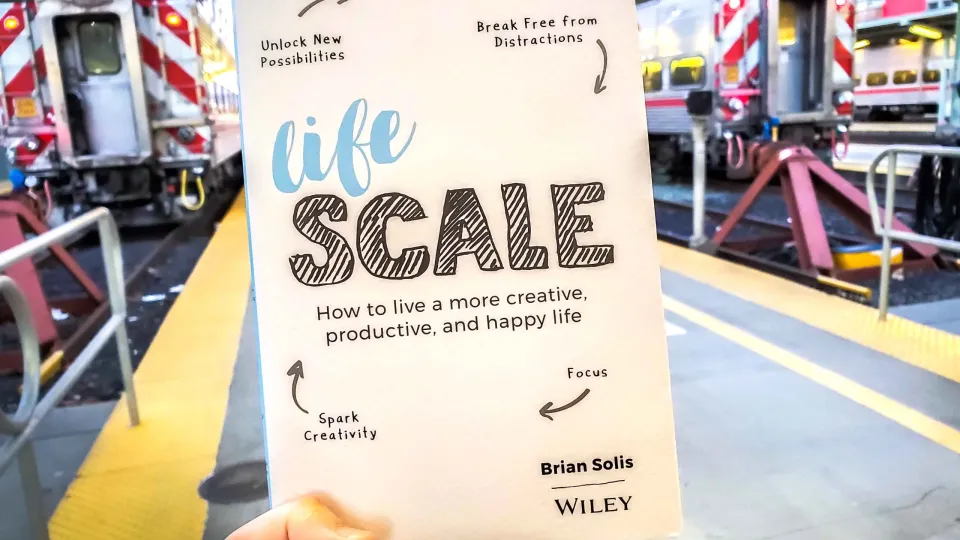
This was part of the journey I explored in Lifescale. At the time, I argued that we had not simply become distracted. Our behaviors were being deliberately shaped around interruption, validation, immediacy, and the endless scroll. Reclaiming our lives did not require abandoning technology. It required learning to use technology without allowing technology to use us, and then to scale our lives intentionally and directionally. In fact, I still use that book and wear the bracelet to live a more creative, productive, and happy life.
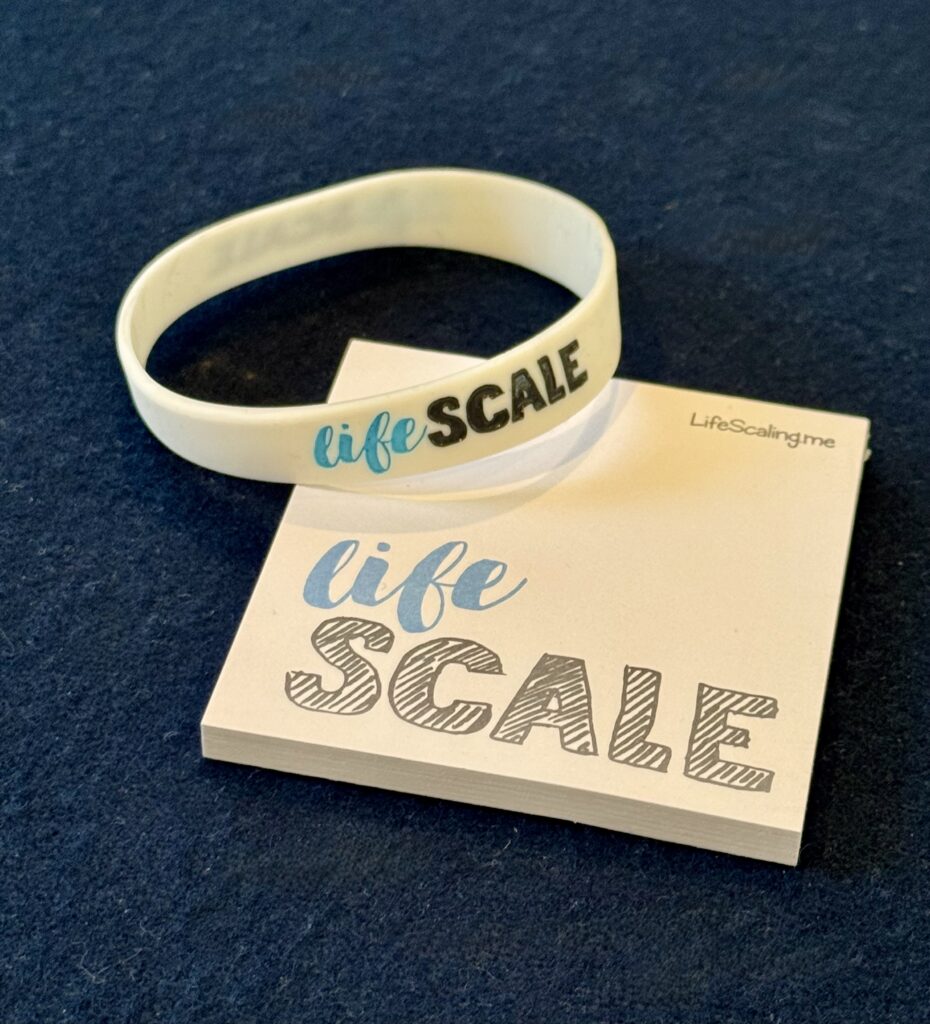
Going analog is, in many ways, Lifescaling made physical. It is an attempt to place boundaries around infinity, to turn our attention away from everything we could be consuming and toward what we have consciously chosen to experience.
The Postliterate Future Is Already Arriving
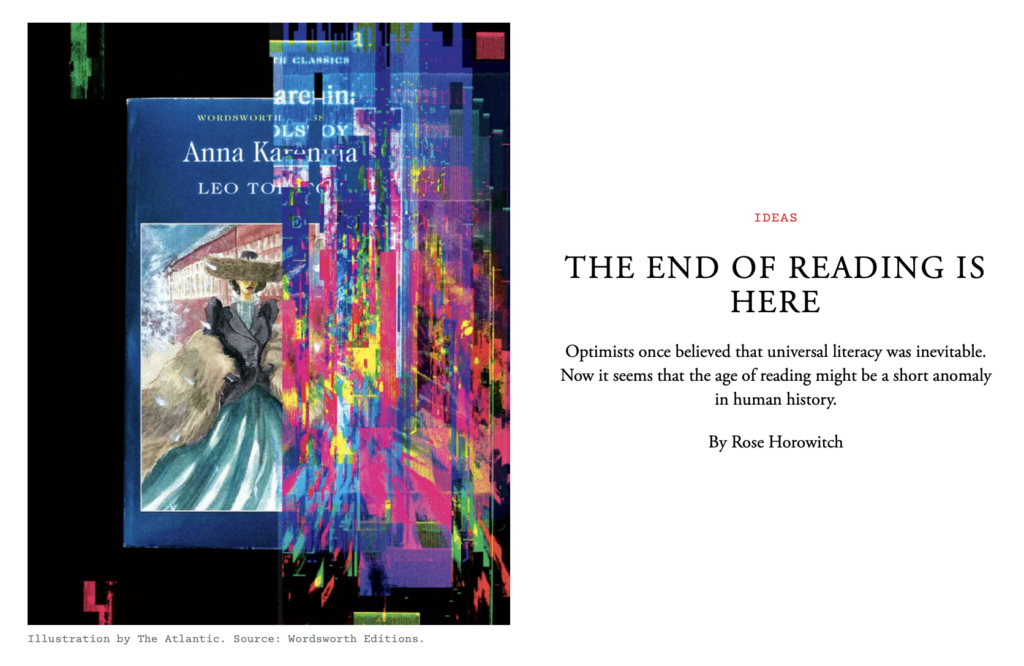
The parallel cultural movement is more troubling, and not just because I’m an author. It’s because I’m fighting to stay human.
In “The End of Reading Is Here,” author Rose Horowitch examines the possibility that the literate age may prove to be a relatively brief chapter in human history. Fewer than half of American adults reported reading a book of any kind in 2022, and only 38% said they had read a novel or short story. The proportion of Americans who read for pleasure on any given day fell from 28% in 2004 to 16% in 2023. The decline cuts across age, gender, and education. And here we are three years into generative AI, which makes me wonder where the stats sit today.
Reading isn’t a defense of the past or holding on to nostalgia. Long-form reading is a superpower. It boosts our cognitive stamina, strengthens critical thinking, enhances analytical skills, boosts empathy and social cognition, enhances our vocabulary and communication, and supercharges our creativity!
Reading also teaches how to remain present while thinking.
Deep reading combats distractions and lengthens our attention span and trains us to stay with an idea long enough for it to challenge us. It requires interpretation, imagination, patience, memory, and tolerance for ambiguity. It allows us to inhabit another person’s perspective without immediately responding, rating, sharing, or swiping away.
Digital culture rewards almost the opposite behavior. It compresses ideas into clips, headlines, summaries, reactions, and increasingly generated answers. We are becoming highly proficient at moving across information while becoming less practiced at moving through it.
We consume more while absorbing less. We encounter more voices while developing less of our own.
The decline of reading and the rise of analog culture aren’t separate trends. They are different responses to the same condition: a society that has optimized access to information while steadily eroding the human capacity to engage with it.
AI Is Moving Us from Attention Outsourcing to Cognitive Outsourcing
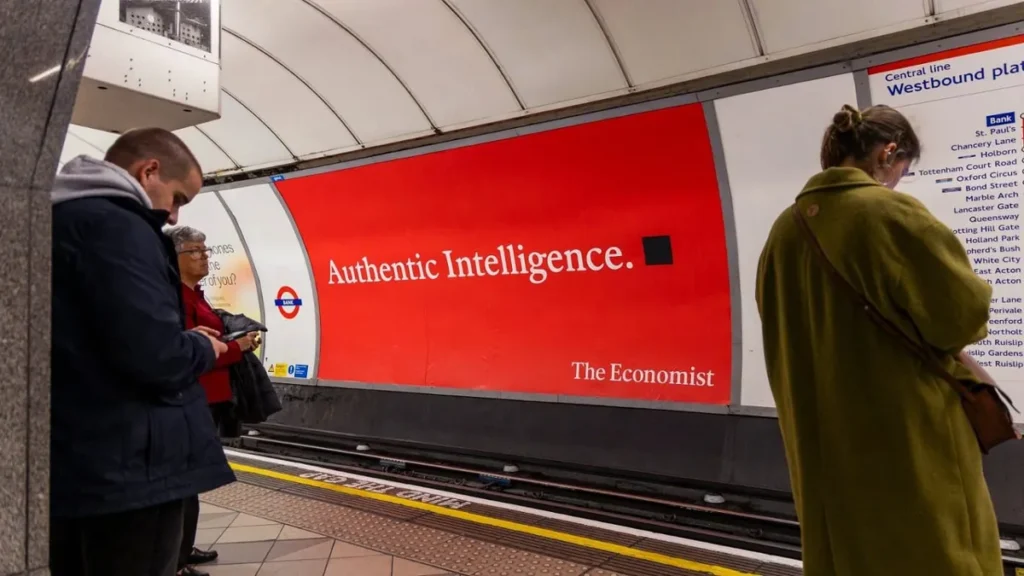
Social media competed for our attention. AI offers to complete the thought before we have one. And speaking of AI, we erode our authentic intelligence with every swipe, scroll, (and prompt).
People now turn to chatbots to draft emails, summarize information, prepare for conversations, make decisions, interpret emotions, generate ideas, and tell them what to say next. The Atlantic has documented heavy AI users who feel unable to begin meaningful work without consulting a chatbot, including one educator who realized his first instinct in solving a simple physical problem was to ask ChatGPT rather than think through it himself.
Let’s be clear. I’m not saying that AI is inherently harmful. Used intentionally, it can remove drudgery, democratize expertise, challenge assumptions, deepen analysis, and enable us to create things that were previously beyond our reach.
The danger though begins when assistance subconsciously becomes dependence.
AI produces polished answers so quickly that fluency can masquerade as understanding. We can appear more articulate while becoming less certain of what we actually believe. We can produce more ideas while exercising less imagination. We can respond faster while slowly losing the ability to sit with uncertainty long enough to develop an original point of view.
Philosopher Kwame Anthony Appiah describes the deepest risk as “constitutive de-skilling.” It’s the erosion of judgment, imagination, empathy, and our feel for meaning and proportion. Just what our society needs right now!
Before AI, digital tech was already interrupting our thinking. Now it can prevent our thinking in the first place. But hey, we can get more done, at speed at scale!
And the faster we move, the greater the risk of burnout. With the algorithm working in my favor, I then was presented with an article in Bloomberg that tracked the uptick in mental health leave. In fact, 67% of US employers report an increase in mental-health-related leaves of absence and accommodation requests over the past year, according to a survey by employment law specialists Littler Mendelson.
Think Outside of the Bot 🤖
We gave digital our attention. Are we about to give AI our minds?
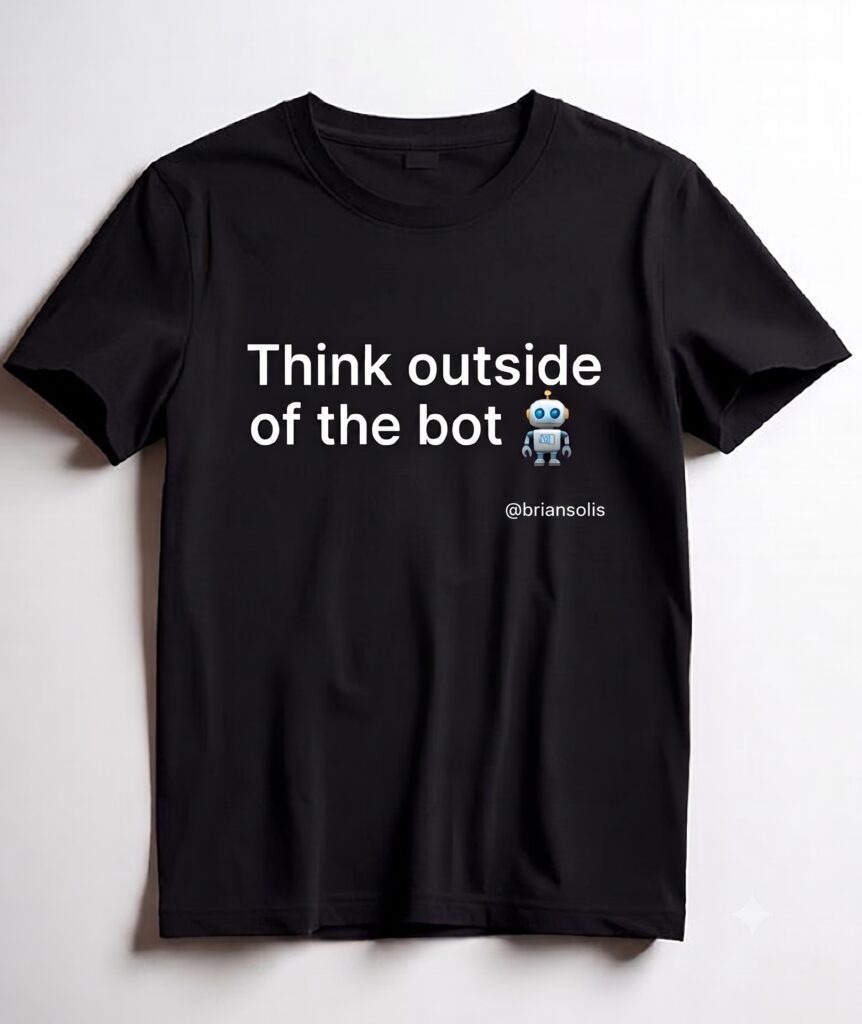
Recently I shared some thoughts, and a nifty t-shirt concept! I’ll reshare some of the thinking here.
When we want people to be creative, we tell them to “think outside the box.” But unless we change the rules, create psychological safety, reward curiosity, and give people time to explore, we are not really changing the paradigm. We are merely redecorating the same box.
I feel the same way about AI.
We ask people to think bigger with it but then measure them by how much faster they complete yesterday’s work. We deploy AI to summarize, automate, respond, and produce more of what already exists. Then we wonder why it is not transforming the business, or the person using it.
This is why I have been advocating WWAID: What Would AI Do?
The question should come before the prompt. It challenges us to imagine possibilities we might otherwise miss.
But I am now embracing an additional mantra: Think outside of the bot.
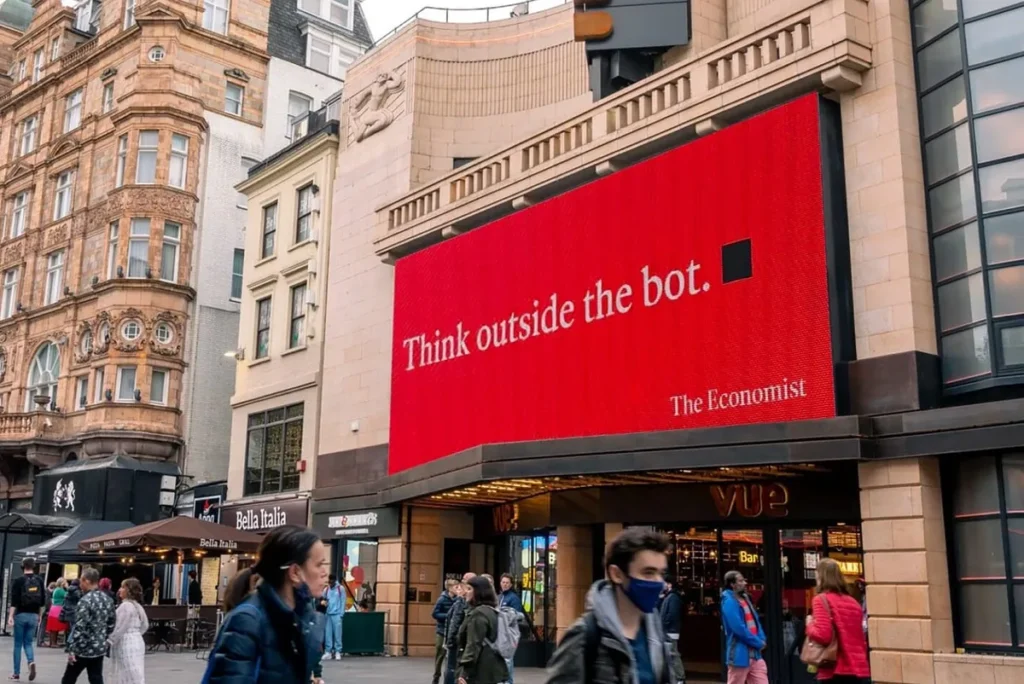
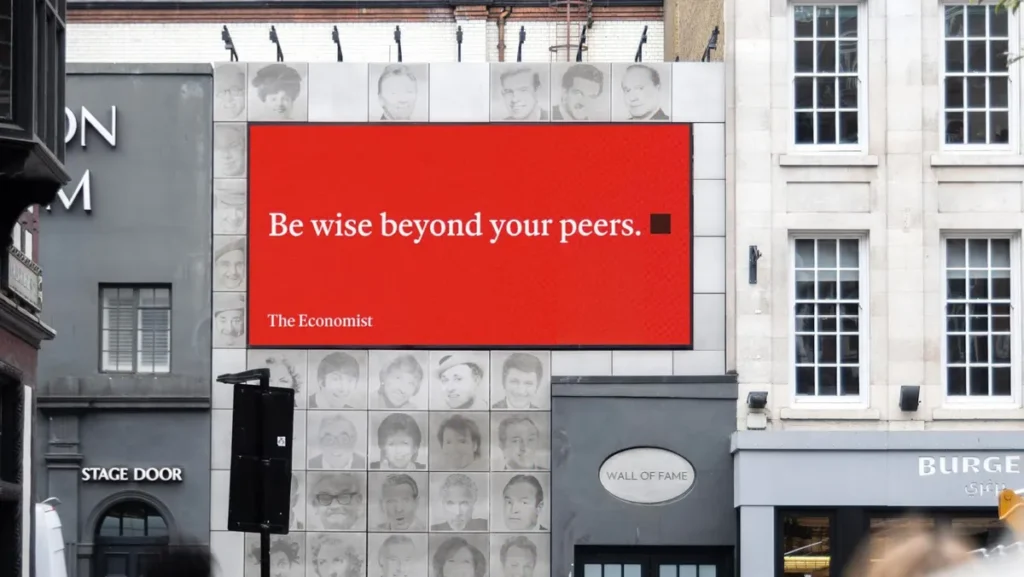
And I’m not alone. The Economist launched a brilliant series of billboards shading AI, with one of them proclaiming just that, “think outside the bot.”
Thinking outside of the bot means bringing something original to the relationship before asking the machine to contribute. It means forming an opinion before requesting an answer. It means using AI to interrogate your assumptions rather than manufacture your convictions.
The aim for AI-human work is not to compete with AI at being a machine. It is to become more human because of what the machine makes possible.
What are We Teaching the People Around Us?
These choices affect more than our individual productivity.
Children develop judgment by making imperfect decisions. They build creativity through boredom, play, reading, conversation, and the slow frustration of trying to make something work. When every question is immediately answered, every assignment summarized, and every uncomfortable moment filled with content, we may be removing the very conditions through which a self is formed.
The same is true in our families. Presence is not simply occupying the same room while everyone attends to a different screen. It is the increasingly rare experience of giving another person attention without simultaneously offering it to a platform.
And it is true at work. Leaders cannot ask teams for breakthrough thinking while surrounding them with back-to-back meetings, constant notifications, productivity surveillance, and AI systems designed primarily to increase output. Creativity needs space. Curiosity needs permission. Original thinking needs enough time to become inconvenient.
Perhaps every family and every organization should ask:
What human capacity are we strengthening through technology—and what capacity are we quietly allowing to disappear?
The Future May Need to Become a Little Less Convenient
The people buying iPods are not retreating from the future. Ideally, they’re prototyping a healthier version of it.
They are reminding us that more choice doesn’t always create more freedom. It can fuel fatigue. More connection does not guarantee more belonging. More information does not necessarily produce more wisdom. And more intelligence on demand does not automatically make us more intelligent.
The real question is not whether we should choose analog or digital, or humans over AI. The question for us to deeply consider is whether we remain intentional enough to choose at all. That requires a different kind of AI, authentic intelligence.
What parts of your life should remain deliberately slow? What decisions should still require your judgment? What conversations should never be summarized? What should your children learn to struggle through? What should your team be expected to imagine before asking a machine? And what are you willing to make a little harder, quieter, slower, or more human, so that it remains truly yours?
Use the technology. Explore its possibilities. Let it stretch what you can see, create, and become.
Just remember to think before you prompt.
Oh, and think outside of the bot. 🤖
Yours authentically,
Brian
nfinite ∞ | Mindshift | Subscribe | Keynote Speaker


Leave a Reply